
The best time to plan is before you need to
Remember when stepping over the side of the bathtub was no big deal? For a lot of us, that same tub eventually becomes the trickiest spot in the house.
If you want to stay in your home as you get older, or help keep aging parents in their home, the smartest move is to plan before a fall or surgery forces a rushed decision. That way, you can make changes one step at a time instead of renovating the whole house in a panic.
On a new episode of our Trust Issues podcast, I sat down with Chris Lalomia, founder of TrustDALE Certified Partner The Trusted Toolbox. Chris's team is certified in aging-in-place remodeling, and he shared the changes he recommends first, along with a few that surprised me.
Key takeaways
- Start early. Better lighting, clear walkways and fewer loose rugs are easy wins you can tackle this weekend.
- Focus on your daily route. The entrance you actually use, the bathroom and the kitchen matter most.
- Rethink the bathroom. Walk-in showers, properly installed grab bars and slip-resistant floors make a big difference.
- Small changes add up. Lever handles, pull-out shelves and motion-sensor lights can make everyday life easier.
- Plan in stages. Fix urgent hazards now, prepare rooms next and save big projects for when you need them.
Bring the family in. The people helping you should be part of the conversation.
Step 1: Light it up and clear the way
When I asked Chris what people should do right now, he didn't hesitate: lighting. If you can't see where you're stepping, you can't move safely.
As our eyes change, it gets harder to judge the depth of a step or notice where the floor changes height. A hallway that seemed bright enough 10 years ago may not be anymore.
Quick fixes Chris recommends:
- Plug-in motion-sensor night lights along the route from the bedroom to the bathroom
- Brighter LED bulbs in older fixtures
- Good lighting at both the top and bottom of every staircase
Clear the clutter (yes, even the recliner)
Clutter is the other big one. Chris's examples? An extra coffee table, an old shag throw rug and more recliners than anybody needs.
I get it. Furniture and keepsakes carry memories. But they shouldn't block the paths you walk every day.
The good news: you don't need a contractor for this part. Move the extra furniture, and either remove loose rugs or secure them so they can't slide. Better lighting and clear walkways are two of the simplest ways to prevent a fall before any remodeling begins.
Step 2: Make getting in and out easy
Chris starts his assessment before he even reaches the front door. He wants to know which door you actually use.
For many people, that's the garage or carport, not the front entrance. And that's good news: a ramp or railing at a side or garage entrance is often less noticeable than one out front.
He described a scene that's easy to overlook. One spouse is carrying in groceries while also trying to help the other up the steps, and there's nothing to hold onto. You may have climbed those steps a thousand times, but that doesn't make them safe in that moment.
A good assessment looks at how you really use the entrance: carrying bags, helping someone or using a cane. Chris still recommends keeping the front entrance clean and maintained. The goal is one dependable way in and out, not upgrading the door visitors see.
Follow your daily path
Chris doesn't assume every room needs work. Instead, he asks where you spend your time and how you move through the house.
For most families, the route looks something like this: come in through the garage, put groceries away, use the bathroom, cook dinner, relax in the living room and head to bed. Those connections deserve the most attention, and keeping daily essentials on one floor can make a big difference.
My family moved my parents from a two-story home in Kentucky to a one-level home in Florida. Looking back, it was one of the smartest decisions we made for them.
Chris also asks about your lifestyle: how often family visits, how much you entertain and which rooms matter most to you. Those answers help decide what needs to change and what can stay just the way it is.
Step 3: Make the bathroom safer
Wet floors plus everyday movement make the bathroom one of the riskiest rooms in the house. That's why it's near the top of Chris's list.
Swap the tub for a walk-in shower
His team converts a lot of bathtubs into walk-in showers. Before planning anything, Chris asks two questions: who will use this shower, and how?
You've got a couple of options:
- Zero-entry shower: no threshold at all, so there's nothing to step over.
- Low-curb shower: a small lip at the entrance, which can be simpler depending on the project.
A shower chair lets you sit while bathing, and a handheld showerhead makes life easier for you or a caregiver. Chris also thinks about where the showerhead sits and whether you can reach it from a seat.
His advice: don't just plan for today. A bathroom that works on an ordinary Tuesday should also work while you're recovering from surgery or need someone's help.
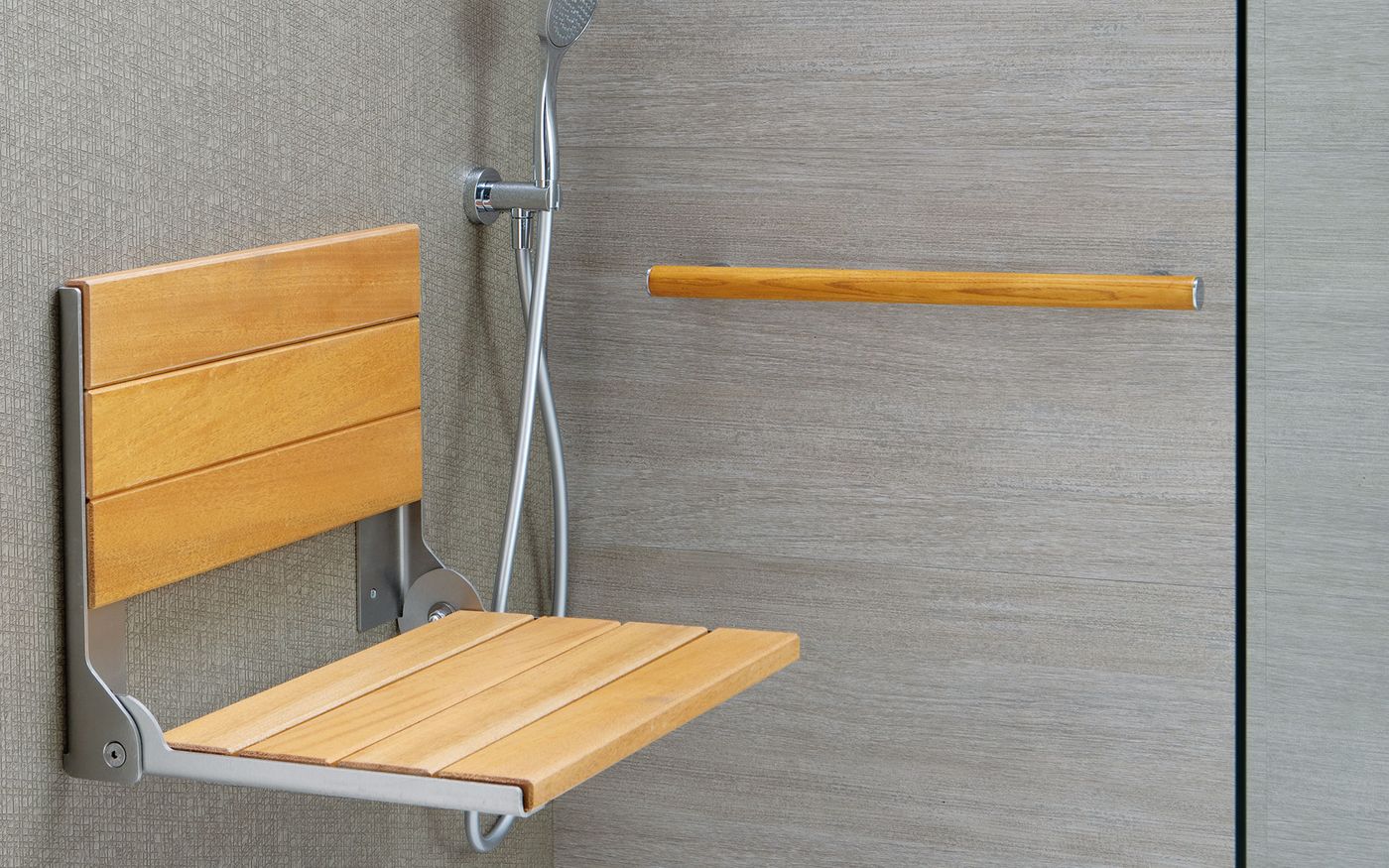 shower seats can look stylish and add functionality
Grab bars don't have to look like a hospital
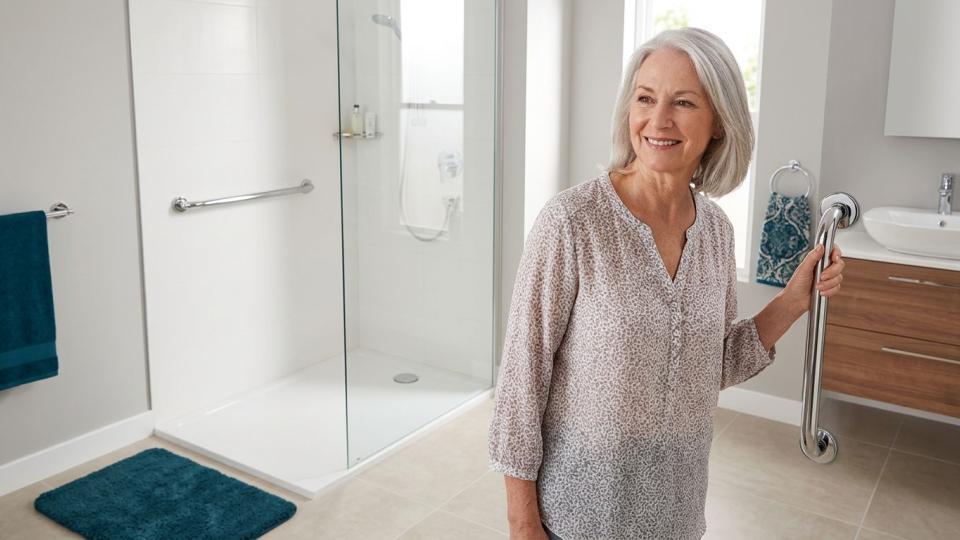
Marnie raised a worry a lot of people share: does aging in place mean turning your home into a hospital room? Not at all. Today's grab bars come in attractive finishes, and some double as a soap dish or toilet paper holder.
But how a grab bar is installed matters far more than how it looks.
A suction-cup grab bar is not a substitute for a properly installed one.
When Chris's team remodels a bathroom, they add wall support (called blocking) behind the walls so grab bars can be installed securely now or later. If you're remodeling anyway, that's the perfect time to plan for it.
If sitting down or standing up is getting harder, ask your doctor or an occupational therapist whether a raised toilet seat might help.
 grab bars now come in a variety of styles and finishes
Watch out for slippery tile
Gorgeous tile can turn into an ice rink when wet. Chris chooses bathroom materials with slip resistance in mind. The National Institute on Aging also recommends grab bars near toilets and around tubs and showers, plus nonskid surfaces where needed.
Step 4: Put kitchen essentials within easy reach
Chris used his own kitchen as an example. As the tallest person in his family, he'd gotten used to reaching up high for his coffee mug every morning, right over a hot coffee maker. Not ideal.
The things you use every day should live where you can grab them easily.
Rethink what goes in prime cabinet space
Do you really need the full set of china or a stack of 16 dinner plates in the most convenient cabinet? Probably not. Chris suggests keeping your everyday dishes, utensils and pans in easy reach and moving the rest higher or lower. Store things for how you cook now, not when the kids were home.
Pull-outs mean less bending
Low cabinets often mean bending, kneeling or digging into a dark corner before you even start cooking. Pull-out drawers and roll-out shelves bring everything to you, and they don't require a full kitchen remodel.
Planning something bigger? All Weather Renovations, a TrustDALE resource, can help you rethink your kitchen's layout and storage.
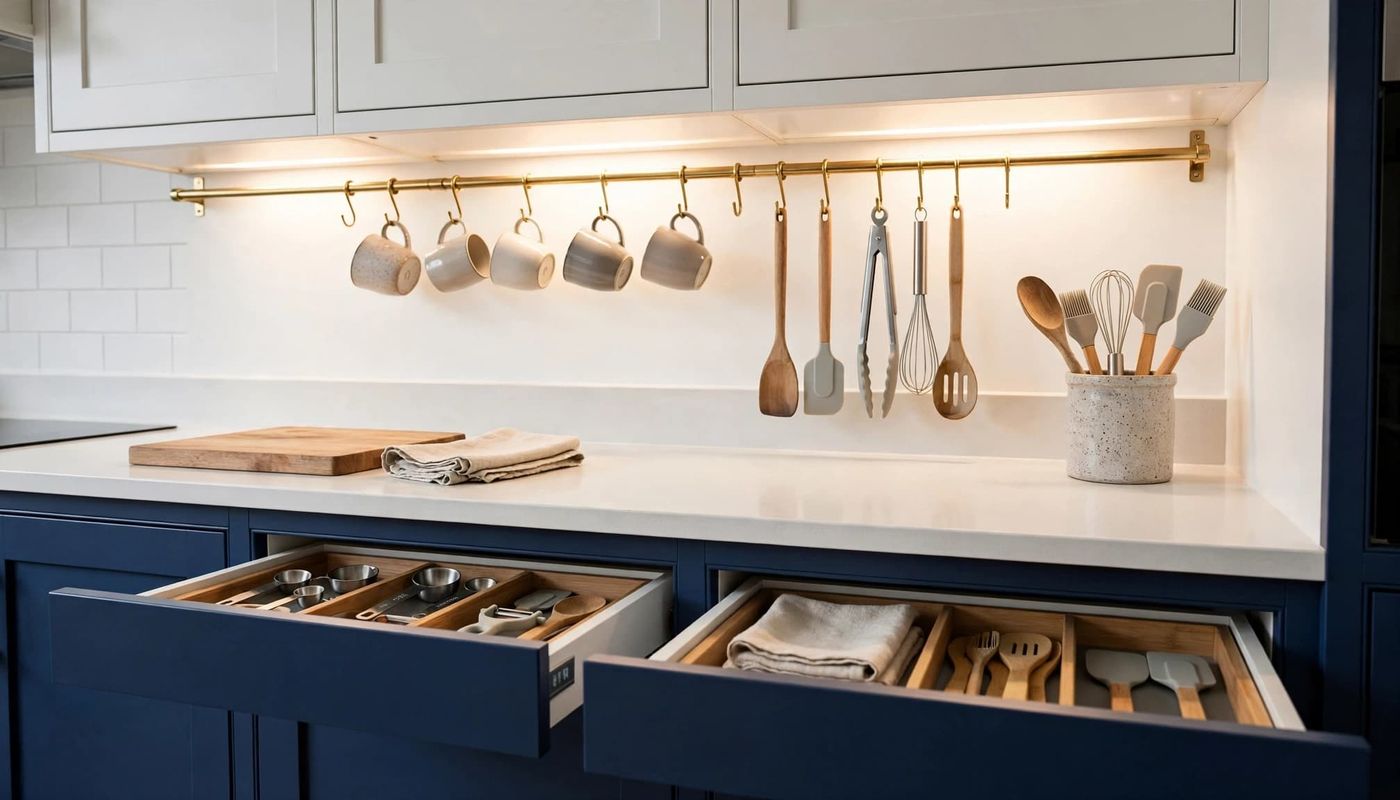 Drawers make for easy access with less bending
Add light where you actually work
Many older kitchens rely on one ceiling fixture. It lights the room, but it can leave your counters in shadow, right where you're chopping with a sharp knife. Under-cabinet lighting fixes that.
Chris also pointed out another kitchen task that needs good light: sorting medications. Marnie described her parents' dedicated pill station, an organizer inside a closet that kept everything visible at eye level. No more digging through a high cabinet.
For bigger kitchen updates, Chris may also talk about prep areas, island design or counter heights that work better for you.
Step 5: Widen doorways, swap knobs and rethink floors
Doorways aren't just a wheelchair issue
A cane, walker or rollator can make a standard doorway feel tight. So can recovering from knee or hip surgery.
The good news: widening a doorway doesn't always mean tearing out a wall. Depending on the opening, Chris may:
- Adjust or remove the trim to gain a little width
- Take off a door that no longer serves a purpose
- Install a pocket door that slides into the wall
He also asks whether every door is still necessary. A two-person household often uses the house differently than it did when the kids were home.
Trade round knobs for levers
Round doorknobs can be hard to turn with arthritis or a weak grip. Lever-style handles are easier to use for everyone, which is the whole idea behind universal design: a home that works for people of all ages and abilities. Chris pictures a kitchen where a grandmother, a parent and a granddaughter can all cook together comfortably.
Choose flooring with grip
Chris compares hardwood, laminate and luxury vinyl plank (LVP) by how slip-resistant they are and how well they handle moisture. He tends to favor LVP. Just know that a "non-slip" label alone doesn't guarantee a safe floor.
And remember: even great flooring can be undone by a loose rug on top of it. If a rug slides, secure it or retire it.
Step 6: Have a plan for the stairs
"Taking the stairs keeps me in shape." Chris hears it all the time, and he pushes back every time. Exercise and getting safely between floors are two different needs. Once stairs get harder, the risk isn't worth the workout.
At minimum, make sure there's good lighting at both the top and bottom of the stairs, a tip the National Institute on Aging also recommends.
Stair lifts: from family joke to lifesaver
Marnie shared her parents' story. They first added a stair lift to reach the basement, then installed a second one upstairs after her mom had another hip replacement.
At first, the family joked about it. Over time, Marnie came to see those lifts as the thing that let her parents stay in the home they loved.
There's a lesson for adult children here, too. It's easy to keep picturing your parents as the strong, active people you grew up with, even when their needs have changed.
Platform lifts and home elevators
Chris also talked about platform lifts and residential elevators. Sometimes a closet area can work for an elevator, but every house needs its own assessment.
His team handles the remodeling, while certified elevator specialists handle the elevator itself. That's a good sign in any contractor: knowing when a job needs another expert instead of treating everything as ordinary remodeling.
Step 7: Let smart-home tech do the heavy lifting
Smart-home features aren't just gadgets. They can take the effort out of everyday tasks.
Chris mentioned voice-controlled lights and blinds, motion-sensor lighting and automated routines. In his own home, motorized blinds changed his habits: now he actually opens and closes them every day in the TV room.
Never cross a dark room again
A light is only helpful if you can turn it on before you walk into the dark. The bedroom is a perfect example. Can you turn the lights off once you're settled in bed, without getting up and shuffling back across the room? A voice command or a bedside switch solves that.
Think about privacy
Chris acknowledged that connected devices raise privacy questions. His focus is on practical features, like lighting, blinds and routines, that help you manage your home and stay independent. Before adding cameras or sharing app access with family, talk through who can see what.
Make it a family conversation
Aging in place is rarely a solo decision. Chris says most calls come from someone helping a loved one: a husband calling about his wife, a wife about her husband or an adult child about a parent.
You're far from alone
- 75% of Americans age 50 and older want to stay in their current homes as they age, according to AARP research.
- The U.S. Census Bureau's 2024 American Community Survey counted about 41.9 million Americans age 70 and older, roughly one in eight people.
- That includes more than 16 million people ages 70 to 74, nearly 12 million ages 75 to 79, more than 7 million ages 80 to 84 and more than 6 million age 85 and older.
Don't forget the caregivers
A Centers for Disease Control and Prevention study found that about one in four baby boomers cares for someone else, and nearly 42% of those caregivers look after a parent or parent-in-law. By my rough estimate using the study's figures, that's about 7.5 million boomers caring for a parent.
The Bureau of Labor Statistics reports that 38.2 million Americans provided unpaid eldercare in 2023 and 2024. People ages 55 to 64 were the most likely to be caregivers, and more than 60% of them were caring for a parent.
These decisions affect two people: the one living in the home and the one helping them. Both deserve a seat at the table.
Your aging-in-place game plan: 3 stages
You don't have to do everything at once. I suggested breaking the work into three stages so you can separate what's urgent from what's worth planning for, and Chris agreed.
| Stage | What to tackle |
|---|---|
| 1. Fix it now | Better lighting, clear walkways, remove or secure loose rugs and check your main entrance |
| 2. Prepare for change | Bathroom access, grab bar support, reachable kitchen storage and better task lighting |
| 3. Plan the big projects | Full bathroom or kitchen remodels, doorway changes and stair lifts or elevators |
Chris kept coming back to three priorities: the entrance, the everyday walking route and the bathroom.
What about the cost?
One of Chris's customers installed a home elevator after comparing it with the ongoing cost of assisted living. For him, staying home was the better fit.
That was one person's choice, not a rule for everyone. But it's a smart way to think about it: compare a modification with the alternative you're actually considering.
Will it hurt my home's resale value?
Chris hears this one a lot. He doesn't see a walk-in shower or a removed door as an automatic hit to value. More importantly, the real question is whether your home supports the life you want to live there right now.
Frequently asked questions
When should I start planning to age in place?
Ideally in your 50s, and definitely before a fall or surgery makes it urgent. Chris says even healthy, active homeowners benefit from better lighting, decluttering and smart-home features long before they'd ever need a ramp.
What are the most important aging-in-place modifications?
Start with the entrance you use most, the paths you walk every day and the bathroom. After that, look at kitchen storage, doorways and stairs based on how you move through your home.
What bathroom changes make bathing safer?
A walk-in shower removes the need to step over a tub, and a shower chair lets you sit while bathing. Add properly installed grab bars, a handheld showerhead and slip-resistant flooring. Ask your doctor or an occupational therapist whether a raised toilet seat would help.
Do suction-cup grab bars work?
They shouldn't be relied on to hold your weight. A grab bar needs to be securely anchored to solid wall support. If you're remodeling, ask your contractor to add blocking behind the walls for future grab bars.
Are stair lifts worth it?
For many families, yes. A stair lift can keep a multi-level home usable when stairs become difficult or risky. Platform lifts and home elevators are other options, but they require a specialist's assessment.
Will aging-in-place changes hurt my home's resale value?
Not automatically. Features like walk-in showers, lever handles and wider doorways appeal to many buyers. The bigger question is whether your home works for you today.
How do I prioritize home modifications?
Fix immediate hazards like poor lighting, clutter and loose rugs first. Then prepare key rooms for changing needs. Save larger projects, like doorway changes or stair lifts, for when you need them.
Don't wait for a fall to start planning
Too often, Chris gets the call after the fall, the broken hip or the surgery. Some homeowners see the need as temporary and resist bigger changes. His approach is to start small, then talk about what else would make daily life easier.
His advice is to start thinking about this in your 50s. You may not need a ramp, but you'll still benefit from brighter lights, less clutter and a few smart-home upgrades.
It's also a good time to rethink how you use the house. Once the kids move out, that second floor or spare room may serve a different purpose. Marnie recently sorted through her daughter's old school papers and a closet full of puzzles, and realized her local library lends puzzles anyway.
The bottom line: a few changes now can help you stay in the home you love for years to come.
Ready to make your home safer? Connect with TrustDALE Certified Partner The Trusted Toolbox to get started.
And remember, like every TrustDALE Partner, they're backed by our $10,000 Make It Right Guarantee!