

When the Ground Starts Playing Tricks
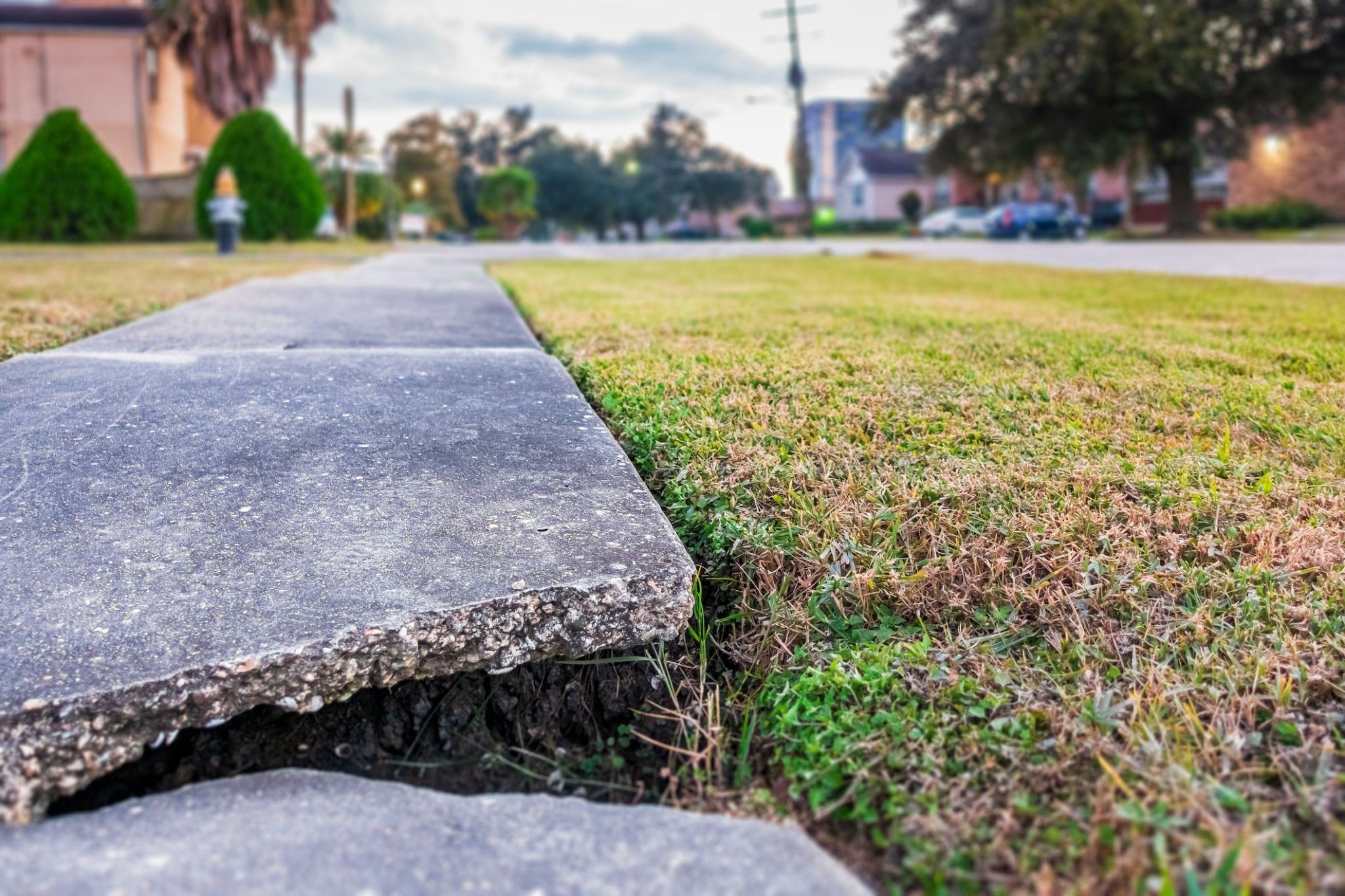
One day your lawn is flat and cooperative. The next, there’s a suspiciously shallow dip near the mailbox that seems to have appeared overnight. Sinkholes often enter a homeowner’s life this way, almost imperceptibly.
In many cases, that small depression is not an emergency. We know the reasons: soil settles, old tree roots decay, backfilled construction trenches compact over time. The real question isn’t whether the ground moved, but why it moved and whether it plans to keep going.
According to the U.S. Geological Survey, sinkholes form when water dissolves underlying rock, especially limestone, creating voids that eventually collapse. These features are most common in areas with what geologists call “karst terrain”, which underlies much of the Southeast. The USGS explains the science in detail here.
Georgia homeowners, in particular, are no strangers to this geology. But does mean every dip in the yard is a disaster? Let’s take a closer look.
Harmless Settling or Hidden Hazard?
Not all sinkholes are created equal. Some barely disturb the grass line, while others signal movement beneath your home that deserves immediate attention.
A shallow depression that appears after heavy rain and then stabilizes may reflect normal soil settlement. If it remains small, sits well away from your foundation, driveway, or retaining walls, and shows no continued expansion, careful monitoring can be appropriate. Outline the edges and revisit the area after major storms. Photograph it periodically so you can compare changes over time. What matters most is whether the ground stays put.
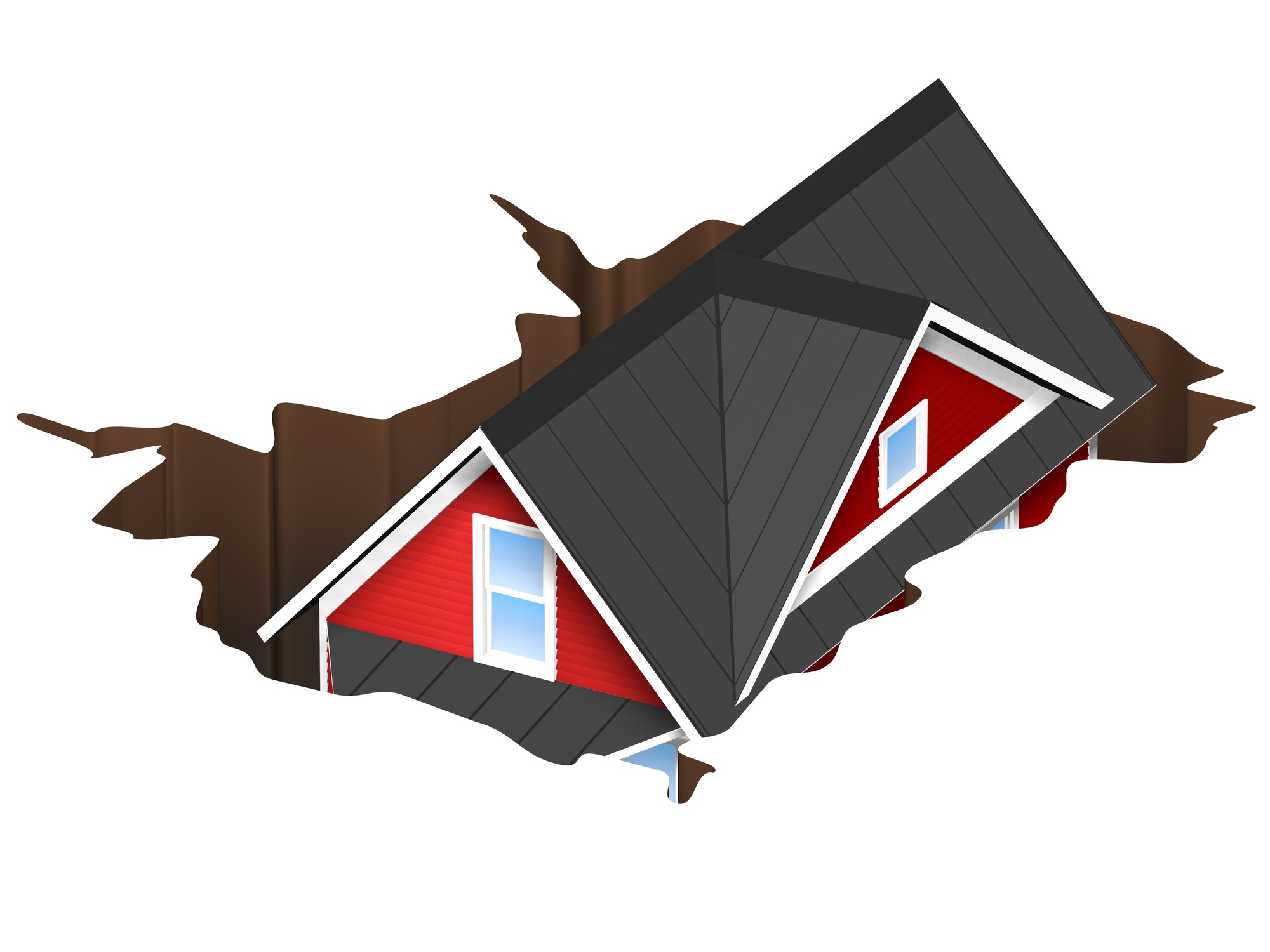
Certain developments, however, shift the situation from watchful waiting to decisive action. Cracks forming in the foundation, doors or windows that begin sticking, visible separations between walls and floors, or a depression that steadily widens or deepens all warrant professional evaluation. Persistent water pooling in the area increases concern, especially if drainage patterns have changed. Ground movement near structural components should never be dismissed as cosmetic.
Sinkholes can develop with little warning and may be triggered or worsened by heavy rainfall that accelerates subsurface erosion. Once structural integrity becomes part of the equation, the shovel belongs back in the shed.
The DIY Temptation and the Shoddy Shortcut
A shovel, a few bags of topsoil, maybe some gravel. On the surface, filling a small hole looks simple. Many homeowners try it, and some even succeed… temporarily.
The problem is that surface filling addresses symptoms, not causes. If a void remains underground, loose fill material can wash into it during the next heavy rain, making the depression return, often larger than before. In worst cases, improper filling can trap water, increasing erosion below.
This is where experience matters. Arbor Hills Construction approaches residential sinkholes differently. Rather than dumping soil into a hole and calling it finished, their team evaluates drainage patterns, soil composition, and subsurface stability. In many cases, that means compacting structural fill in controlled layers, improving drainage, and stabilizing the surrounding soil so the repair holds.
As a family owned company with a long track record in the region, Arbor Hills has spent years working in the very soil conditions that produce these issues. That local familiarity is not a marketing phrase. It translates into understanding how Georgia clay behaves when saturated and how limestone influenced terrain can shift.
Shoddy contractors often offer quick, low cost fixes. The trouble tends to show up months later. A proper repair may cost more upfront, but it reduces the likelihood of repeated work and escalating damage.
How Arbor Hills Repairs It Right
Every sinkhole repair should begin with assessment. Arbor Hills Construction typically inspects the site to determine whether the issue is simple settlement or a deeper geotechnical concern. If needed, they recommend further evaluation before any soil is moved.
When filling is appropriate, the process involves more than dumping dirt. Structural backfill is placed in controlled lifts and mechanically compacted. Drainage corrections are often integrated into the solution, especially if water concentration contributed to the void forming in the first place. The goal is stability, not camouflage.
Homeowners also benefit from Arbor Hills’ broader construction expertise. If the sinkhole is near a foundation, driveway, or retaining wall, their experience with structural elements allows them to evaluate the bigger picture. That holistic perspective can prevent a cosmetic repair from overlooking a deeper issue.
Strong warranties and a reputation built over years of service in the community provide additional peace of mind. Choosing a contractor with a consistent local presence matters when dealing with something as unpredictable as the ground beneath your home.
When in Doubt, Get a Professional Opinion
A small dip in the yard may be harmless. It may also be the beginning of something more complicated. The difference is not always visible from the surface.
If you notice changes in your landscape, especially near your home, it is wise to have it evaluated before grabbing a shovel. Arbor Hills, a TrustDALE certified Partner, offers the kind of informed, region-specific expertise that sinkhole repairs demand.
For homeowners across the area, the safest ground is informed ground. Reach out to Arbor Hills Construction or explore other vetted professionals through TrustDALE to ensure your property stays solid for years to come.