

A tree can look fine up top while the root zone is quietly struggling. Roots control tree health and yard drainage, and they leave clues you can read without turning your lawn into an archaeological dig.
The City Under Your Feet
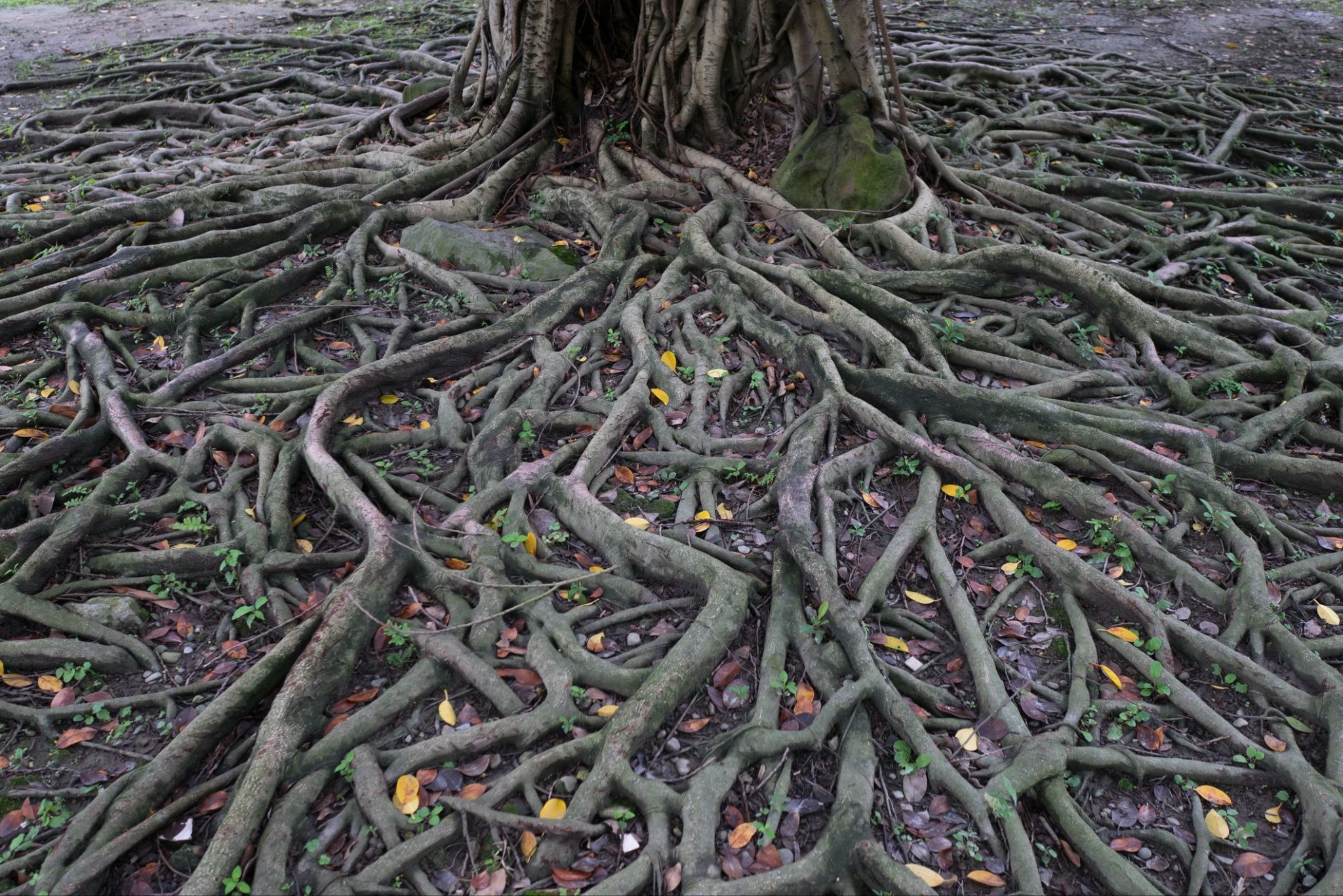
Roots are not a tidy, upside down mirror of the branches. They spread outward and stay relatively shallow where oxygen and moisture are easier to access. University of Illinois’ College of Agricultural, Consumer, and Environmental Sciences notes that more than 90% of tree root biomass sits in the upper 18 inches of soil, with almost half in the upper 6 inches. Surface changes, like added soil or a too thick mulch layer, land right where the tree is most alive.
The Institute of Food and Agricultural Sciences at the University of Florida adds another reality check: many small diameter roots live in the top 12 inches, even though some roots can grow deeper when conditions allow. Those fine roots do most of the daily water and nutrient intake, so surface problems can become whole-tree problems fast.
When Roots Rewrite Your Drainage Map
Roots can actually help drainage. International Society of Arboriculture (ISA) resources describe how roots build soil structure by creating tunnels and larger pores that let water move through the ground. But soil that stays saturated pushes oxygen out, and Iowa State University Extension notes that low oxygen negatively affects root health.
Chronic wetness can also invite pathogens. UC Agriculture and Natural Resources explains that Phytophthora root and crown rot is primarily associated with heavy or waterlogged soils, especially when the base stays wet for prolonged periods. If you have a soggy ring around the trunk all summer, think “risk,” not “extra watered.”
DIY Root Checks That Won’t Wreck the Tree
You don’t need to dig up roots to learn a lot. Keep it gentle.
- Find the root flare. The trunk should widen at the base instead of disappearing into soil or a mulch mound.
- Do a drainage test. Iowa State’s percolation test uses a hole about 12 inches deep: fill, drain, refill, then measure the water drop in 15 minutes (multiply by 4 for inches per hour). They say 1 to 3 inches per hour is desirable for most plants; less than 1 inch per hour signals poor drainage.
- Probe for compaction. After rain, push a screwdriver into the soil around the drip line. If it stops abruptly, roots are probably struggling for air.
If the results make you uneasy, an arborist can investigate without guesswork. In Metro Atlanta, Southeast Tree is a TrustDALE certified partner that offers ISA certified arborist services, which is the kind of credentialed help you want when the problem is hidden below ground.

When It’s Time to Call a Root Whisperer
Call a professional when you see a sudden lean, major canopy dieback, repeated pooling around the base, or sidewalk heaving that seems to accelerate. Also call before trenching, grading, or building near a mature tree. Root cutting changes stability.
Look for ISA credentials, proof of insurance, and a written plan that protects your property and the root zone. Southeast Tree is a practical benchmark: with ISA-certified arborists and a longstanding history of outstanding service.
Bottom line: if drainage keeps fighting your trees, or your trees keep fighting your yard, do not wait for the next storm to cast the final vote. Use TrustDALE to connect with a certified pro and get a clear plan for what is happening underground and what to do next.