

National Consumer Protection Week is the kind of calendar reminder that earns its spot. From sketchy job “offers” to fake delivery texts to tax season trickery, scammers keep moving, and the rest of us are expected to keep up while making dinner, running a business, or helping a teenager fill out their first bank form.
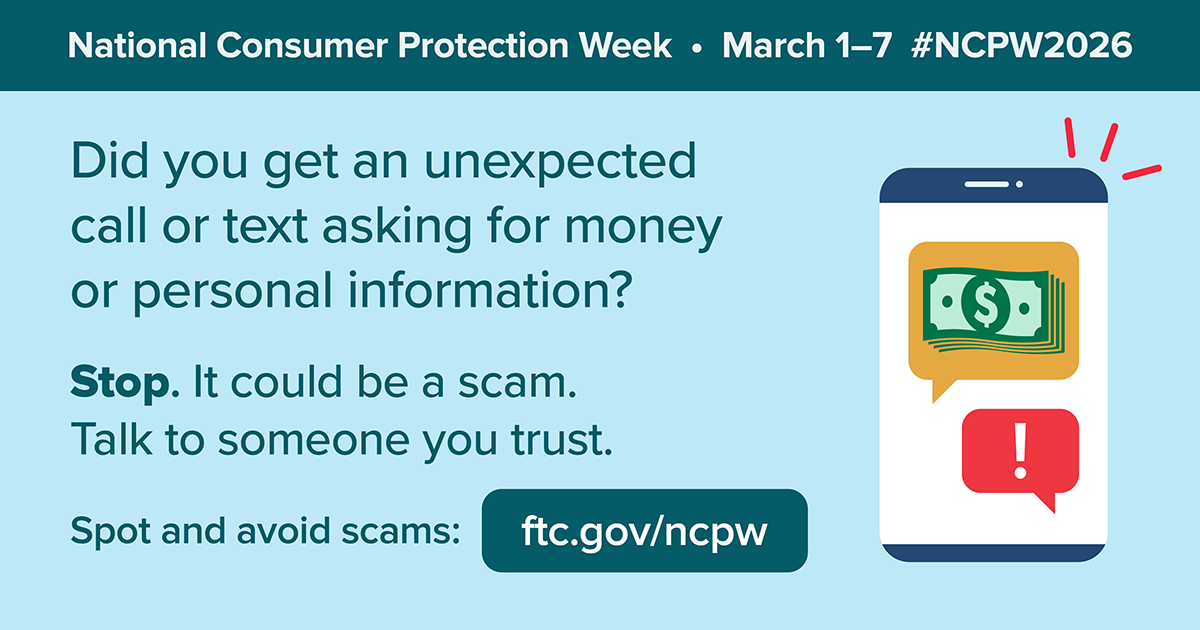
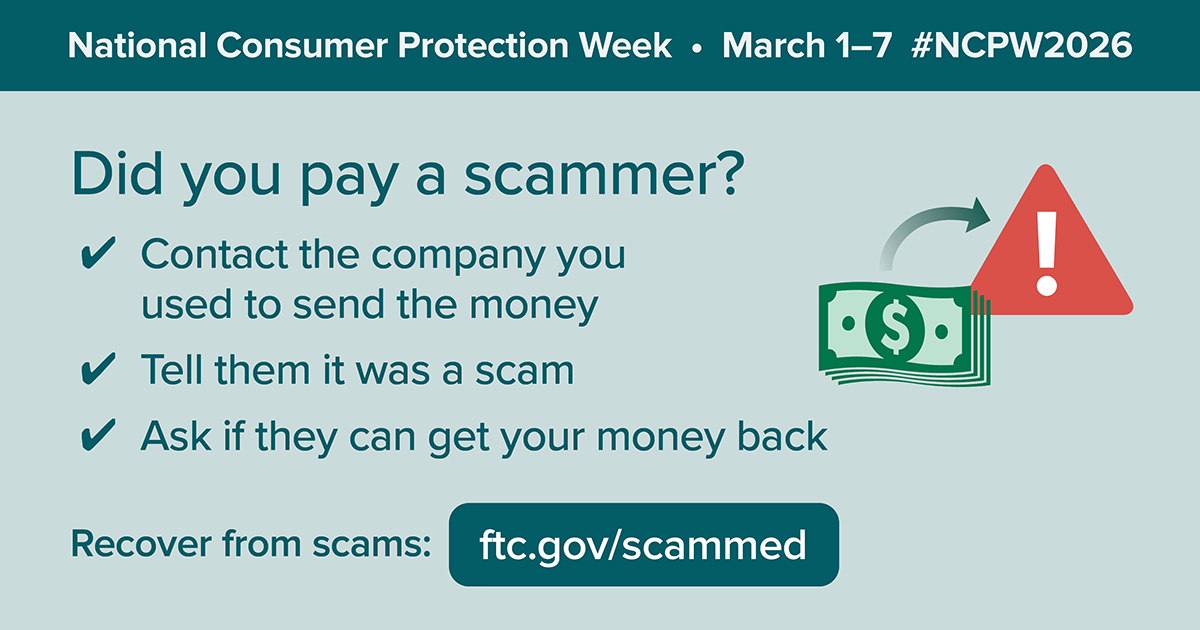
The FTC is using the first week of March (the 1st through the 7th) to push a simple message with three verbs that matter: avoid scams, report scams, recover from scams. The week is also packed with public events and practical tools you can share in a group chat, a classroom, a break room, or a neighborhood meeting.
Three verbs, one habit: avoid, report, recover
Avoiding scams rarely comes down to one magical trick. It looks more like a set of small frictions you add to your day: pausing before you click, verifying before you pay, and treating urgency as a warning label. The FTC’s National Consumer Protection Week hub organizes guidance around those “avoid, report, recover” steps, and it links out to focused topics like identity theft and job scams so you can zoom in on what’s hitting your community right now.
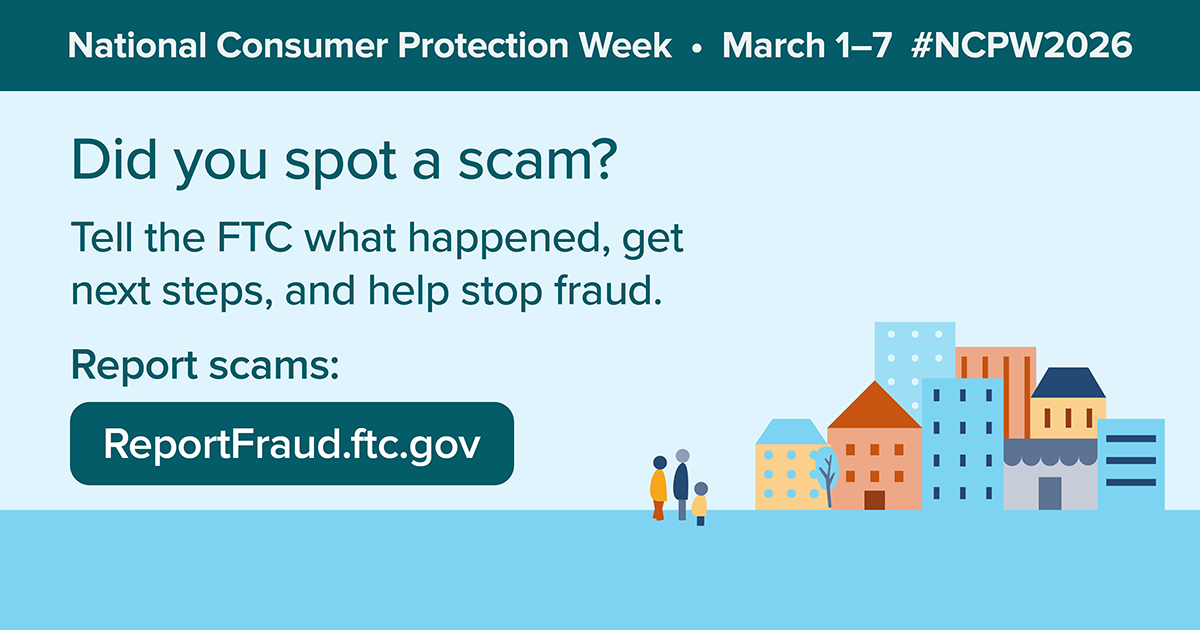
Reporting is where a lot of people freeze, partly because they assume it will not matter. The FTC asks consumers to report scams through its official portal, and those reports help the agency spot patterns and target enforcement and education efforts. If you are dealing with identity theft, IdentityTheft.gov is designed as a one-stop route to an FTC Identity Theft Report and a personalized recovery plan, which can be useful when you need to prove to companies that fraud occurred.
A week of “show up” moments: the 2026 event lineup
If you want a consumer protection boost that feels less like homework, the FTC has events baked into the week. Each day, the agency is sharing advice through its social channels, which can be helpful if you are looking for timely reminders to repost, forward, or discuss at home.
Teaching kids the internet is a place, not a toy
Parents already know the feeling: you are trying to explain why a “free” game skin costs real money, why a stranger’s DMs are not a friendship, and why a “too good to be true” giveaway is often bait. The kids webinar in the FTC’s lineup matters because it frames digital life as a set of skills, not a lecture, and it points adults to free resources that make those lessons easier to deliver.
A practical way to think about digital literacy is to treat it like driver’s ed for the online world. Kids need repetition, not a one time warning, and they learn fastest when the examples feel like their actual feeds and group chats. Focus on the everyday moments: spotting pressure tactics, recognizing impersonation, and understanding what personal information can do once it escapes into the wild. When families normalize talking about scams and sketchy messages, shame has less room to grow, and kids are more likely to speak up early, while the problem is still small enough to contain.
Small businesses and tax season: two places scammers love
Small businesses live in a target rich environment: invoices, payroll, customer data, vendor emails, social media accounts, and busy employees who are trying to move fast. The FTC’s small business cybersecurity guidance pulls together defensive basics and plain language recommendations, and NIST’s small business quick start resources can help owners organize security work in a more systematic way, even when they do not have an IT department.
Tax identity theft deserves its own spotlight because it can hit ordinary households, students, retirees, and families with kids claimed as dependents. The FTC explains that tax identity theft happens when someone uses your Social Security number and personal information to steal a refund or to get employment, and people often find out only when a return is rejected as a duplicate. The IRS offers an Identity Protection PIN, a six digit number known only to you and the IRS, designed to stop someone else from filing a return using your SSN or ITIN, and it is worth learning about before you are in a panic.
The simplest way to “participate” is to share the right door
Consumer Protection Week is not asking you to become a fraud detective. Think of it as a chance to hand people the right map before they get lost, the right form before they waste time, and the right website before a scammer sends them on a wild goose chase.
If you do one thing, pick one FTC resource that fits your world and pass it along: a school newsletter link for families, a short training moment for your staff, a reminder to report scams, or a quick conversation with a neighbor who keeps getting strange calls. The week runs March 1 to 7, 2026, and the ripple effect starts with one person deciding not to keep quiet about what happened.