

A Birthday Spent Inside College Football’s Story
Some birthdays come with cake and candles, others come with something more specific. For Alex’s 17th birthday, that “something” was a day at the College Football Hall of Fame. He had been talking about it for weeks, excited in a way that felt focused and genuine, especially since the experience isn’t just an ordinary day kind of thing.
In fact, the visit itself grew out of a promise. My husband, Joe, has mentored Alex through a local program for the past few years. After a failed attempt to visit the Hall last year, Joe promised Alex that they would try again. When the time came, the circumstances lined up in a way that allowed TrustDALE to help make the visit possible.
From the moment we walked inside, the Hall made it clear that connection was part of its design.
First Impressions That Set the Tone
The entrance opens onto a sweeping wall of helmets, suspended and carefully arranged, representing programs from across the country. Alex stopped immediately, scanning the rows, pointing out logos he recognized with tidbits of trivia thrown in. It was the kind of moment that set the pace for the day, curiosity first, movement second.
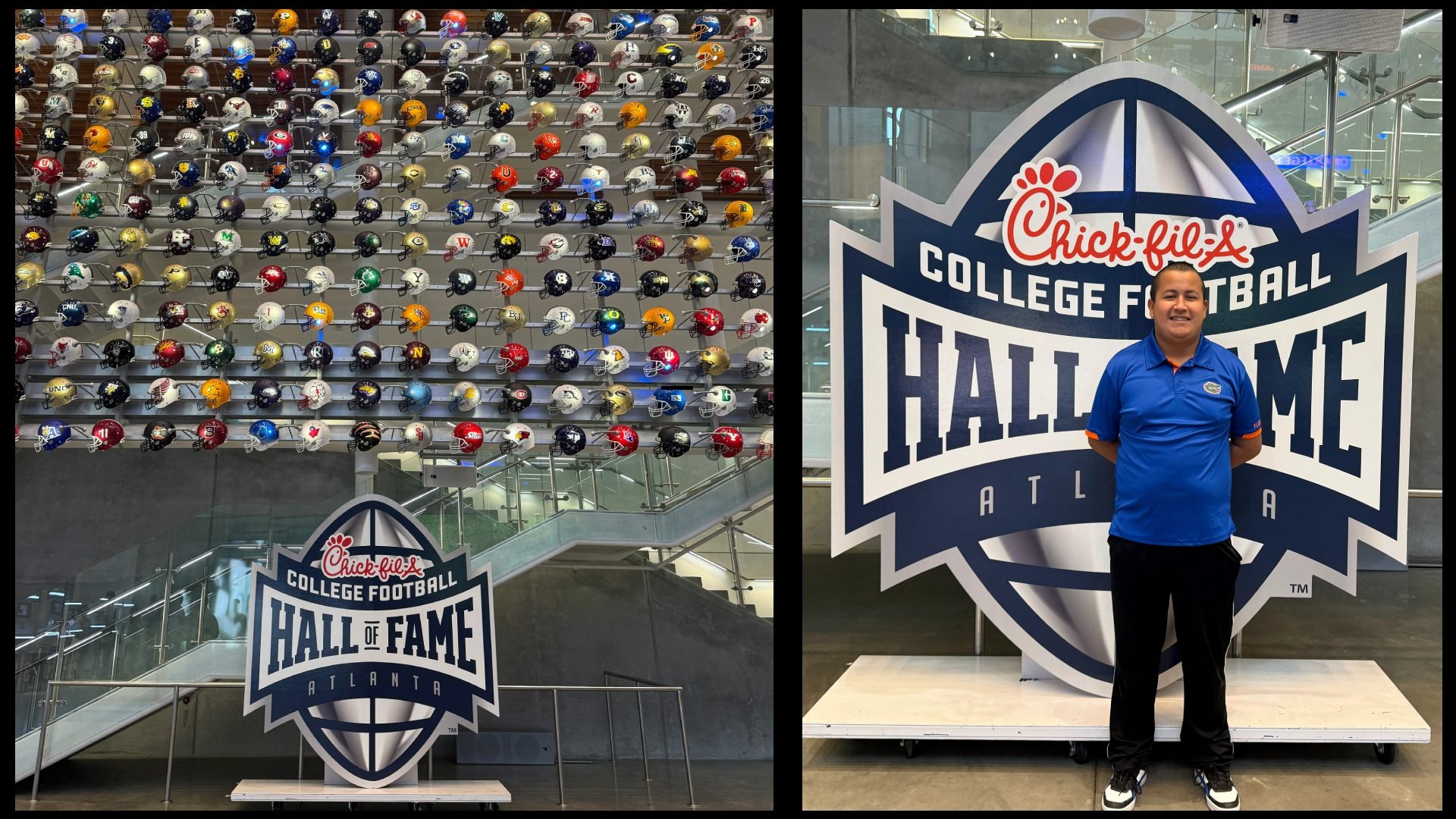
Our visit officially began as we were ushered over to these kiosk-type machines. We each stood in front of one, scanned our badges, and answered a few simple questions: favorite team, least favorite team, dream job, favorite tailgate food. Just small personal details that we didn’t understand the relevance of at the time.
Within seconds of finishing up at the kiosks, the Hall began tailoring our individual experiences, shifting from a general museum visit to something way more personally significant and entertaining.
Starting at the Top, Then Letting Curiosity Lead
We were encouraged to start on the top floor and work our way down, which gave all of us time to settle into the rhythm of the space. The uppermost level primarily exhibited the actual Hall of Fame. The large, circular room had little-to-no overhead lighting, instead relying on the bright glow emanating from hundreds of inductees’ name lining the outer walls. Dotting the middle of the room were large touchscreens that invited us to scan our badges. Alex was the first to notice how the Hall used our answers to give us a truly personalized experience. When he scanned his badge, we all watched as the inductees from his favorite school were displayed on the screen. He swiped through the names and images, drawn in by names he recognized and stories he hadn’t heard before.
I snagged a screen of my own, scanned my badge, and saw my name with a greeting flash on the screen. Just a few seconds later, standing in front of me almost like a hologram on the screen, was University of Alabama’s former head coach Bear Bryant. Swiping through, I “met” other former Bama coaches and players who had been inducted. Just like Alex, I came for the futuristic setup and stayed for the stories.
The Hall allows that kind of wandering, letting visitors decide when to linger and when to move on, without pushing them toward a single path. That was great for our little group, allowing each of us to play and learn on our own time and in our own ways.
Where History Becomes Interactive
The second floor shifts the experience in noticeable ways. This level hums with activity, blending history and culture and participation. Exhibits explore tailgating traditions, social rituals, music, uniforms, and artifacts that reflect how college football has been experienced across generations. Alex drifted easily between hands-on activities and visual displays, while Joe and I found ourselves circling back to moments that sparked conversation.
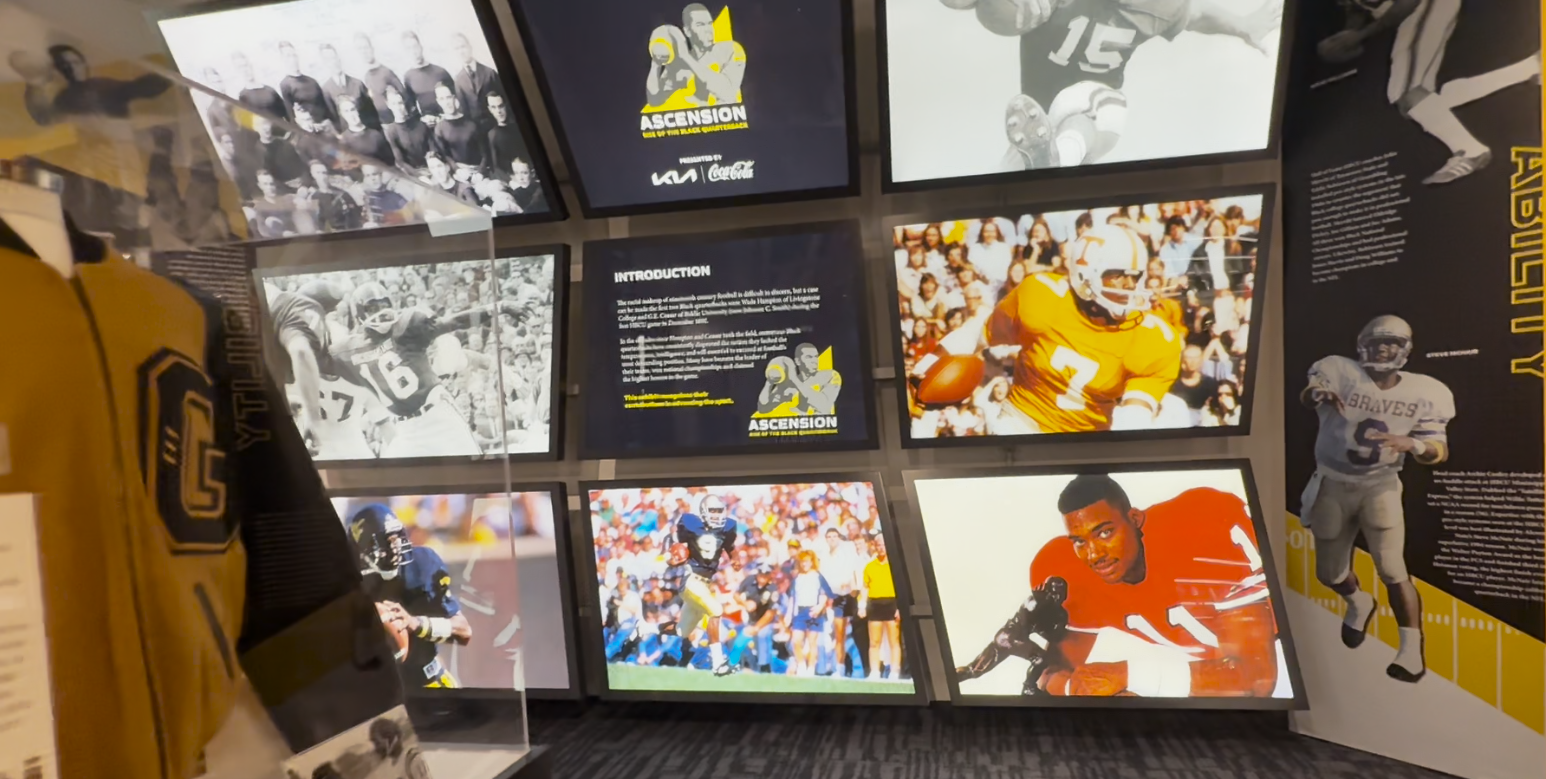
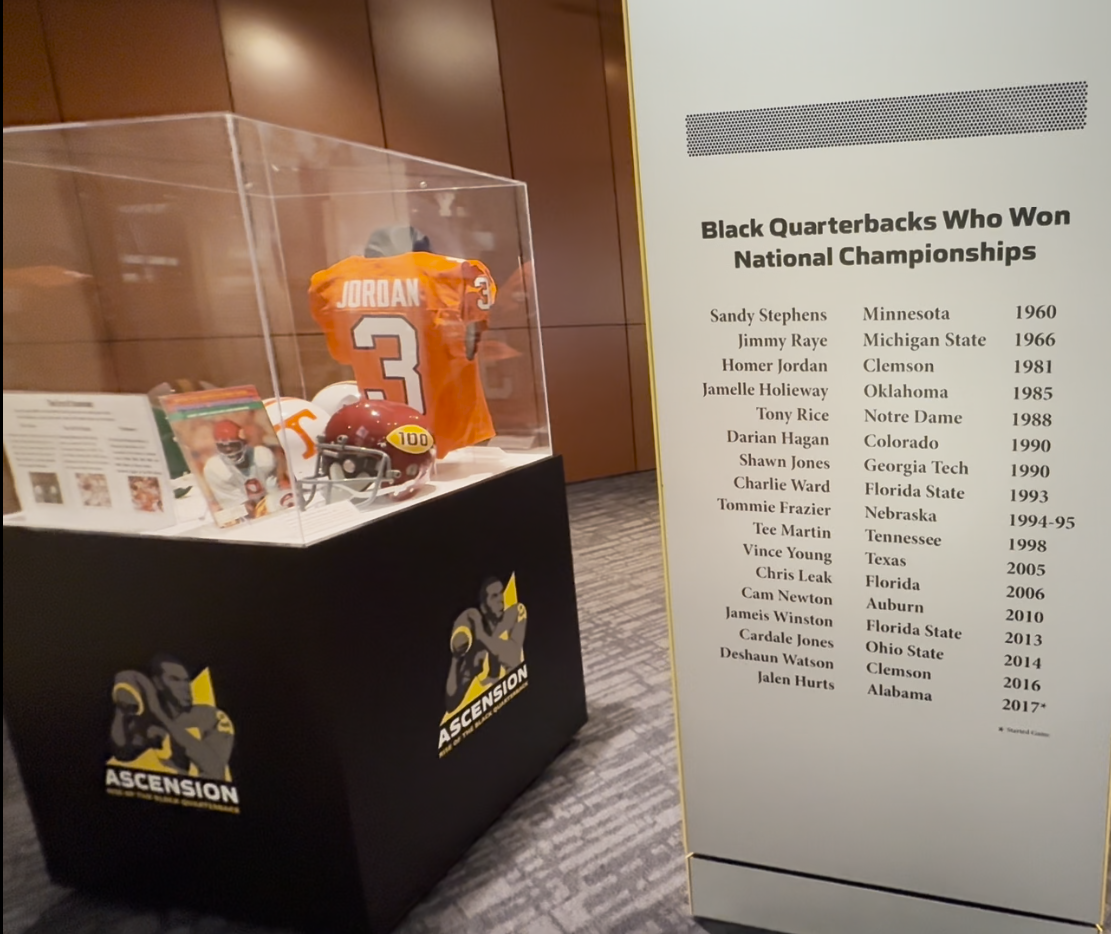
One exhibit slowed all of us down though. Ascension: Rise of the Black Quarterback is newly integrated and naturally draws attention. Through historical artifacts, imagery, and carefully framed context, the exhibit traces how Black quarterbacks challenged entrenched misconceptions and reshaped leadership at the sport’s most demanding position. Alex lingered here longer than I expected, reading names aloud and asking questions, while Joe and I filled in stories we remember watching unfold in real time.
Play, Personalization, and Shared Moments
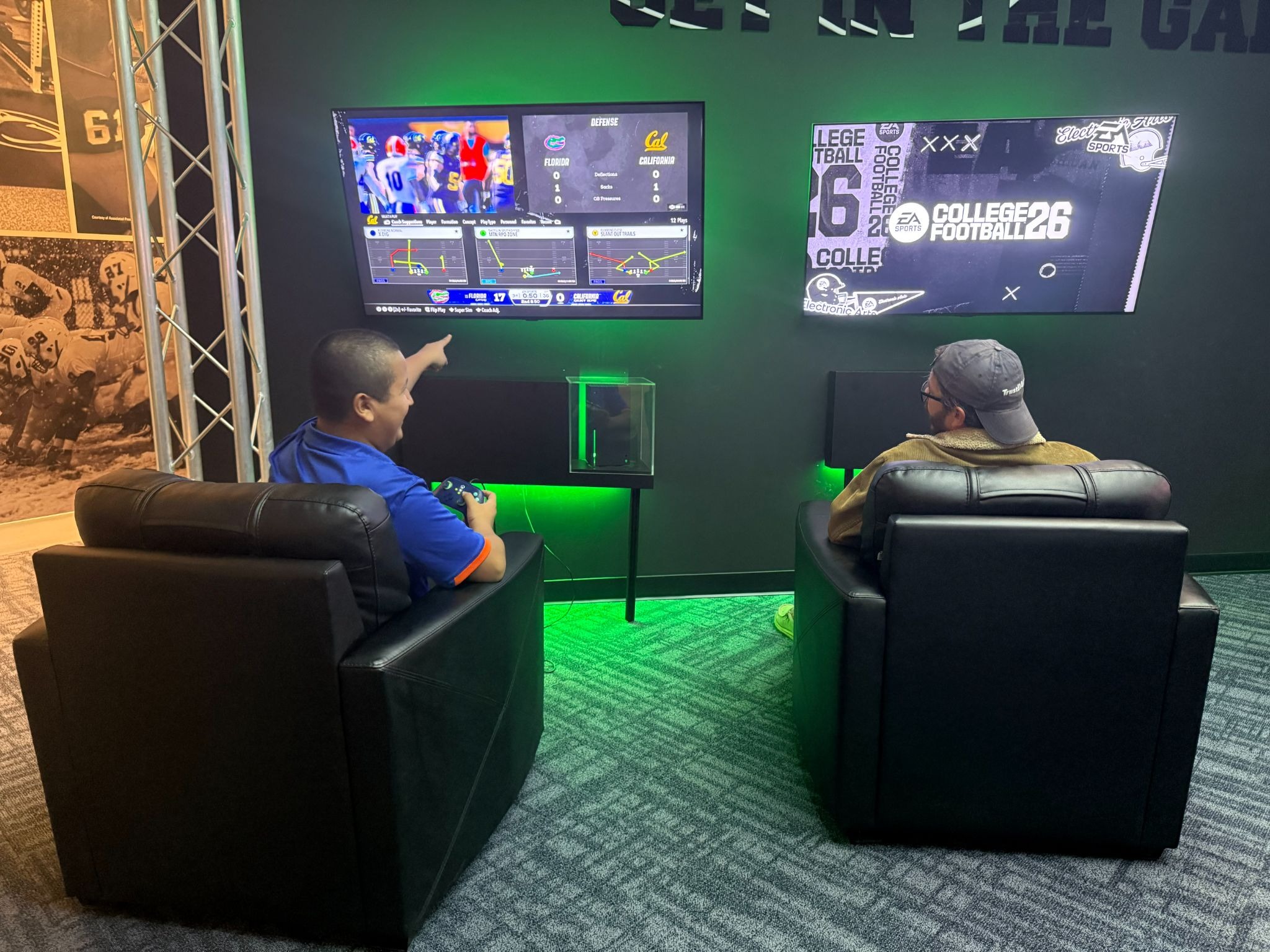
As the day continued, the experience leaned into playfulness. In the video game room, Alex sat down and watched the screen automatically generate a matchup between his favorite team and his least favorite team. His reaction was immediate, pointing at the screen and laughing as he realized the system had paid attention. Joe caught his eye and smiled, the kind of shared look that said this is exactly why we came.
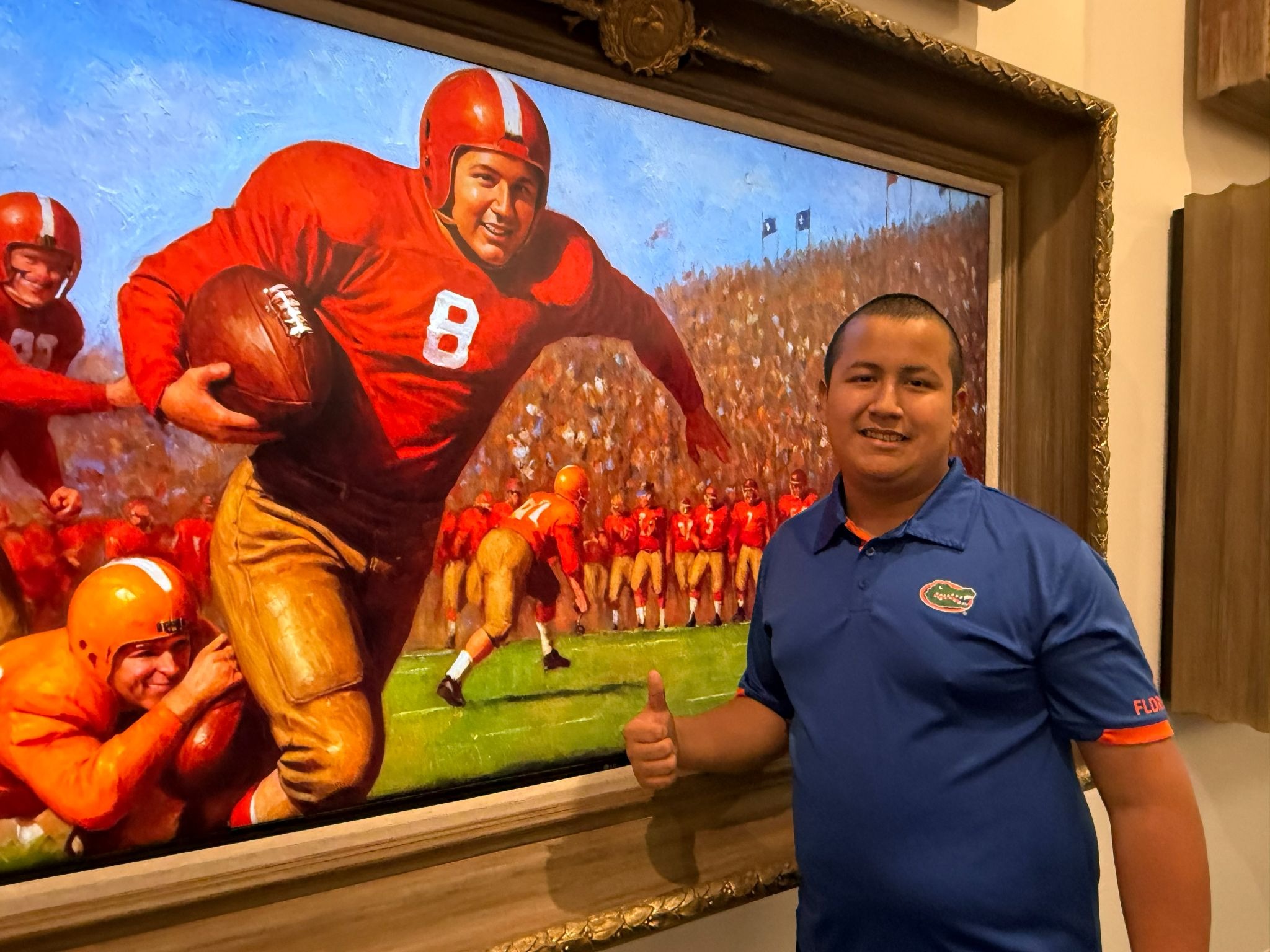
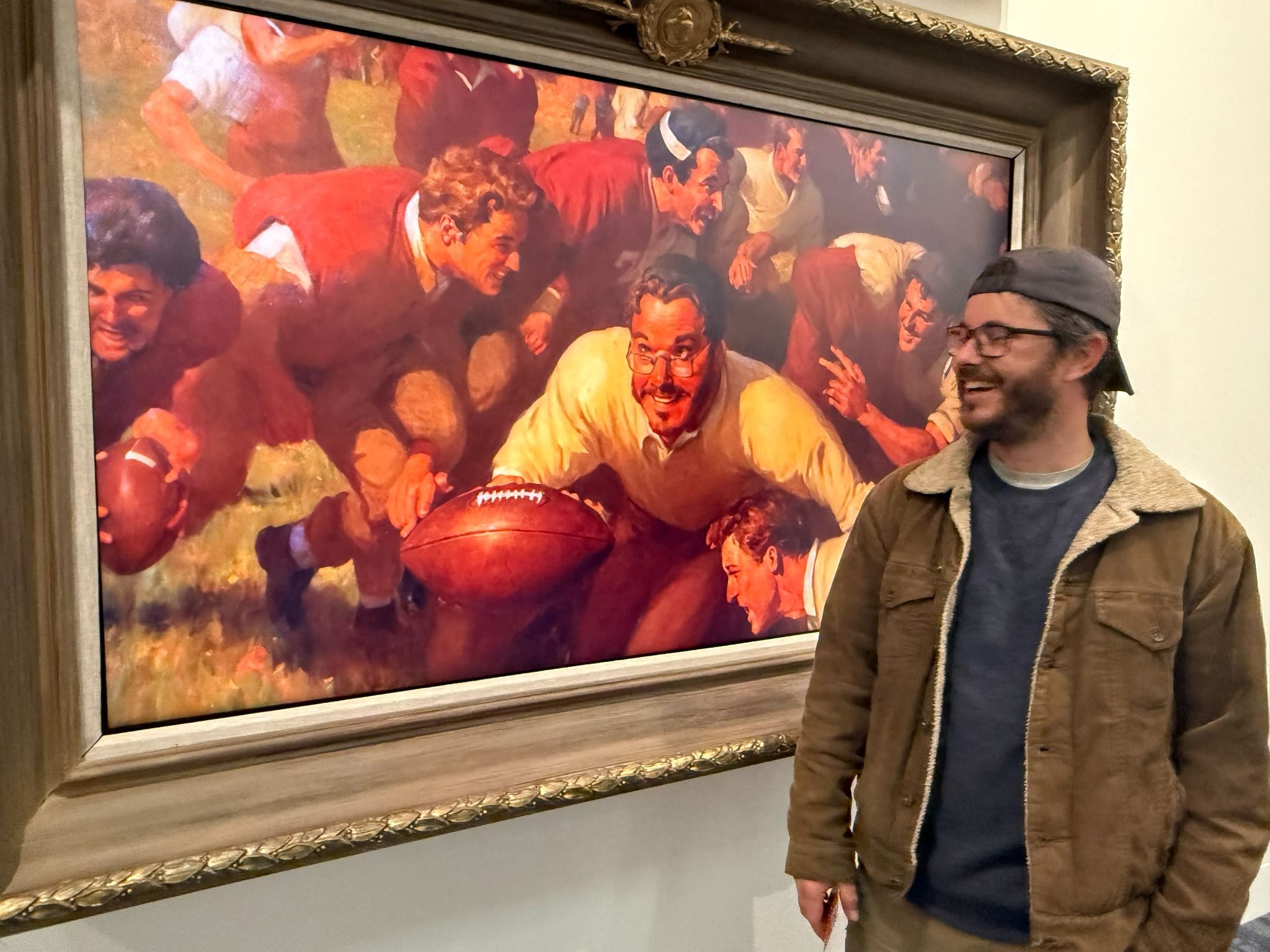
Artificial intelligence appeared throughout the Hall in ways that felt intentional rather than distracting. Visitors were placed into historic paintings, cast as coaches with fictional legacies, or turned into players complete with stats and commentary. Alex and Joe both took turns creating their own versions, comparing outcomes and laughing at the details. Standing nearby, it was easy to see how the technology invited participation without requiring deep knowledge to enjoy it.
The Field, the Challenge, and the Joy of Movement
The physical challenges brought everything back to the body. Alex stretched before attempting the simulated 40 yard dash, focused and determined, watching the screen closely as his results appeared. Later, he lined up on the indoor practice field and kicked clean field goals through the uprights, again and again. Each kick carried the same mix of excitement and disbelief that he was actually doing this.
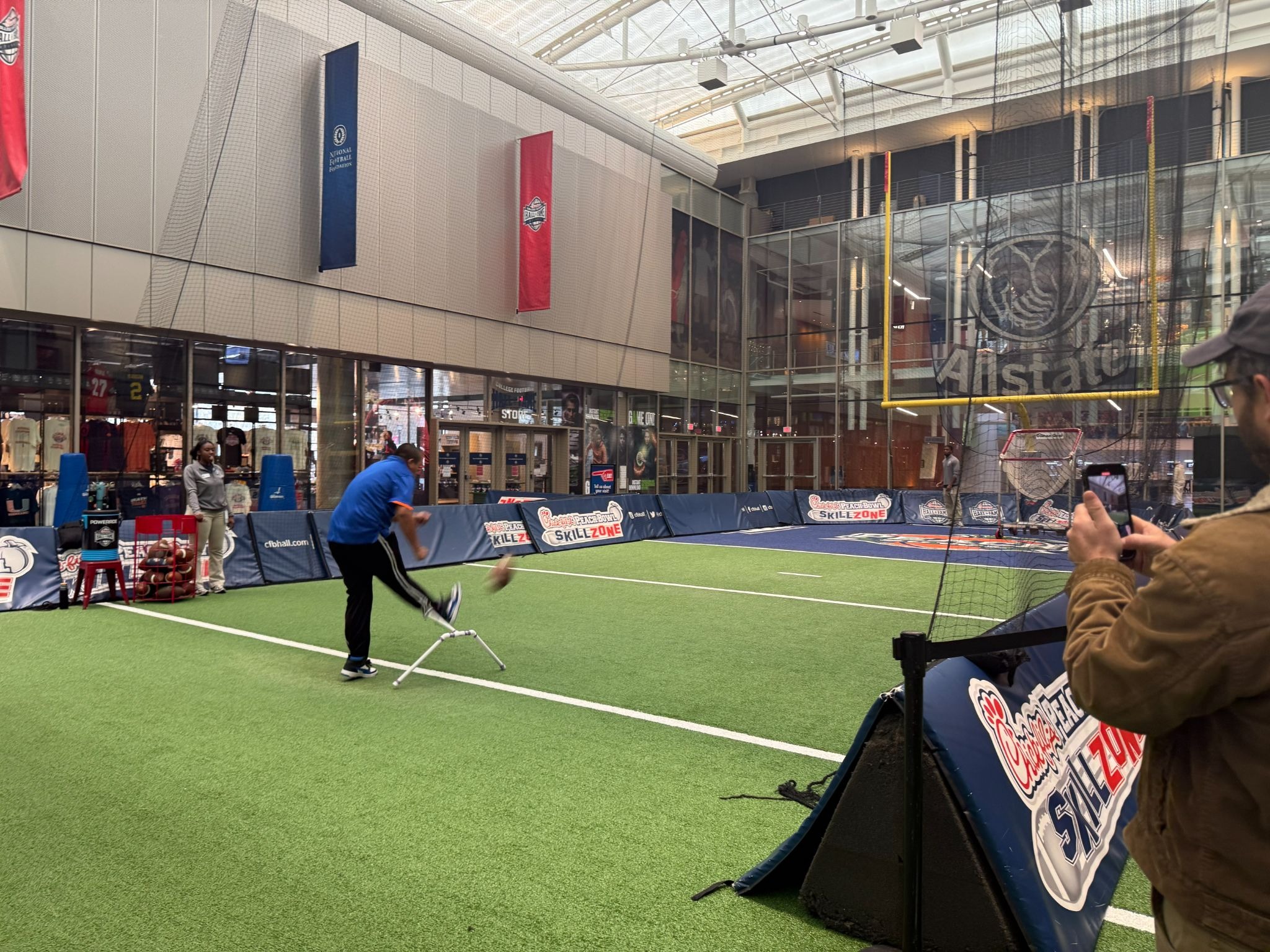
Families gathered along the sidelines, some cheering, some eating, others simply watching. Alex walked onto the field with confidence, then turned back with a grin that made it clear the moment mattered to him. Joe stayed close, offering encouragement without interrupting the experience.
Why the Experience Works
We spent more than three hours inside the Hall and still left knowing there was more to see. Entire sections barely explored, a screening room, and even more artifacts and memorabilia all waiting for our next visit. That lingering sense of unfinished discovery speaks to how thoughtfully the space is designed, especially for visitors who want to return and experience it differently over time.
What stood out most was how accessible everything felt. Alex moved easily between learning and play, while Joe and I engaged with history we already knew and details we never noticed before. The Hall adjusted quietly to each of us, allowing different levels of knowledge and interest to coexist without friction.
For TrustDALE, moments like this are reminders that advocacy does not always look like warnings or investigations. Sometimes it looks like access, education, and giving someone the chance to step into an experience that stays with them.
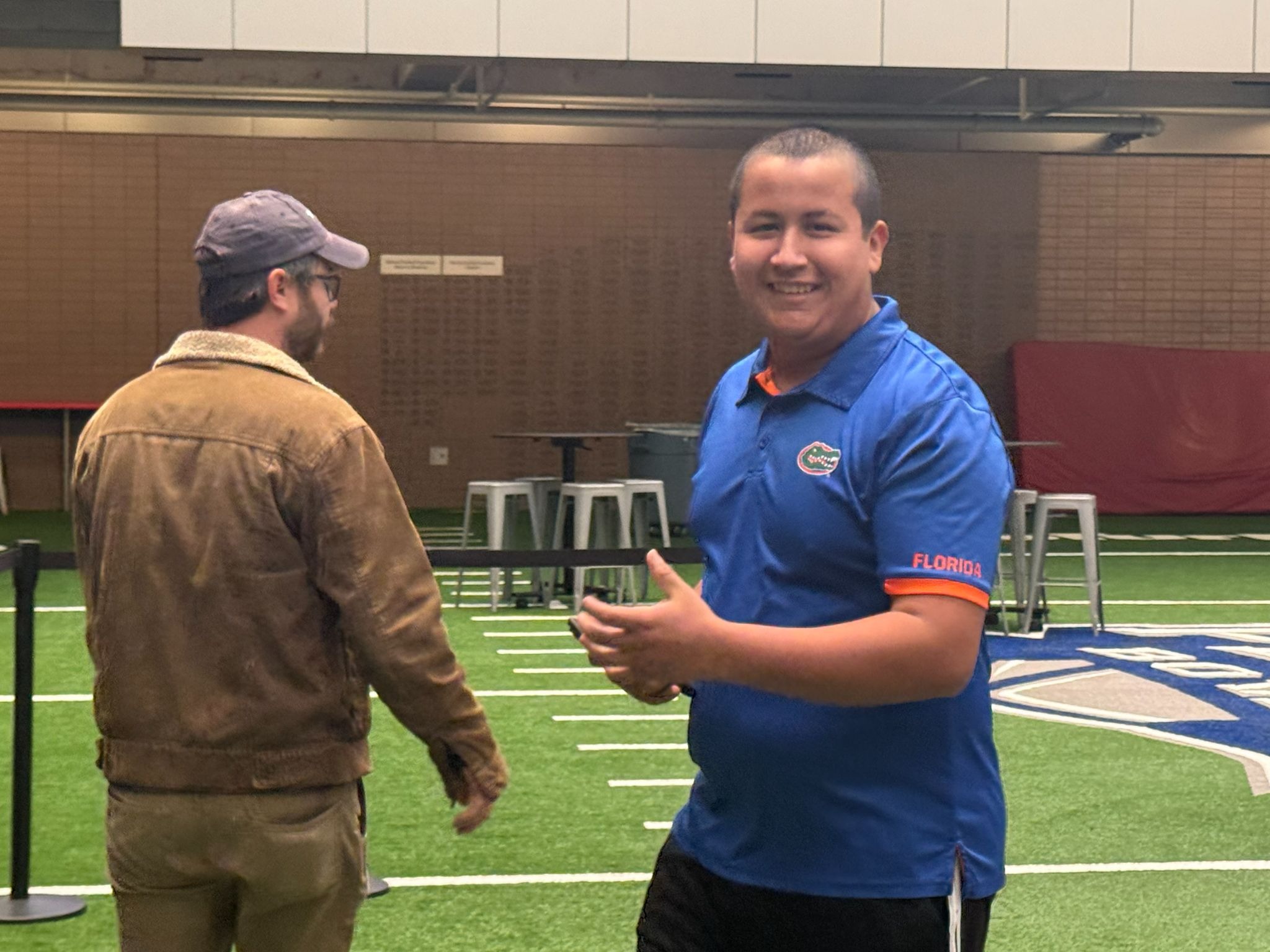
As we walked out, it was clear the day had done more than celebrate a birthday. It honored a promise, strengthened a relationship, and created a memory that will be talked about long after the details blur. The kind of experience that invites you back, knowing you will notice something new the next time.