

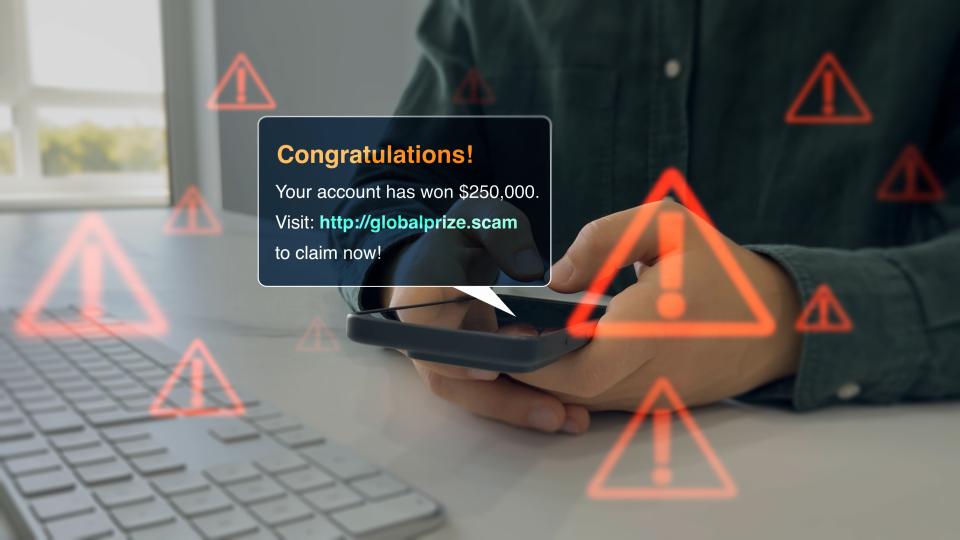
If a stranger calls to announce that your luck has finally arrived, your first reaction might not be suspicion. It might be curiosity, or maybe that tiny spark that says, well, that would be nice. Prize scams always open with excitement, which is exactly what makes them so doggone slippery. Once you get the “good news”, that’s exactly when the trouble starts.
In today’s blog, you’ll learn how prize scams usually work, which phrases should make you immediately skeptical, and what to do if a so-called “prize” comes attached to pressure, fees, or urgency.
A real win is something you brag about – not something you end up having to explain to your bank.
The Confetti Cannon Is Usually a Trap
Prize scams tend to follow a script because the script still works. Someone calls, texts, or emails saying you’ve won something flashy: cash, a car, a vacation, electronics, maybe even some grand sweepstakes jackpot with a name you recognize. To make it sound official, the caller may borrow the identity of a known company or claim they’re tied to a respected promotion. The point is not creativity. The point is credibility.
Then comes the catch, and that’s where the whole thing falls apart. You’re told you need to pay taxes upfront, cover delivery fees, handle insurance costs, or send a processing payment before your prize can be released. That is the rotten core of the scam. The FTC’s recent consumer alert makes this plain: if someone says you have to pay to collect a prize, it’s a scam.
Real prizes are free, and real sweepstakes companies do not demand money before handing them over.

The Red Flags Usually Show Up Fast
The first giveaway is simple: you never entered anything. That alone should be enough to stop the conversation in its tracks. People don’t usually win contests they forgot about, especially when the caller expects immediate action and already has a polished explanation for why you need to pay now.
The second giveaway is pressure. Scammers love urgency because it cancels out judgment. They’ll say the offer expires today, the claim window is closing, or your file has to be processed right away. It’s sales pressure dressed up as opportunity. Any stranger trying to hustle you into a payment before you’ve had time to think is not helping you, they’re trying to outrun your common sense.
There’s also the matter of payment method, which often tells the whole story. Scammers tend to ask for hard to reverse payments such as wire transfers, gift cards, cryptocurrency, or payment apps. No legitimate prize operation is waiting breathlessly for you to read a gift card number over the phone.
That’s not how winning works.
That’s how getting fleeced works.
How to Slow the Whole Thing Down
The smartest move is also the least dramatic one: pause. Don’t argue, don’t explain, and definitely don’t let a stranger keep you on the phone long enough to build momentum. Scammers count on your emotions taking control of the wheel. When you slow down, their pitch starts to wobble.
Next, research the name they gave you. Look up the contest, the company, and the exact phrase they used, along with words like complaint, review, or scam. That one search can pop the balloon in seconds. The FTC recommends checking unexpected prize claims instead of trusting what a caller says on the spot. They also offer scam guidance and action plan resources that help people respond more clearly when a suspicious message lands in their lap.
A good rule to keep in your back pocket is this: good news does not require secrecy, speed, or a service fee. If the person on the line is pushing any of those, you’re not dealing with a prize desk. You’re dealing with a performance.

What to Do If the Call Caught You Off Guard
Even smart, careful people get rattled by these calls. That’s not a character flaw. It’s the whole design. Prize scams are engineered to make people feel lucky before they have time to feel cautious. If you picked up, listened, or even started to wonder whether it might be real, that doesn’t mean you failed some test. It means the pitch was built to get under your guard.
If you did send money or shared information, move quickly. Contact your bank or payment provider right away, secure any accounts that may be affected, and report what happened at ReportFraud.ftc.gov. The FTC uses those reports to track patterns and support enforcement efforts, which means your report may help more than just you. At the very least, it helps turn one scammer’s quiet little operation into a visible trail.
The Prize Worth Keeping Is Your Skepticism
There’s nothing wrong with hoping for good news. There is, however, a lot wrong with paying someone to prove it’s real. Prize scams work because they hijack a pleasant fantasy and rush it straight toward your wallet. Once you know the pattern, the whole thing gets a lot less glamorous.
So the next time a stranger calls with life changing winnings, treat it like a smoke detector, not a celebration. Step back, verify, and remember the simplest rule in the room: if a prize costs money to claim, it isn’t a prize. It’s bait.