

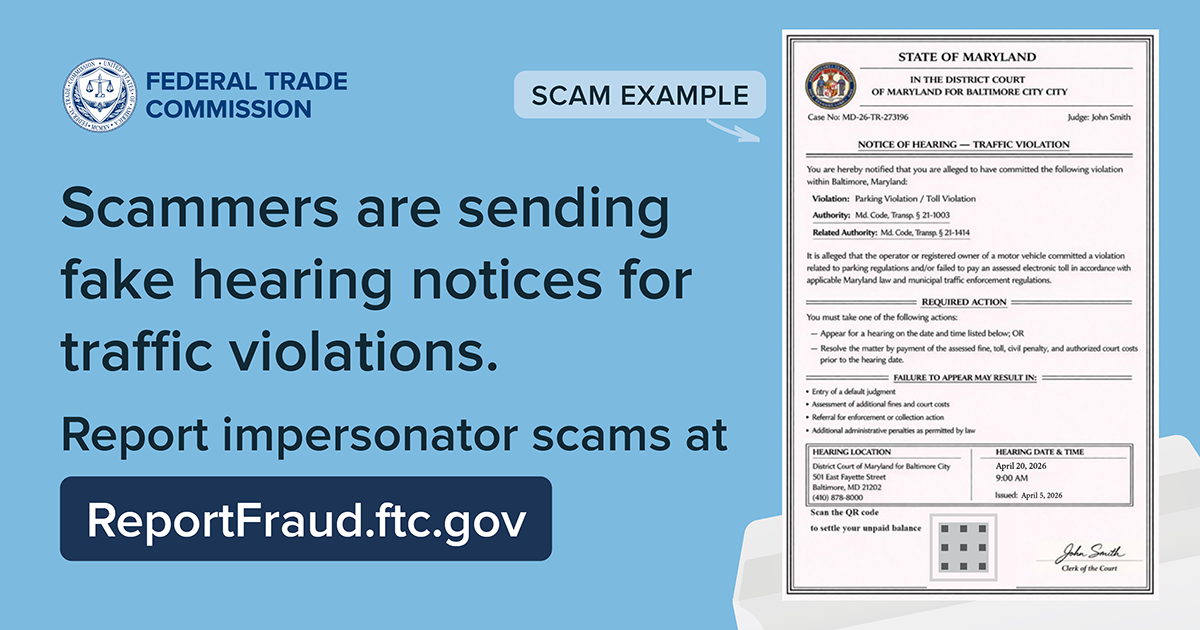
A text message about a traffic violation can feel urgent, even a little unsettling. It’s supposed to – in fact, it’s literally designed that way. Lately, more people are receiving messages that look official, complete with case numbers, hearing dates, and even state seals, all pushing you to act fast.
In this blog, you’ll learn how this scam actually works, why it’s so convincing, and what steps you can take to protect yourself. We’ll also walk through what to do if you’ve already interacted with one of these messages so you can limit the damage quickly.
The Anatomy of a Convincing Scam
At first glance, these messages don’t look like scams at all. They often include what appears to be a formal notice of a traffic violation, sometimes with a scheduled hearing date and time. The message usually gives you two options: show up in court or pay the fine immediately.
That’s exactly where things start to unravel. Instead of directing you to a legitimate government website, the message includes a QR code. Scanning it takes you somewhere you were never supposed to go. Behind that code is often a phishing site designed to collect personal or financial information, or worse, install malware on your device.
The pressure is intentional. These texts often warn about consequences like default judgments, additional fines, or enforcement actions if you don’t act right away. It’s a classic tactic, create urgency, reduce hesitation, and push you into making a quick decision you wouldn’t normally make.
The Federal Trade Commission recently reported a surge in these types of scam messages, highlighting how quickly they’re evolving and spreading.
Why QR Codes Make This Scam More Dangerous
QR codes feel harmless. Most of us use them to view menus, pay for parking, or check into events. That familiarity is exactly why scammers are leaning on them.
When you scan a QR code, you’re skipping the step where you’d normally evaluate a website address. You don’t see a suspicious URL ahead of time, you just land wherever the code sends you.
That lack of visibility creates an easy opening for fraud. Once you’re on a fake site, it might ask for payment details, Social Security numbers, or other sensitive information under the guise of resolving your “violation.” In some cases, it may trigger downloads that compromise your phone. After all, it's not just about money, it’s also about access.
Red Flags You Shouldn’t Ignore
Even well-crafted scams leave clues. You just have to know where to look.
- Unexpected text about a traffic violation you don’t remember
- Urgent language pushing immediate payment or action
- QR codes instead of official website links
- Threats of legal consequences without prior notice
- Requests for sensitive personal or financial information
Real government agencies don’t operate this way. They don’t demand immediate payment through text messages, and they don’t rely on QR codes to resolve legal matters.
What to Do Instead of Reacting
If you get a message like this, don’t engage with it. Don’t reply, don’t click, and definitely don’t scan the QR code.
If there’s even a small chance the notice could be legitimate, verify it independently. Look up the court’s official website yourself or call a verified number. Never use contact information provided in the text message.
That extra minute of caution can save you from a much bigger problem.
Already Fell for It? Act Fast
If you’ve already scanned the code or entered information, time matters.
Start by contacting your bank or credit card company to flag potential fraud. Change any passwords that may have been exposed, especially for financial accounts. Monitor your statements closely for unusual activity.
You should also report the incident to the FTC through their fraud reporting portal. It helps investigators track patterns and warn others before the scam spreads further.
Why Awareness Is Your Best Defense
Scams like this rely on your behavior. They count on people being busy, distracted, or worried enough to act without verifying. The more familiar these tactics become, the less effective they are. Awareness slows scammers down, forces them to work harder, and in many cases, move on.
If something feels rushed or overly official in a text message, that’s your cue to pause. Real institutions don’t need to pressure you into immediate action through a text, but scammers do.
Staying informed isn’t just helpful. It’s one of the strongest protections you have.