


A phone call about missed jury duty can knock the air out of a normal day. Most people don’t deal with courts often, and scammers know how to use that gap. When someone claims there’s a warrant for your arrest, fear can move faster than judgment, especially when the caller sounds official and already knows pieces of your personal information.
The Federal Trade Commission recently warned consumers about a jury duty scam that has become more convincing. Scammers are still calling people and threatening arrest, but some now follow up with texts or emails containing fake warrant documents. In this guide, you’ll learn how the scam tends to unfold, which details should make you stop, and how to verify the story before anyone talks you into paying a fake fine.
When the Call Sounds Official
The scam often starts with a caller who uses stern language, legal phrases, and the kind of authority that makes people hesitate. They may claim to work for the U.S. Marshals, a local police department, or another agency that sounds close enough to legitimate law enforcement. The story is usually direct: you missed jury duty, a warrant has been issued, and payment must be made right away to avoid arrest.

Some callers may already know your full name, address, or other personal details. That can make the conversation harder to dismiss, but it doesn’t prove the call is real. Personal information can circulate through public records, old accounts, data breaches, social media, and places consumers never know about until a scammer uses it against them.
Go ahead and type in your full name in quotation marks using your favorite search engine.
You might be surprised by how much of your information is publicly available.
A scammer doesn’t need a full dossier to create pressure. Just a name, a city, a confident voice, and a threat can keep a lot of folks on the phone longer than they intended.
The Fake Warrant Is Part of the Trap
The newer version of this scam adds a document to the performance. After the call begins, the scammer may send a text or email with what appears to be an arrest warrant. It may include legal wording, a seal, your name, a case number, or an amount supposedly owed for missing jury duty.
According to the Federal Trade Commission, those documents are fake. Real law enforcement will not text or email you an arrest warrant. Courts also don’t demand payment over the phone.
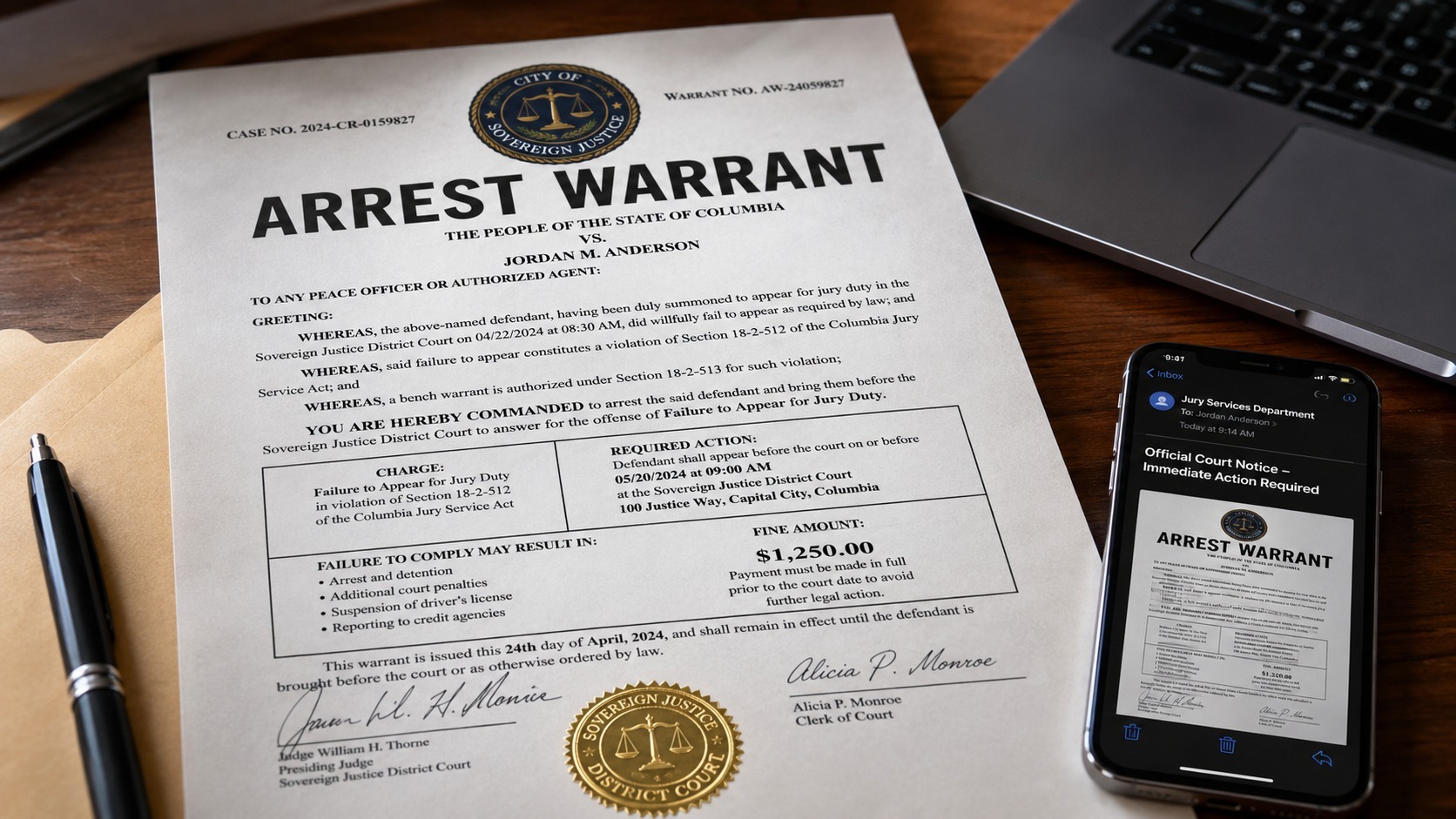
That document is meant to sharpen the threat. Scammers know a visual prop can make a shaky story seem solid, especially when it arrives while someone is already rattled. Don’t treat a texted or emailed warrant as proof. Treat it as a warning sign.
The Payment Request Gives It Away
The payment demand is often the clearest clue. Scammers may tell you to pay through a payment app, cryptocurrency, gift cards, Western Union, MoneyGram, or another wire transfer service. Criminals favor those methods because the money can disappear quickly and may be difficult to recover.
Government agencies don’t require payment that way. The court system won’t call out of nowhere and demand instant payment over the phone. Law enforcement officers don’t threaten to arrest you if you hang up.
Watch especially for these warning signs:
• The caller says you missed jury duty and must pay immediately
• The caller threatens arrest if you disconnect
• A fake warrant arrives by text or email
• The caller demands payment through cryptocurrency, gift cards, wire transfer, or a payment app
• The caller ID appears to show a police department, court, or federal agency
Caller ID can be spoofed. A number that looks official should never carry the whole weight of your decision.
How to Check Without Getting Pulled In
The safest move is to end the call. Don’t explain, debate, or follow instructions from the person who contacted you. If you’re worried there could be a real court issue, look up your local court’s official website or phone number yourself and contact them directly.
Don’t use a number the caller provides.
Don’t click links in the message.
Don’t open attachments sent by the scammer. Even when the fake document is meant mostly to scare you, links and downloads can create new problems.
Consumers who receive one of these calls can report it to the FTC at ReportFraud.ftc.gov. Anyone who already paid should act quickly, especially if the payment involved a bank account, payment app, credit card, gift card, wire transfer, or cryptocurrency.
Give Yourself Permission to Pause
Scammers want the conversation to move at their speed.
Verification moves at yours.
Before you pay anyone who contacts you unexpectedly, especially someone using threats, step away from the pressure and check the story through an official source. Here at TrustDALE, we encourage consumers to treat fear-based payment demands as a reason to slow down, ask better questions, and verify before sending money.
A legitimate issue can survive a phone call ending. A scam usually can’t.