
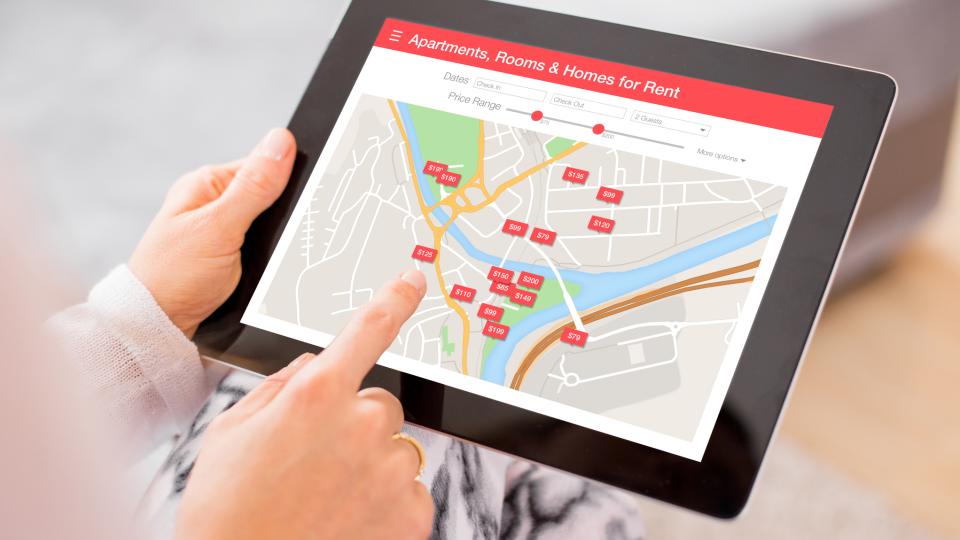
A downtown Atlanta apartment listing appeared to offer an unusually affordable home. Instead, it led Corey Mayville to a Bitcoin ATM, a vanished contact, and an address that was not an apartment at all.
Rental searches often happen under pressure, when a low price and a quick answer can feel like a way out of a difficult situation. That pressure is what made a convincing-looking listing so costly for Corey Mayville.
His case shows why reviews, identification photos, and a polished online profile are not enough to prove that a rental listing is real.
A Deal That Looked Made for Downtown Atlanta
Mayville was searching for a one-bedroom, one-bath apartment in downtown Atlanta when he found a listing that seemed unusually appealing. The rent was listed at $620 per month, and the property appeared to offer the features many renters struggle to find in the city:
- A downtown location
- A dog-friendly home
- Two parking spaces
The listing seemed to answer several problems at once. For someone trying to secure housing, an offer like that can create a strong incentive to move quickly before another applicant takes it.

Why the Listing Seemed Credible
Mayville did not send money without first trying to check the person presenting the property. He looked at a HomeAway profile connected to the name Anthony Thomas Hall and saw five-star reviews from 10 people. He also received a photograph of a passport.
Those details created the appearance of a legitimate owner with a history of satisfied renters. However, a profile, reviews, and a document image do not establish that the person offering a property owns it or has authority to rent it. A name can be used without permission, and a passport photo can be copied, altered, or obtained from another source.
Mayville believed he had done his due diligence. Yet the verification focused on the identity presented online, not the property itself.
The $800 Bitcoin Deposit and the Warning Signs
To secure the lease, Mayville deposited $800 into a Bitcoin ATM. Bitcoin is a digital currency that does not move through a traditional bank account, which can leave a victim with fewer paths to challenge or reverse a payment after the funds have been transferred.
After he paid, the contact grew harder to reach. Mayville later realized that the person had avoided giving him a phone number and had stopped responding to emails. Five days after the payment, he went downtown to look at the address in person.
The promised one-bedroom apartment did not exist. The location was a school building slated for demolition.
The most persuasive part of a fraudulent rental listing is often the part that appears easiest to verify.
Mayville described his frustration as an 11 out of 10. The financial loss mattered, but so did the feeling that someone had taken money he worked hard to earn.
The case did not turn on a complicated contract or hidden clause. It turned on a false property offer, an irreversible payment method, and a listing that was never tied to a real residential unit.
How Renters Can Verify a Listing Before Paying
An attractive listing deserves more scrutiny, not less. Renters can reduce the chance of losing a deposit by verifying the property and the person offering it before funds change hands.
First, the address should be checked in person whenever possible. A walk-by can reveal whether the building is residential, occupied, under construction, or plainly inconsistent with the listing. A landlord who refuses to allow a showing before requesting a deposit creates a serious concern.
Next, renters should speak with the person offering the property by phone or video call. Email-only communication gives a fraudster more room to control the story and avoid simple questions. The conversation should include details about access, the lease, the property's current condition, and who will handle maintenance.
Payment method matters as much as the listing itself. Security deposits should not be sent through Bitcoin ATMs or other methods that leave no practical way to dispute a transaction. A written lease and a traceable payment record provide a clearer paper trail if a disagreement arises.
Finally, online reviews should be treated as one clue, not proof. Reviews may relate to a different service, a different property, or an account that does not belong to the person behind the current listing. A copied passport image can create the same false confidence.
What Happened After Dale Stepped In
Dale Cardwell met Mayville after the discovery at the demolition-bound school building. Although Mayville acknowledged that he had missed warning signs, the circumstances still called for empathy. Rental fraud often succeeds because it copies the normal signals people use to assess trust: good reviews, documentation, and a seemingly responsive property owner.
TrustDALE stepped in and refunded Mayville's $800 deposit. The moment brought visible relief, because the money represented far more than a line item in an apartment search. It was money already set aside for housing, taken during a period when Mayville needed a home.
The refund did not erase the experience, but it addressed the immediate loss and placed the focus where it belonged: on the conduct that made the listing possible.
Consumer Protection Extends Beyond Rental Listings
The same principle applies when consumers hire contractors, repair technicians, or property vendors. Homeowners and business managers often face urgent decisions after a leak, equipment failure, fire, or other expensive problem. A rushed choice can expose them to poor work, unclear pricing, or payments that are difficult to recover.
For that reason, vetting matters when selecting Home Service Companies and Commercial Service Companies, not only when searching for housing. A directory of vetted home service providers can help consumers begin with companies that have been reviewed for accountability and service standards.
A real address, a direct conversation, clear written terms, and a traceable payment are basic safeguards. None of them guarantees a perfect outcome, but each one makes it harder for a false offer to survive inspection.
The Lasting Lesson From a Fake Apartment Listing
Corey Mayville's $800 loss began with a deal that looked unusually favorable and ended at a building that could never have been his home. The gap between those two facts is where rental scams operate.
The safest rental decision is rarely the fastest one. Verification before payment remains the clearest protection against a deposit that disappears before the lease ever begins. And while TrustDALE was able to make Corey whole, your best defense is spotting a scam before you become a victim. You can find all the tools you need to become an expert scam detective with Dale Cardwell's best-selling book "Don't Get Scammed, Get Smart!: Seven Steps to Outsmart Today's Most Dangerous Post-COVID Scams" available on Amazon.