

Spring has a way of making everything look manageable right up until the skies open. One hard rain can expose problems that have been quietly building all winter, especially along the roofline. When gutters are packed with leaves, grit, and shingle granules, water stops moving where it should and starts looking for other places to go.
That’s why this job deserves attention before storm season gets comfortable. This next blog in our Spring into Action series will explain why spring gutter cleaning matters, what a proper cleanup should include, how to tell when the work has moved beyond DIY territory, and what to look for when hiring a professional to get the house ready for heavy rain.
The Small System That Protects the Whole House
Gutters do not get much credit until they fail. Their job sounds simple, but the impact reaches far beyond the edge of the roof. When water is carried away properly, it helps protect fascia boards, soffits, siding, landscaping, and the area around the foundation. When water backs up, it can spill over the sides, pool near the house, and soak places that were never meant to stay wet.
That matters even more in spring, when repeated rounds of rain can arrive with very little patience. FEMA advises homeowners to clean and maintain gutters and downspouts as part of reducing flood risk around the home. Ready rain management is not glamorous, but it can spare a homeowner from a much bigger repair story once storms settle in.
What a Real Spring Gutter Cleanup Should Include
A proper spring gutter cleaning is not just someone scooping out leaves and calling it a day. The debris has to come out, of course, but that is only the beginning. The system should also be checked for loose fasteners, sagging runs, separated joints, and downspouts that are blocked or dumping water too close to the home.
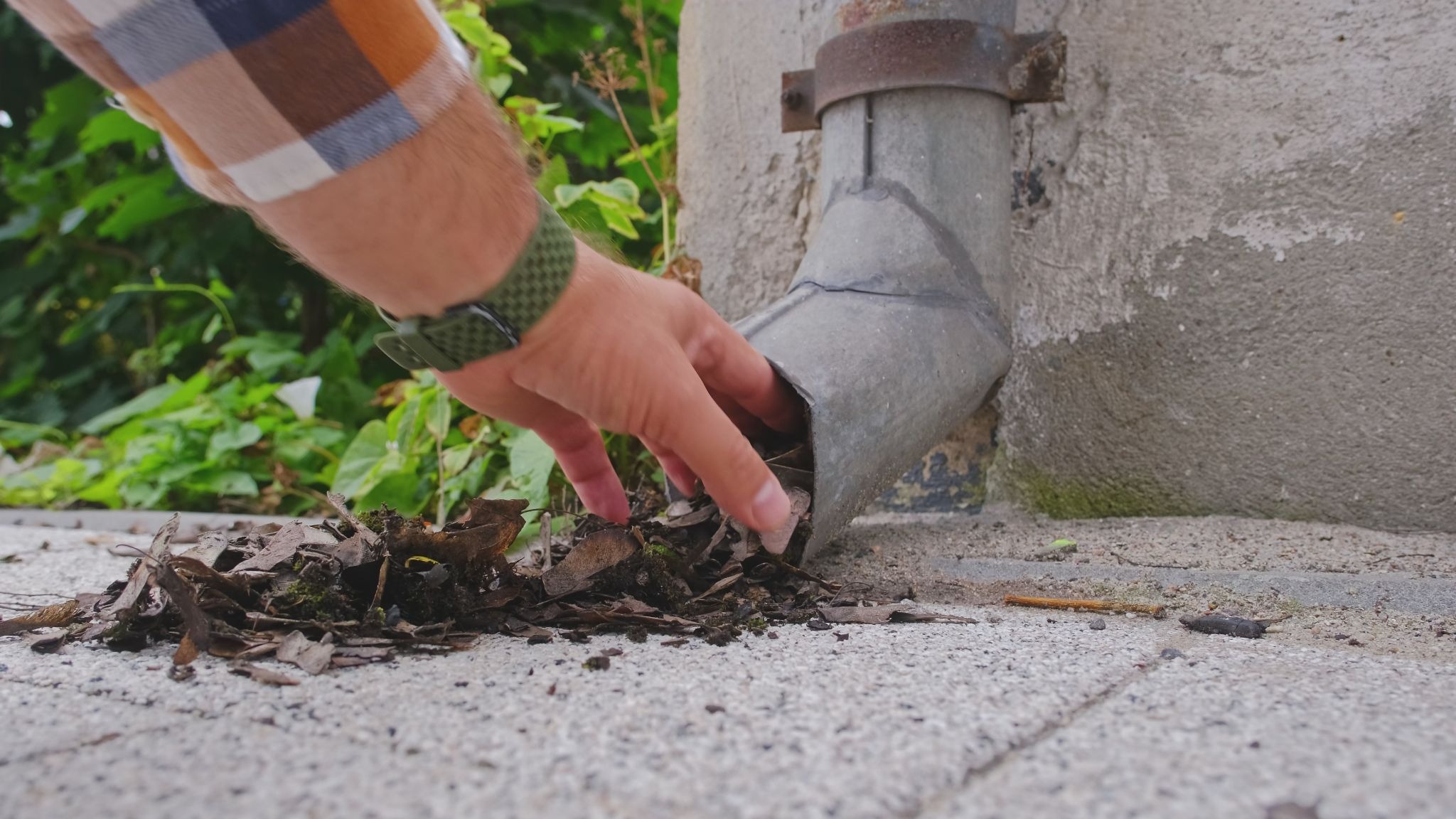
This is also the right time to look for clues that winter left behind. Granules from shingles, nests tucked into corners, bent sections, and water stains on siding can all point to bigger trouble. If the gutters are clean but water still spills over during rain, the issue may be slope, capacity, or a clog in the downspout rather than simple buildup.
A careful spring visit should answer one basic question: when the next storm hits, where will the water actually go? If that answer is not clear, the job is not finished.
DIY Has Limits, Especially on a Two Story Home
For some homeowners, gutter cleaning is manageable. A single story home, stable footing, proper ladder use, and light debris can make this a reasonable weekend task. Even then, it helps to think of it as inspection work as much as cleaning. You are not just clearing a channel. You are checking a drainage system that protects some of the most expensive parts of the house.
That said, many homes are poor candidates for do-it-yourself work. Tall rooflines, steep grades, second story sections over concrete, and gutters packed with wet debris change the risk quickly. Add power lines, wasp activity, or damaged gutter sections, and the project stops being a simple chore.
Hiring a professional also makes sense when the homeowner wants the whole system evaluated, not merely emptied. A seasoned gutter pro can spot pitch problems, weak attachment points, and drainage issues that are easy to miss from a ladder.

Downspouts Matter More Than Most People Think
Many homeowners focus on the gutter trough and forget the exit path. That is where downspouts earn their keep. If they are clogged, disconnected, or draining too close to the foundation, the house can still end up with water trouble even after the gutters have been cleaned.
The EPA recommends redirecting downspouts so water flows into an area where it can soak into the ground rather than rushing straight onto hard surfaces, while also noting that placement should avoid creating new drainage problems around the property. In plain terms, clean gutters without good downspout drainage are only half a solution. Spring is the perfect time to make sure runoff is being pushed away from the home, not invited to settle beside it.
Before the Weather Turns, Get It Handled
Storm prep does not always look dramatic. Sometimes it looks like clearing out a narrow channel before the first hard rain arrives. Still, this is one of those basic maintenance tasks that can save homeowners from a chain reaction of avoidable repairs once spring weather gets serious.
If your gutters are overflowing, sagging, or simply have not been cleaned since fall, now is the time to act. Find a TrustDALE Certified gutter professional and get ahead of the season before the next storm tests every weak spot around your home.