

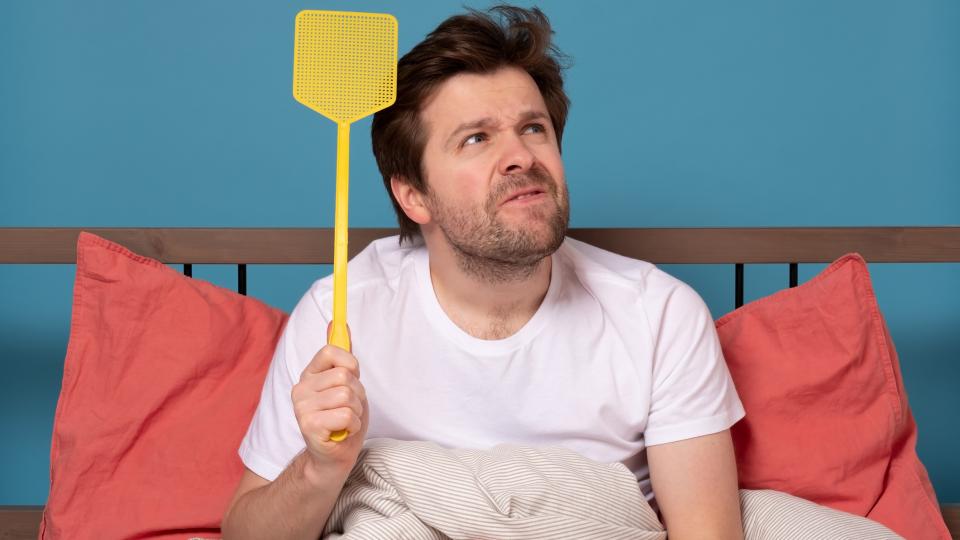
Why Some Bugs Trigger Panic While Others Barely Register
If you’re anything like me, swatting down an annoying fly or smacking a mosquito raises no issues at all. But if I spot a cockroach across the room? I won’t be in that room anymore. You’ll find me running in the opposite direction, shrieking that somebody has to take care of it. Those nasty, creepy little bugs may have you running away right next to me. Or maybe roaches don’t freak you out, but you won’t be caught dead within ten feet of a spider or mouse.
Typically, we don’t run from creepy crawlies because they pose any real threat. It’s not about their size or the damage they could cause. I hate to be the bearer of bad news, but that fear we feel? It’s all in our heads.
That’s right! Our brains are wired to respond quickly to perceived threats, especially ones associated with contamination, disease, or loss of control. Certain pests activate that alarm system more intensely, even if they aren’t actually dangerous at all. In this article, we’ll help you understand how to separate emotional reactions from actual risk, and make calmer, smarter decisions when pests eventually show up.
Our Brains Come With Its Own Threat Filter
Psychologists point to evolutionary conditioning as one reason certain pests provoke stronger fear. Creatures that move erratically, hide in dark spaces, or appear suddenly tend to trigger instinctive avoidance responses. These traits historically signaled danger, even when the threat was minimal.

Cockroaches, for example, are fast, unpredictable, and associated with unsanitary environments. Spiders activate fear responses through movement and appearance, despite the fact that most household species are harmless (we call them ‘spider bros’ in our house to help with that). Rodents, of course, trigger concerns about disease and structural damage, even before any evidence exists.
By contrast, ants or ladybugs move predictably and are often seen in outdoor settings. The brain categorizes them as manageable, even when they are technically more invasive in numbers.
How Stress Makes Pest Problems Feel Bigger
Emotional state plays a major role in how pests are perceived. Research in environmental psychology shows that stress lowers tolerance for uncertainty and surprise. Think about it: when you’re already overwhelmed, the smallest issue can feel catastrophic, right?
That’s why seeing a bug often feels more distressing at night, during busy seasons, or in moments when homeowners already feel stretched thin. The pest becomes a symbol of disorder rather than a standalone issue.
Healthy Home Pest Control understands this dynamic. Their approach emphasizes prevention, education, and consistency so homeowners don’t feel caught off guard. Knowing a professional is actively monitoring and treating your home reduces stress long before pests ever appear.

Cultural Bias and Learned Fear
Interestingly, not all pest fears are universal. Cultural exposure plays a significant role in shaping reactions. Some insects considered alarming in one culture are neutral (or even symbolic) in another. Fear can be learned through childhood experiences, media portrayals, or social reinforcement.
Horror imagery often exaggerates pest behavior, reinforcing associations between bugs and danger. Over time, the brain stops questioning whether the fear is proportional or even necessary. Instead, it just reacts.
This is where professional pest control becomes more than a physical service. It can actually help restore your sense of control. Healthy Home Pest Control focuses on identifying root causes of infestations and eliminating conditions that allow pests to thrive. That proactive approach helps homeowners regain confidence in their living space.
Why Professional Prevention Changes the Emotional Equation
When pests are unpredictable, fear grows. When prevention is consistent, fear fades. Reliable pest control removes the element of surprise that fuels anxiety.

Healthy Home Pest Control is a TrustDALE certified partner, which means the company meets strict standards for transparency, ethical practices, and proven performance. Their services are built around integrated pest management principles that focus on long term prevention rather than reactive treatments.
Their technicians inspect entry points, moisture sources, and nesting conditions, addressing the reasons pests appear in the first place. For homeowners, that translates into fewer sightings and far less stress when one does occur.
Reclaiming Peace of Mind at Home
Our reactions to pests are deeply human. They are shaped by biology, experience, and emotional context. While fear is natural, living in constant anxiety about pests doesn’t have to be!
By understanding why certain bugs provoke stronger reactions and pairing that insight with professional prevention, homeowners can restore a sense of calm. Healthy Home Pest Control provides trusted, certified service that protects not just your home, but your peace of mind as well. When pests lose their power to surprise, they lose their power to scare.