

January often arrives with fresh notebooks and financial resolve. Budgets get revisited, credit reports get checked, and plans for the year begin to take shape. Yet, identity theft protection rarely makes that list (unless something has already gone wrong).
The Federal Trade Commission wants to change that mindset. Identity Theft Awareness Week offers consumers a focused moment to learn how identity theft happens, how to reduce risk, and how to recover when fraud disrupts everyday life.
Why Identity Theft Belongs in Your Annual Planning
Identity theft reaches beyond fraudulent charges. Thieves can open accounts in your name, redirect tax refunds, interfere with medical care, and leave long term damage on credit reports that takes time to unwind. These issues often surface months later, and usually long after the initial breach of information.
Planning ahead matters because many protective steps are easier before a problem arises. Monitoring financial statements, using strong authentication tools, and understanding how to respond quickly can significantly reduce both losses and stress. Identity theft prevention works best when it is treated as routine maintenance rather than emergency repair.
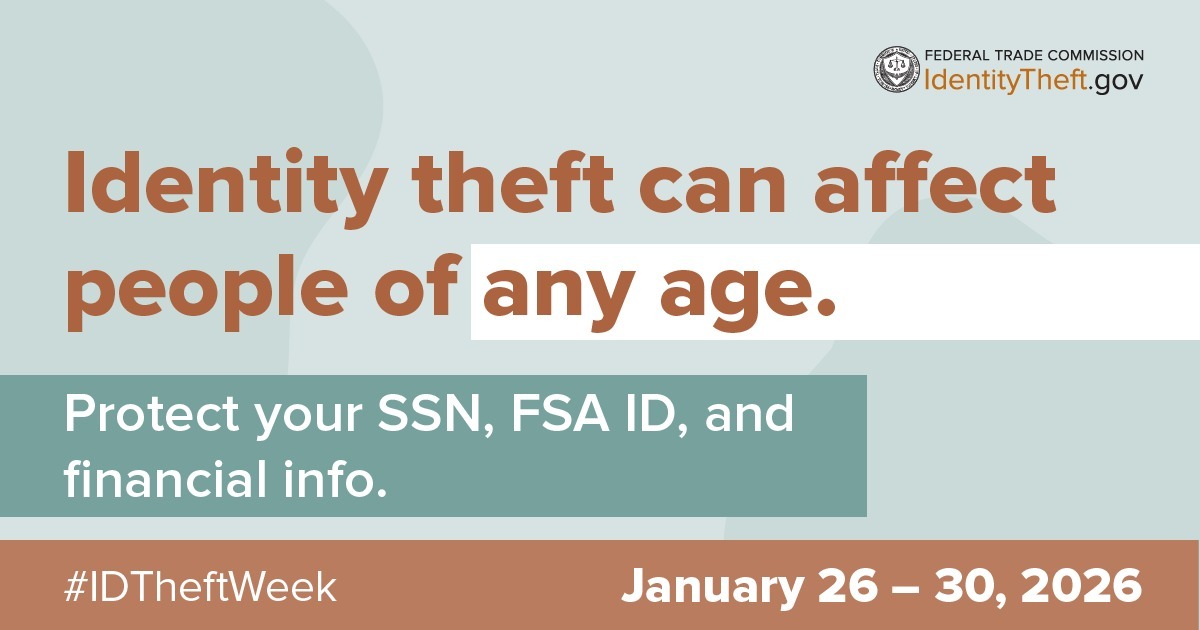
image source: FTC
What Identity Theft Awareness Week Offers
Identity Theft Awareness Week (IDTAW) runs from January 26 through January 30. During that week, the FTC and partner organizations host free educational events designed for everyday consumers, including webinars, podcasts, live interviews, and interactive sessions that test identity theft knowledge.
The emphasis is practical rather than technical. Topics often include common scams, warning signs that information has been compromised, and small behavior changes that make stolen data harder to use. Events are open to the public and intended to be shared, making them useful for families, workplaces, and community groups.
Steps You Can Take Before the Week Begins
The FTC encourages consumers to start preparing now rather than waiting for the events to begin. There are several simple actions that can help build awareness and readiness without requiring financial investment or specialized tools:
- Explore and share the free identity theft resources, which explain how identity theft occurs and how to reduce exposure
- Bookmark the Identity Theft Awareness Week page to track newly posted events and registration links
- Watch and share FTC identity theft videos to spread awareness among friends, family, or coworkers
- Visit IdentityTheft.gov to make a report if identity theft has already occurred and receive a personalized recovery plan
- Review additional educational material at to understand ongoing risks and recovery options
Using these resources early makes the information from IDTAW more actionable when the week arrives.

If Identity Theft Happens, Knowing Where to Go Matters
Many consumers delay reporting identity theft because they are unsure where to start. IdentityTheft.gov serves as the FTC’s central reporting and recovery tool, guiding victims step by step based on the type of information misused. Early reporting helps limit damage and creates documentation that is often required by creditors, banks, and government agencies.
Understanding this process ahead of time can reduce panic and shorten recovery timelines if fraud occurs.
Looking Ahead to a More Secure 2026
Identity Theft Awareness Week is not about fear, it is about preparation. Setting aside time in January to learn, share resources, and establish protective habits can make the rest of the year more resilient.
As you plan for 2026, consider adding this week to your calendar alongside financial reviews and goal setting. Protecting your identity supports every other plan you make.