
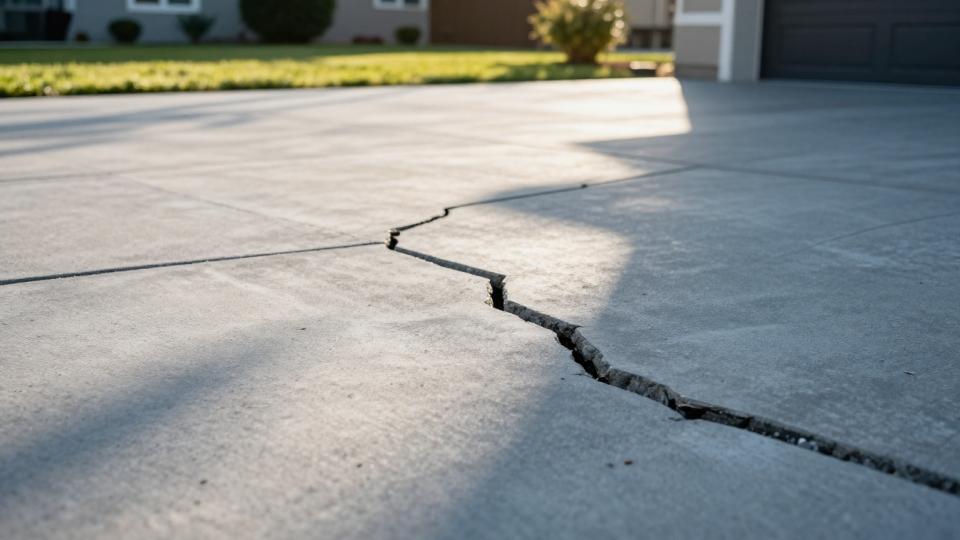
You go to get in your car and spot driveway cracks that weren't there yesterday, and the question comes fast: is this normal aging or evidence that something larger is failing underneath? Hairline cracks and surface cracks may be cosmetic, but width alone doesn't prove a serious defect. Uneven edges or displacement deserve closer attention.
Concrete cracks can result from early drying, known as shrinkage cracks, thermal expansion, freeze-thaw cycles, poor water drainage, or soil settlement. Movement within or beneath the concrete slab can point to a larger concern, especially when structural cracks include displacement or loss of support. Knowing what changed helps you decide whether to monitor the damage, arrange repairs, or call a qualified professional.
Why Do Concrete Driveways Crack?
Concrete hardens, but a concrete slab continues to move. As water leaves fresh concrete, the slab shrinks. Heat causes thermal expansion, while cold and moisture changes create stress. Freeze-thaw cycles can add movement as water freezes and expands within small openings.
The Portland Cement Association, American Concrete Institute and National Ready Mixed Concrete Association all recognize that concrete cracks are common in concrete flatwork. A crack alone doesn't prove poor workmanship. Weak subgrade compaction, a deficient base layer, inadequate reinforcement, a poor concrete mix or heavy loads can contribute to movement, but each case requires context.
Control joints are planned weak points that encourage cracking along a deliberate line. According to the American Concrete Institute's guidance on control joints, joints help manage cracking but can't guarantee a crack-free slab.
Joint layout depends on slab thickness, concrete mix, reinforcement, base support and drainage. Contractors often cut control joints to about one-fourth of the slab depth. Panels are usually kept close to square, with 15 feet often cited as a practical maximum dimension. These are design guidelines, not a promise that concrete won't crack. Expansion joints serve a different purpose by allowing adjoining sections to move independently.
Shrinkage and Temperature Changes Can Create Early Cracks
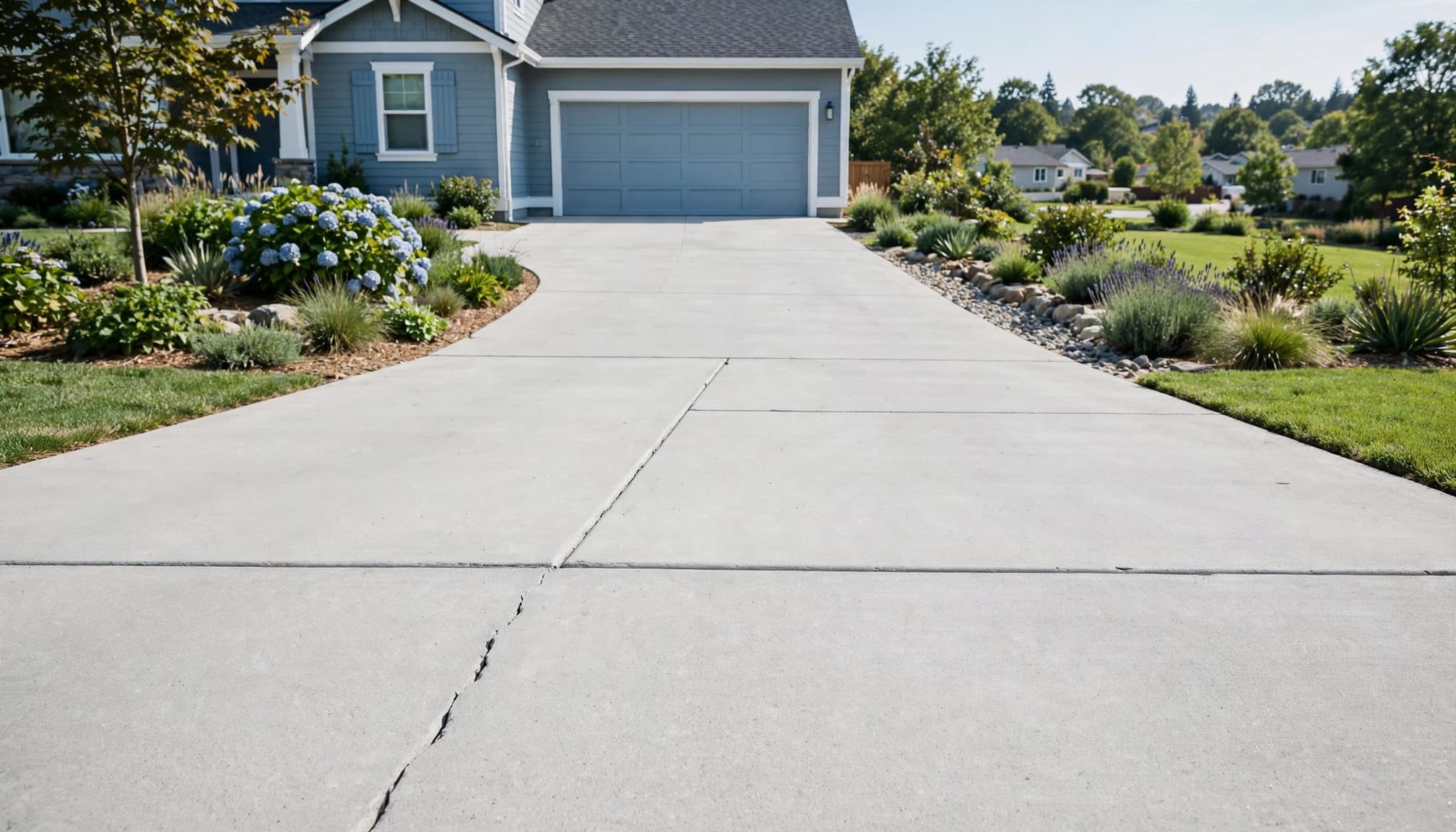
Fresh concrete contracts as it dries. If the curing process is rushed, the surface dries too quickly or joints are installed late, stress can produce early cracks. The American Concrete Institute advises cutting joints as soon as the slab can tolerate saw-cutting without raveling, often within hours of placement. Joint spacing and timing influence where cracks form.
Seasonal heat and cold add more movement. A driveway that receives direct sun on one end and stays shaded or damp on the other can develop uneven stress. Freeze-thaw cycles can worsen existing openings, while de-icing chemicals may contribute to surface deterioration when moisture and cold are present.
A fine crack that stays narrow, remains flush and doesn't grow may be a stable curing crack. Shallow surface cracks are usually less concerning than movement-related damage. A crack that reopens after sealing, gets longer or develops a vertical offset needs closer attention.
Poor Drainage and Weak Soil Can Move the Slab
Concrete needs steady support underneath. Standing water can saturate soil, wash fine material out of the base or worsen freeze-thaw cycles in colder climates. Soil settlement or tree root intrusion can also shift part of the driveway while the rest stays in place.
Inspect cracks near downspouts, drains, catch basins, inside corners and persistent puddles. Those areas often concentrate stress or reveal a drainage problem. Soil loss at a crack edge, a nearby depression or a soft area beside the driveway deserves prompt evaluation.
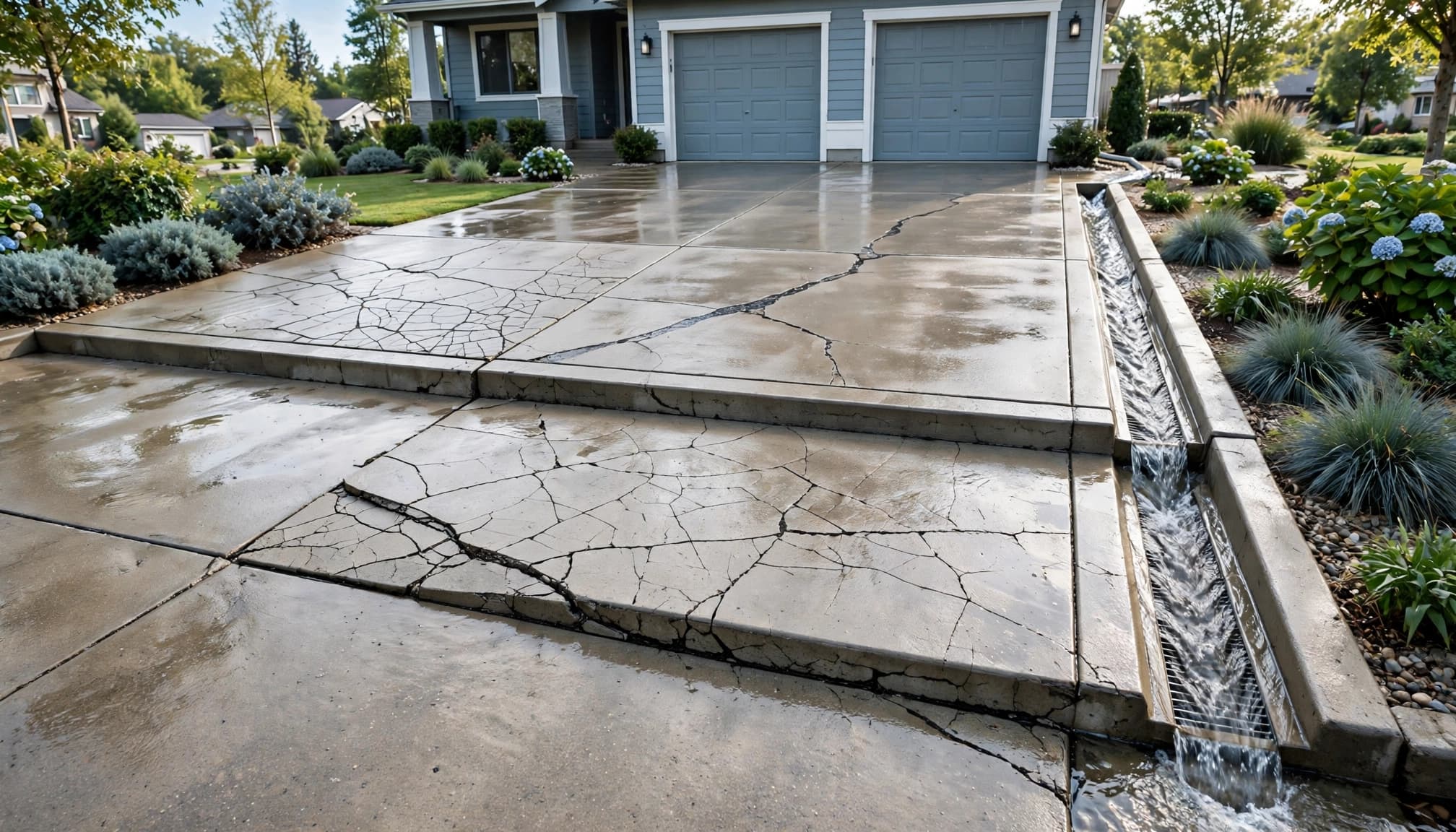
A crack becomes more concerning when the slab edges no longer sit in the same plane. That vertical offset points to movement beneath the concrete, and a displaced pattern could indicate structural cracks rather than ordinary surface shrinkage.
How to Tell Whether a Cracked Driveway Needs Repair
Start with a record, not a tube of filler. Photograph the driveway cracks clearly, using a ruler or coin for scale. Mark both ends with a pencil and date them. Recheck after heavy rain, one or more freeze-thaw cycles, or several months of normal use.
Measure the widest part of the crack and photograph it with a ruler or coin for scale. Width can help you track changes over time, but it shouldn't be used by itself to determine whether a crack is serious.
Look beyond the opening itself. Stable damage may be a candidate for concrete sealer, flexible concrete caulk or an epoxy filler. These materials don't correct movement, poor subgrade compaction, soil settlement or water drainage. Also document tree root intrusion and exposure to de-icing chemicals, which can help explain recurring deterioration.
Signs You Should Not Ignore
Treat these conditions as warning signs rather than cosmetic flaws:
- One side of the crack has a vertical offset that creates a trip hazard.
- A displaced or repeatedly reopening line may indicate structural cracks.
- Several random cracks appear away from control joints.
- Widespread or movement-related damage may indicate structural cracks, not just surface cracks.
- A section has sunk, tilted or broken into multiple pieces.
- Soil is visible or missing beneath an edge.
- Water pools on the driveway or flows toward the garage, steps or foundation.
These symptoms can indicate settlement, erosion, weak support or an ongoing moisture issue. Sealing the visible line without correcting the cause often wastes money.
When a Professional Should Inspect the Driveway
Schedule an evaluation when the slab is sinking, shifting or has a vertical offset that affects access to the garage, walkway or steps. You should also call for help if water drainage near the house has changed or water collects along the foundation.
A professional can determine whether crack repair is appropriate and whether void-related settlement might respond to polyurethane injection. Ask whether polyurethane injection suits the specific slab and soil conditions, since it doesn't work in every situation.
Don't cover a growing crack with resurfacing material before someone identifies why it formed. A coated surface can hide evidence of ongoing movement while the underlying issue continues.
If you're dealing with cracked or sunken concrete in metro Atlanta, a TrustDALE Certified concrete repair company can evaluate whether the slab can be repaired or leveled.
Concrete Driveway Repair Options and Their Limits
The right repair depends on whether the slab is stable, structurally sound and supported by suitable conditions. Structural cracks, poor subgrade compaction and a weak base layer can signal movement. Freeze-thaw cycles may cause a repair to fail if the underlying condition remains active. An honest contractor should explain the cause before recommending a product.
For a stable narrow crack, epoxy filler can limit water entry and reduce surface deterioration. Flexible concrete caulk may suit some locations. Neither option levels the slab or corrects poor grading.
If a sound slab has settled because of voids below it, polyurethane injection may be possible. Polyurethane injection systems such as PolyLevel® are installed through small drilled holes, where the expanding material fills voids. This polyurethane injection process may raise suitable concrete, depending on slab condition and support. The PolyLevel technical overview states that installers commonly use 5/8-inch holes for the injection process.
Why Patching May Not Solve the Real Problem
Patching works best when the crack is stable and the surrounding concrete remains well supported. An epoxy filler cannot correct a vertical offset or ongoing movement. It also won't solve poor water drainage, a failed base or a displaced slab.
A low-cost patch often breaks loose when the slab keeps moving. That does not automatically mean the patch product failed. It may mean the repair addressed the appearance instead of the underlying condition.
Corrective work can include downspout extensions, regrading, drainage improvements, void filling, slab leveling, partial replacement or complete removal and replacement. New installations should account for control joints and expansion joints, rather than treating them as a cure for movement. A compatible concrete mix and reinforcement may also matter where heavy loads or de-icing chemicals affect durability. If panels are badly fractured or ongoing movement has weakened the driveway, replacement may offer a more durable result.
What to Compare in a Contractor's Estimate
Ask for a written scope that identifies the suspected cause, proposed repair method, access needs, drainage work, crack repair, cleanup, curing process, timeline, price and warranty terms. Ask who will perform the work, whether licensing and insurance apply in your area and how the contractor will verify the repair.
For substantial leveling or replacement, our experts recommend getting at least three detailed estimates. Ask whether epoxy filler is appropriate and how polyurethane injection will be verified after installation. A reputable estimate explains why a repair is suitable, not only what product will be installed.
When you need driveway help in the Atlanta area, compare verified driveway replacement and repair services. TrustDale Certified driveway repair and replacement providers are evaluated through an approved seven-point inspection and backed by the $10,000 Make It Right Guarantee. You can also find Vetted Home Service Providers backed by our $10,000 Make It Right Guarantee on TrustDale.com for a more confident starting point.
How to Prevent New Driveway Cracks From Spreading
You can't eliminate every future crack, but you can reduce water-related damage from thermal expansion and freeze-thaw cycles. Keep downspouts discharging away from the driveway and foundation. Correct low spots that hold water after rain, and keep soil from washing out beside slab edges.
For a new driveway, discuss subgrade compaction, the base layer, reinforcement, concrete mix, joint layout, and curing process before work begins. Include expansion joints, but remember they complement proper support and drainage. Design should reflect expected heavy loads from commercial vans, loaded work trucks, or dumpsters. Tell the installer about recurring heavy loads before finalizing the design.
A concrete sealer can reduce water entry and surface wear when it suits the concrete and climate. It won't stabilize a moving slab or resolve structural cracks. Use de-icing chemicals carefully in winter, and follow the concrete manufacturer's or contractor's guidance for de-icing chemicals. Polyurethane injection may repair an already settled slab, but it isn't a substitute for preventing water or support problems. Keep vehicles off fresh concrete until the installer confirms it has cured adequately.
Frequently Asked Questions
Are cracks in a concrete driveway normal?
Some hairline or surface cracks are common as concrete dries, expands and contracts. A narrow crack that stays flush and does not grow may only require monitoring, but displacement or repeated reopening deserves closer attention.
When is a driveway crack a serious problem?
A vertical offset, sinking slab, missing soil beneath an edge or widespread random cracking can indicate settlement, erosion or weak support. Cracks that grow, reopen after repair or affect access to the garage, steps or walkway should be evaluated by a professional.
Can I repair a driveway crack with concrete filler?
Epoxy filler or flexible concrete caulk may suit a stable, narrow crack in otherwise well-supported concrete. These products do not correct movement, poor drainage, soil settlement or a failed base layer.
How can I tell whether a driveway crack is getting worse?
Photograph the crack with a ruler or coin for scale, mark its ends and record the date. Recheck it after heavy rain, freeze-thaw cycles or several months, looking for increased length, width, water entry or vertical movement.
Should I replace a cracked concrete driveway?
Replacement is not automatically necessary because of cracking alone. It may be more appropriate when panels are badly fractured, the slab continues to move or drainage and support problems make patching and leveling unlikely to provide a durable result.
Conclusion
The crack you can see isn't always the real problem. What matters most is whether the concrete is still supported, level and properly drained. If a crack is growing, reopening, sinking or creating an uneven surface, have the cause evaluated before paying for a cosmetic repair. Fixing the reason the driveway moved is usually more important than simply filling the line it left behind.