
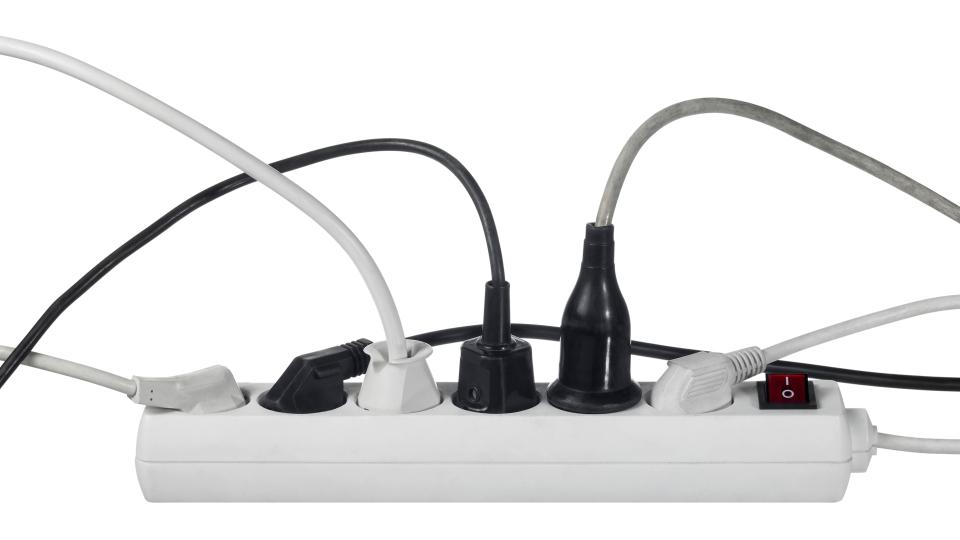
Running out of places to plug in?
Phone, laptop, tablet, smartwatch, lamps, the coffee maker, the air fryer... Most of us run out of outlets before breakfast is over. And with space heaters coming out and holiday lights going up soon, the problem is about to get worse.
If your home is starting to look like a tangle of power strips and extension cords, you're not alone. Many homes were wired long before we owned dozens of gadgets.
The short answer: there's no magic number of outlets every home should have. It depends on how you use each room. The real question is whether your outlets are in the right places, and whether your wiring can safely handle what you plug in.
Key takeaways
- Plan around how you live. Where your furniture sits and what runs at the same time matter more than a room-by-room count.
- More outlets don't mean more power. Adding receptacles doesn't increase what a circuit can safely handle.
- Extension cords are a short-term fix. Never daisy-chain power strips or run cords under rugs.
- Hot, scorched or loose outlets need attention now. So do breakers that keep tripping.
- Vet your electrician. Check the license, insurance and permit plan, and compare detailed written estimates.
How many outlets do you really need?
There's no single number that fits every home. The National Electrical Code sets minimum requirements, but each city and county adopts its own edition and amendments. Your local building department or a licensed electrician can tell you what applies to you.
Beyond code, convenience comes down to how you actually live.
Take a quick device inventory
Walk through each room and jot down:
- What you plug in: TVs, computers, chargers, lamps, kitchen appliances, office gear.
- What runs at the same time: the coffee maker and toaster every morning, or a monitor, laptop and printer all day.
- What's always plugged in vs. occasional: a vacuum or seasonal decorations only need an outlet now and then.
- Where furniture sits now, and where you'd like it. Plan outlets around your ideal desk or bed placement, not the other way around.
In an older home, also note any two-prong outlets or known knob-and-tube wiring. Those should be checked by a professional before you plan any changes.
Spot the trouble spots
You probably already know where the problems are. Watch for:
- Unplugging a lamp just to charge your phone
- Cords stretched across walkways
- Power strips plugged into power strips
- Outlets hidden behind bookcases or the couch
- Plugs that won't stay in the outlet (that one needs a repair, not an adapter)
Snap a photo of each trouble spot and add a quick note. That gives an electrician a much better starting point than "I need more outlets everywhere."
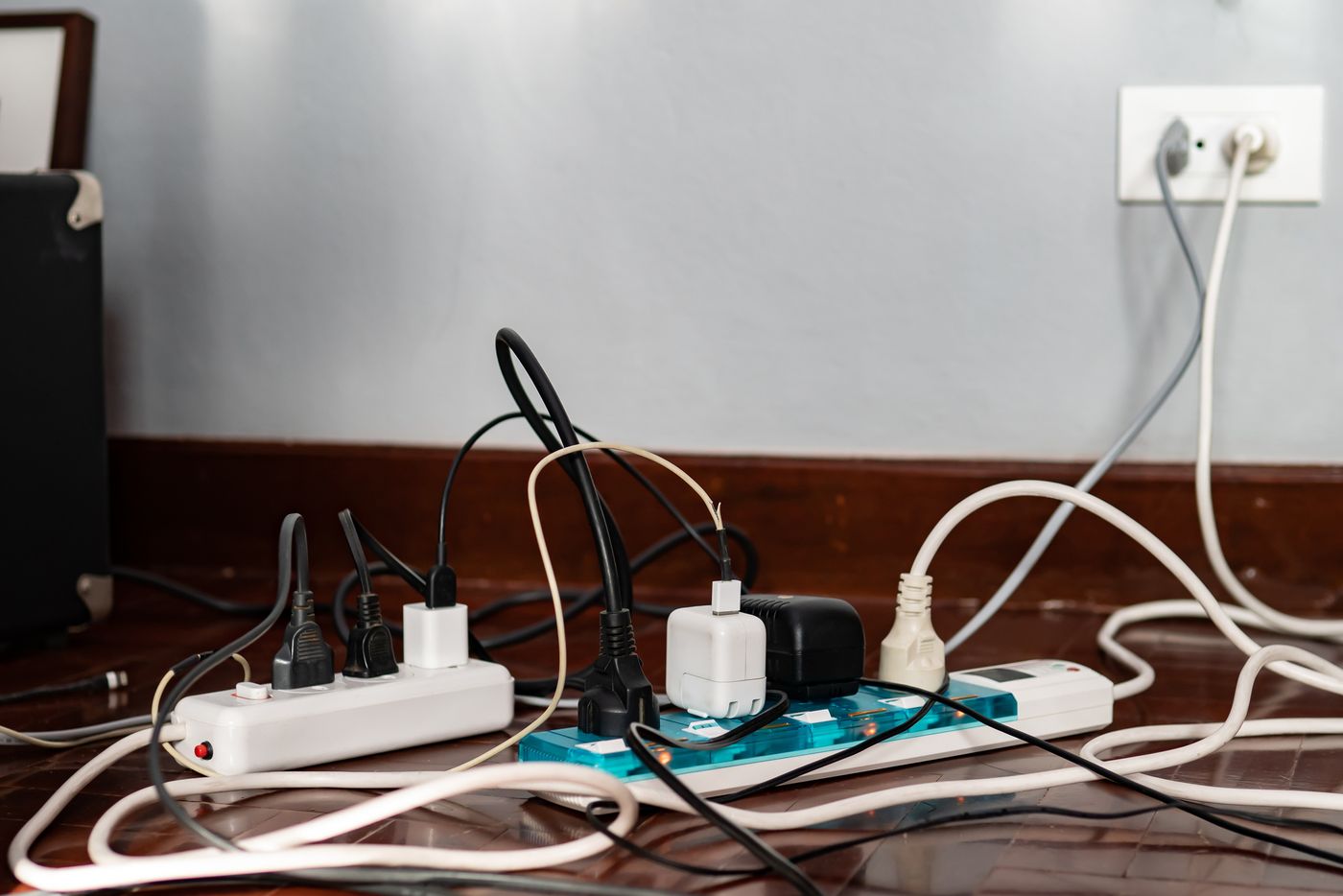
Why too few outlets can become a fire hazard
When outlets are scarce, people get creative, and that's where trouble starts. Overloaded cords and power strips snaking behind furniture can overheat and spark a fire.
According to the U.S. Consumer Product Safety Commission, about 2,000 home fires a year are linked to electrical cords and plugs. Short circuits, damaged cords and too many products plugged into one cord are common causes.
That doesn't mean every power strip is dangerous. A properly rated strip, used within its limits, can be perfectly safe. The problem is how we use them.
Extension cord and power strip do's and don'ts
| Do | Don't |
|---|---|
| Use extension cords only as a temporary fix | Run cords under rugs or carpets |
| Check the cord's rating before plugging in | Pinch cords in doors, windows or behind furniture |
| Inspect cords and replace any that are cracked or frayed | Daisy-chain power strips together |
| Plug major appliances directly into the wall | Tape up or repair a damaged cord |
Space heater season reminder: The Electrical Safety Foundation International (ESFI) warns against plugging space heaters into extension cords or power strips. Plug them directly into a wall outlet.
And remember, a surge protector shields your electronics from voltage spikes, but it doesn't add capacity to the circuit.
GFCI vs. AFCI: what's the difference?
These two safety devices protect against different dangers:
- GFCI (ground-fault circuit interrupter): protects you from electric shock by cutting power when it senses a current imbalance. Critical anywhere near water, like kitchens, bathrooms, laundry rooms and outdoors.
- AFCI (arc-fault circuit interrupter): protects your home from fire by detecting dangerous sparking in wiring.
One doesn't replace the other. And if your outlet doesn't have test buttons, don't panic. Protection might come from a different outlet upstream or from a breaker in your panel. Ask your electrician to confirm what you have and what local code requires.
Plan your outlet upgrade around real life
Here's the part most people miss: adding outlets doesn't make a circuit able to handle more. Placement and capacity are two separate problems.
Focus on the rooms that work hardest
- Kitchen: Map out where you use the coffee maker, toaster, air fryer and other countertop appliances. ESFI recommends plugging major appliances directly into wall outlets, never extension cords.
- Home office: Count your monitors, computer, router, printer and a charging station for phones and tablets. Factor in home security devices as well.
- Entertainment area: Think TV, streaming devices, sound bar, speakers and game consoles.
- Electric car charger: Installing a car charger a serious electrical upgrade that can impact your safety, your panel’s performance, and even your utility bills.
A quick bit of math
If you can easily see an appliance's label, write down its wattage. For perspective, a 1,500-watt appliance draws about 12.5 amps. Many household circuits are rated for 15 or 20 amps, so two high-wattage appliances on the same circuit can quickly push it to the limit. That's why an electrician needs to look at what runs at the same time and decide whether something like a microwave or space heater needs its own dedicated circuit.
Do you need more outlets or a better layout?
Sometimes the fix is free. Before you call anyone, see whether moving a desk, lamp or appliance closer to an existing outlet solves the problem. Just keep cords out of walkways and don't crush plugs behind furniture.
If the need is permanent, you may want new outlets, relocated outlets or additional circuits. Tell your electrician exactly what you want to run at the same time so they can recommend the right solution.
Surge protectors guard against voltage spikes, but they don't increase your circuit's capacity.
And don't buy a bigger adapter just because it has more plugs. Its rating, and your circuit's limits, still decide what you can safely connect.
Warning signs you shouldn't ignore
Some outlet problems can't wait for a remodel. Stop using an outlet right away if you notice:
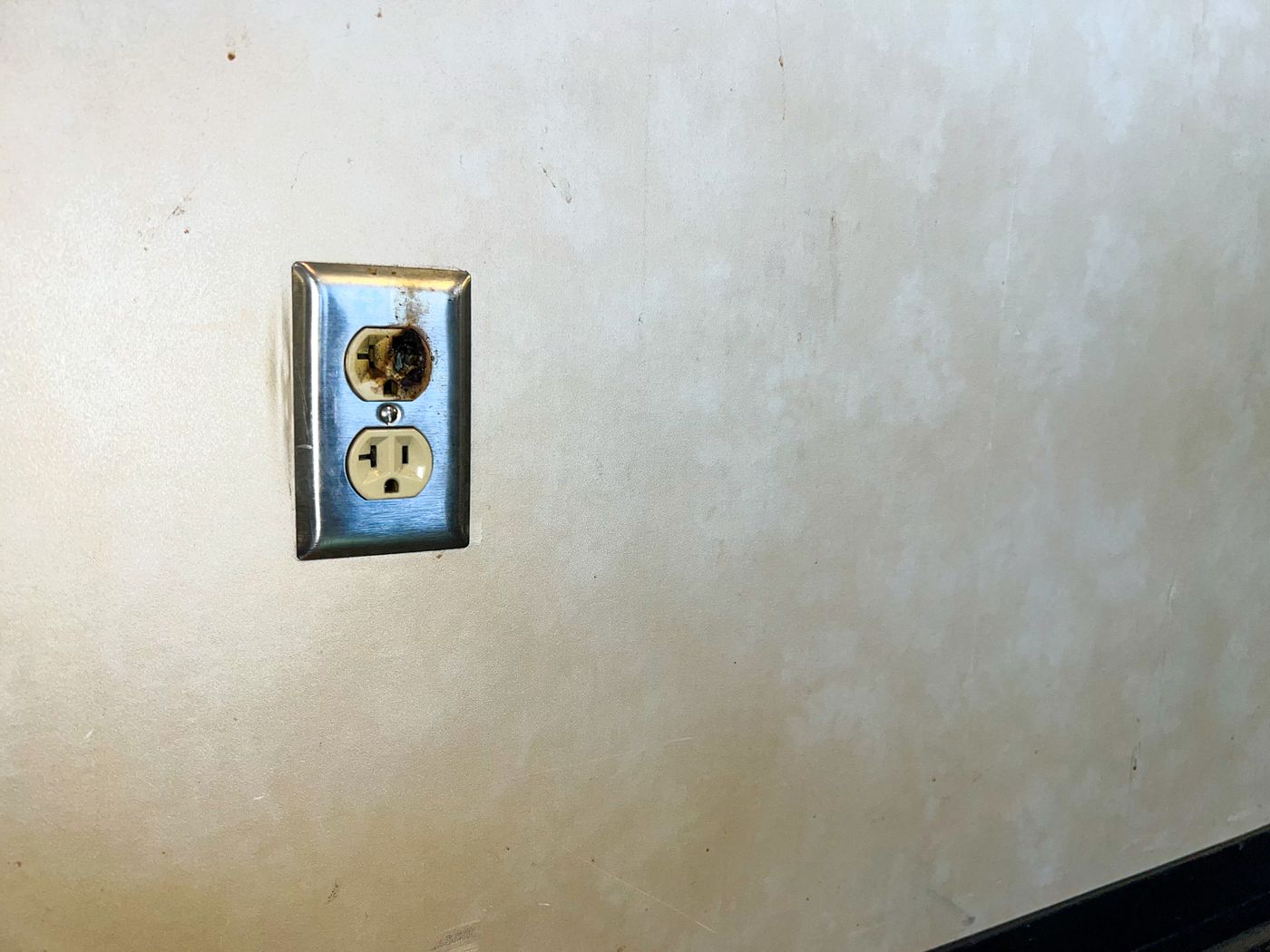
- Scorch marks or discoloration
- Melted plastic
- A burning smell
- An outlet or cover plate that feels hot
- A plug that falls out or fits loosely
Don't touch an outlet that's hot or visibly damaged. Call a licensed electrician.
Breaker keeps tripping?
A tripping breaker is doing its job. It's telling you something is wrong, whether that's an overloaded circuit or another fault. Resetting it over and over won't fix the cause.
Never swap in a higher-rated breaker to stop the tripping. That can let wires overheat inside your walls. Leave panel work to a professional.
If you see smoke or flames, get out and call 911. Never use water on an electrical fire.
Check your cords and power strips for recalls
Search the CPSC's recall database for the brand and model of the cords and power strips you already own, and follow the instructions on any recall notice.
Older home? Get the wiring checked
Two-prong outlets or knob-and-tube wiring are a sign your electrical system should be evaluated before you add anything. You can't judge the condition of wiring hidden inside walls just by looking at the outlet.
How to hire the right electrician
Licensing, permits and inspection rules vary by location, so do a little homework before anyone opens a wall.
Verify credentials and who's doing the work
- Get the company's legal name, license number and proof of current liability insurance.
- Look up the license with your state licensing board and confirm it covers the work you need.
- Ask who will actually do the installation, and who supervises employees or subcontractors.
A business registration isn't the same as an electrical license. At TrustDALE, we've seen this firsthand. When founder Dale Cardwell has dug into unusually low quotes, he's found unlicensed workers who couldn't meet TrustDALE's certification standards. If the credentials are missing, pause, no matter how good the price looks.
5 questions to ask before you hire
- Will this work need a permit, and who will get it?
- Can my existing circuit handle the equipment I plan to use?
- Will I need a new or dedicated circuit?
- What GFCI or AFCI protection does local code require?
- Who will schedule the inspection?
Ask for the answers in writing. A good electrician will explain what's included and be upfront about anything that depends on what they find inside the walls.
Compare apples to apples
For non-emergency work, get at least three written estimates. Two "outlet installation" quotes can describe very different jobs. One might just extend an existing circuit, while another includes new wiring, a new breaker and required safety protection.
Make sure each estimate spells out:
- Outlet locations and circuit work
- Permit fees and inspection arrangements
- Whether opening walls, drywall repair and repainting are included
- How surprises will be handled (require written approval before extra work begins)
- The payment schedule and workmanship warranty
Access matters too. Running wire through an unfinished basement or attic usually costs less than working behind finished walls.
Keep your estimate, contract, insurance certificate and permit records together in one place.
Remember, insurance and qualified labor cost money. A much lower quote deserves a closer look, especially if the contractor can't document either one. But price alone doesn't prove someone is or isn't qualified.
Looking for an electrician you can trust? Find a TrustDALE Certified electrician at TrustDALE.com. Every certified partner has passed our rigorous seven-point inspection and is backed by the $10,000 Make It Right Guarantee.
Frequently asked questions
How many outlets should a modern home have?
There's no one-size-fits-all number. Think about the devices you use, where your furniture sits and what runs at the same time. Then check local code requirements with an electrician or your building department.
Is it safe to use power strips?
Yes, if the power strip is properly rated and you stay within its limits. Never plug one power strip into another, and plug major appliances and space heaters directly into the wall. Remember, a power strip adds plugs, not capacity.
Can I add an outlet myself?
Adding a permanent outlet may involve new wiring, permits and an inspection, and an extra outlet doesn't mean the circuit can handle more. For safety, have a licensed electrician assess your wiring and local requirements.
What are the warning signs of a dangerous outlet?
Stop using any outlet that's hot, scorched, melted, smells like burning or won't hold a plug. Breakers that trip repeatedly also need a professional's attention. Don't keep resetting them or swap in a higher-rated breaker.
Should I worry about two-prong outlets?
Two-prong outlets in an older home are a good reason to have a licensed electrician evaluate your system before making changes. You can't tell the condition of the wiring inside the walls just by looking.
The bottom line: convenience starts with safe wiring
Start with a quick walk-through: list your devices, note where cords and constant unplugging drive you crazy, and snap a few photos. Then have a licensed electrician check your wiring and circuit capacity before you add anything permanent.
Well-placed outlets can make everyday life a lot easier. But they're only worth it when they're installed safely, to code, with a clear written plan and an electrician you can trust.
Ready to power up your home safely? Connect with a TrustDALE Certified electrician, backed by our $10,000 Make It Right Guarantee.
For a deeper dive into electrical work and the dangers of cutting corners, check out TrustDALE's Trust Issues podcast episode called "Short Circuit: The Shocking Truth About Electrical Scams" with Dari Payrow from TrustDALE Certified Partner R.S. Andrews.