
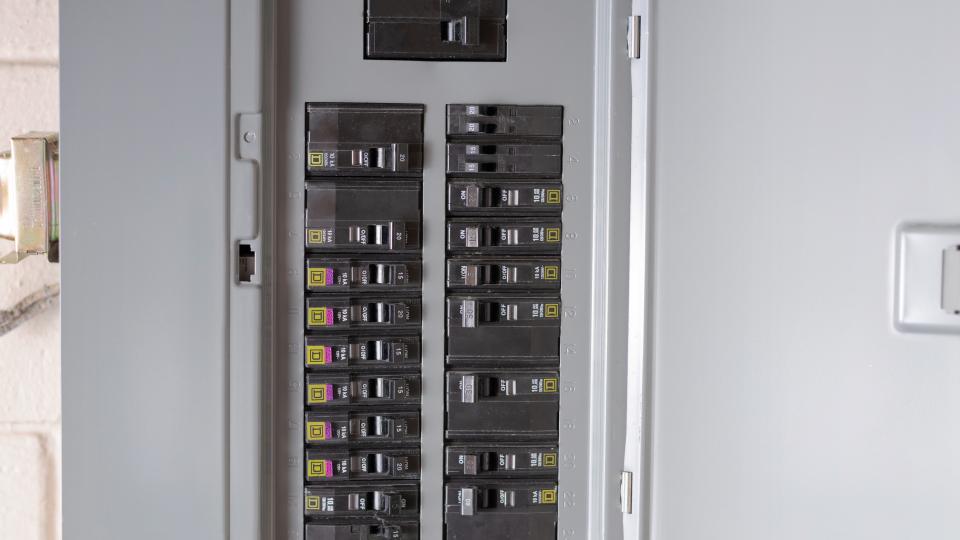
If you notice your lights flicker every time your air conditioner cuts on, you may want to pay attention. A circuit breaker that trips once may be doing its job as an electrical safety device, interrupting overcurrent or an electrical fault. But flickering lights or repeated trips point to a problem you shouldn't ignore.
Key Takeaways
- Summer cooling, appliance use, and repeated motor starts can overload a circuit and cause a circuit breaker to trip.
- Repeated trips may indicate an overload, short circuit, ground fault, failing appliance, damaged wiring, loose connection, or worn breaker.
- Unplug nonessential devices, inspect accessible cords, document the trip pattern, and reset the circuit breaker only once after removing a temporary overload.
- Stop using the circuit and contact a licensed electrician if it trips again or shows heat, buzzing, burning odors, scorch marks, smoke, or flickering lights.
- Prevent future trips by maintaining HVAC equipment, avoiding overloaded outlets and extension cords, and having circuit capacity and wiring evaluated before peak summer demand.
Why Your Circuit Breaker Keeps Tripping in Summer
A circuit breaker functions as an electrical switch that monitors current on a circuit. Its trip unit responds to overcurrent when sustained current exceeds the circuit's current rating or follows an unintended path. It then opens the circuit, protecting wiring, outlets, equipment, and people.
Thermal protection handles sustained demand through a bimetallic strip that bends as it heats. Electromagnetic protection responds rapidly to a severe fault, such as a short circuit. The operating mechanism separates the contacts. An arc extinguisher or arc chute helps contain the electric arc.
Summer increases electrical demand because cooling equipment often runs for long periods. A circuit breaker may trip when a central air conditioner, window unit, portable AC, refrigerator, microwave, and hair dryer share one circuit. Together, these appliances can create an overload condition. Startup also causes a brief surge because motors and compressors draw more current as they begin running.
Several different conditions can cause the same result:
- An overload happens when too many devices draw power from one circuit over time.
- A short circuit occurs when a hot wire contacts a neutral wire or another unintended conductor.
- A ground fault occurs when current escapes its intended path to ground, often through damaged wiring, moisture, or a defective appliance.
- An electrical fault can also result from a deteriorating or improperly sized breaker. It may trip too easily or fail to protect the circuit properly.
Heat alone doesn't normally create an electrical fault. However, high temperatures, longer cooling cycles, and repeated motor starts can expose a weak connection, worn appliance, undersized circuit, or overloaded panel. Extended demand can create enough heat for thermal protection to respond, especially when cooling equipment runs continuously.
In a typical home, the electrical distribution board commonly uses a miniature circuit breaker for individual branch circuits. Where the appropriate equipment is installed, a dual function circuit breaker may combine arc-fault and ground-fault-related protection. Not every household breaker has the same protective functions.
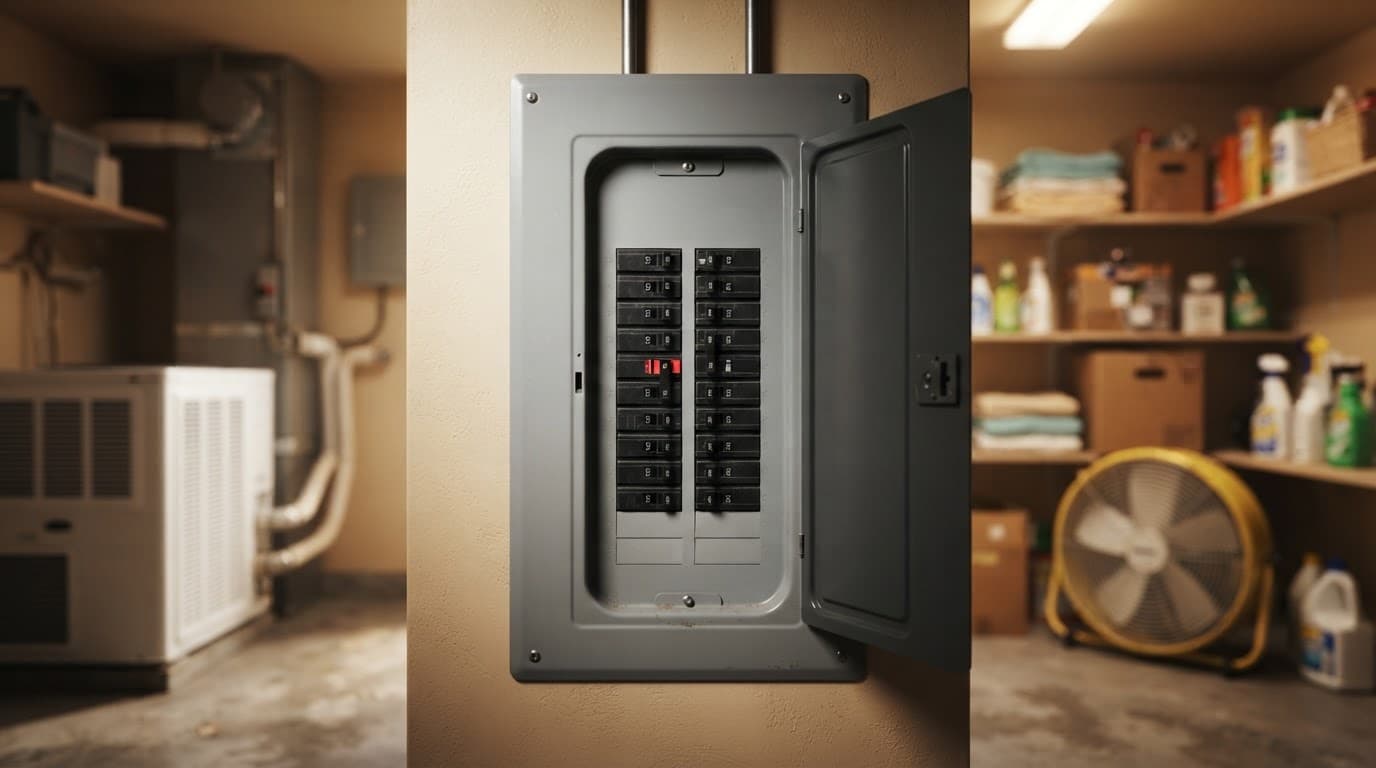
Never tape a breaker in place, block access to the panel, or keep forcing it back on. Modern breakers may also include arc-fault protection. The Consumer Product Safety Commission's research on arc-fault breakers provides supporting information on how these devices can combine overload and short-circuit protection with arc-fault detection.
Air conditioning can expose an overloaded electrical circuit
Your air conditioner's compressor and blower motor use more current at startup. If the system struggles because of a dirty filter, airflow restriction, or mechanical problem, it may run much longer than it should. That extended run time can reveal a circuit that was already near capacity.
Some HVAC equipment needs a dedicated circuit. A portable air conditioner should not share an outlet or circuit with a refrigerator, freezer, pool pump, space heater, or similar high-draw equipment. Extension cords and overloaded power strips make the situation worse.
When the circuit breaker trips, note which rooms lose power and what devices were running. Write down whether the central AC, window unit, refrigerator, or pool equipment started shortly before the outage. Don't remove the electrical panel cover or try to change wiring to test your theory.
The breaker itself or the wiring may be failing
A circuit breaker can also point to loose connections, damaged insulation, water intrusion, a failing appliance, a worn breaker, or a panel that can't safely support the building's demand. Those causes require trained diagnosis.
Stop using the circuit and call for help promptly if you notice:
- Buzzing or crackling at an outlet, switch, panel, or appliance
- A burning odor, smoke, scorch marks, or melted plastic
- An outlet, plug, panel cover, or breaker that feels warm or hot
- Flickering lights, recurring shocks, or a circuit breaker that won't remain reset
A circuit breaker that trips repeatedly is a warning device, not an inconvenience to override.
Call 911 if you see smoke or fire. For non-emergency concerns, disconnect power only if you can do so safely, then wait for a qualified professional.
What You Can Safely Check Before Calling an Electrician
You can gather helpful information without performing electrical work. First, turn off or unplug nonessential devices on the affected circuit breaker. This may include portable cooling units, fans, countertop appliances, chargers, or office equipment.
Next, inspect accessible appliance cords and plugs. Don't use any device with frayed insulation, bent blades, melted plastic, discoloration, or a loose plug. Keep your hands dry and leave the cover closed.
After removing a temporary overload condition, you may reset the circuit breaker once. Move the handle fully to the off position, then back on. If it trips again, stop. Repeated resetting can allow a damaged appliance, connection, or conductor to overheat.
Record the date, outdoor conditions, equipment in use, and every room or outlet that lost power. Also note recent changes, such as a new freezer, portable AC, server, refrigerator, or renovation. Those details shorten diagnostic time and help you compare estimates fairly.
Use the trip pattern to narrow down the problem
A circuit breaker that trips immediately after a reset may indicate a short circuit, ground fault, or failed appliance. If it holds for 20 minutes, several hours, or only during the hottest part of the day, thermal protection may be responding to sustained demand and heat buildup.
Try to identify whether the problem follows one appliance. For example, if it trips every time a window AC starts, leave that unit unplugged and report the pattern. If several rooms lose power without a clear appliance connection, the wiring or service equipment may need closer inspection.
For a business, keep a short log of operating schedules, refrigeration cycles, cooling equipment, and the time of each trip. Protect operations by moving work to unaffected circuits only when it is demonstrably safe. Never bypass the breaker to keep equipment running.
Know when a reset is no longer a safe solution
One reset after removing a temporary overload condition can be reasonable. A second trip is a diagnostic warning. Stop using the circuit if it won't reset, trips again, feels hot, or shows visible damage. If the circuit breaker trips again, end the troubleshooting attempt and call a licensed electrician.
A portable fan or extension cord isn't a permanent substitute for a correctly installed circuit. That's especially true for air conditioners, refrigerators, commercial refrigeration, and other high-wattage equipment. The U.S. Fire Administration's electrical fire guidance warns against overloaded outlets and unsuitable extension cords.
When Repeated Circuit Breaker Trips Need a Licensed Electrician
Call a licensed electrician when a circuit breaker trips more than once, trips with little load connected, or shows warning signs such as heat, odor, buzzing, or flickering. A professional should identify the cause before recommending an electrical panel replacement, rewiring project, or larger circuit breaker.
A careful inspection may include load calculations, circuit capacity, the breaker’s current rating and operating mechanism, and its bimetallic strip, thermal protection, and electromagnetic protection. The electrician may also check panel connections, grounding, appliance amperage, HVAC disconnects, and moisture around wiring or equipment.
Larger facilities may use a molded case circuit breaker for feeder protection and an air circuit breaker for low-voltage main distribution. A vacuum circuit breaker is associated with suitable medium-voltage equipment, not an ordinary residential branch circuit. Commercial switchgear may also use an air circuit breaker, while a solid state circuit breaker provides electronically controlled interruption rather than conventional mechanical operation.
A protective relay can detect abnormal conditions and coordinate with switchgear. Technicians may verify protective relay settings during larger facility inspections. Appropriate commercial equipment may include an arc extinguisher designed to contain and interrupt an arc. During service, technicians inspect the arc extinguisher for condition and proper operation. These technologies are not typical upgrades for a residential branch circuit.
The electrician may isolate appliances and test the circuit breaker under controlled conditions. A protective relay can help document test results during coordinated commercial testing.
Ask for a written diagnosis that separates the confirmed problem from recommended improvements. A reputable contractor should explain whether the circuit breaker issue involves a defective appliance, loose connection, damaged wiring, inadequate circuit capacity, or an aging panel. Don't approve a broad upgrade solely because a circuit breaker tripped once.
Before hiring, verify license and insurance requirements in your state and local jurisdiction. Of course, TrustDALE has already done those checks for you, so you can skip that step if you use a TrustDALE Certified Electrician. Request detailed written estimates from at least three qualified providers when time allows, and ask whether the work needs a permit or inspection.
Questions to ask before approving electrical work
Ask direct questions before you sign:
- What caused the circuit breaker to trip, and which test confirmed that diagnosis?
- Is the proposed repair permanent, or does it only manage the immediate symptom?
- Does the circuit meet current code, including any need for a dual function circuit breaker for AFCI and GFCI protection?
- How did the protective relay support the diagnosis, if commercial equipment is involved?
- Will the estimate include protective relay test results, parts, labor, warranty coverage, and possible additional charges?
Compare written estimates line by line. Be cautious when a contractor pressures you to approve unrelated upgrades without showing why they are needed. Keep invoices, permit records, photos of the electrical panel, and any test results with your property records.
The Electrical Safety Foundation's home electrical fire information cites CPSC data showing that electrical receptacles are involved in thousands of fires each year. Visible damage or buzzing can indicate an electric arc, so seek immediate professional attention instead of repeatedly resetting the circuit breaker. A clear diagnosis and documented repair are worth more than a quick reset.
How to Prevent Summer Circuit Breaker Trips and Future Electrical Overloads
Schedule HVAC maintenance before peak cooling season. Replace dirty filters on schedule, keep the outdoor condenser clear of debris, and address unusual noises or long cooling cycles. Maintenance can reduce equipment strain, but it can't restore thermal protection in a worn breaker or correct undersized wiring.
Avoid stacking high-wattage appliances on the same circuit. Spread portable cooling equipment, refrigerators, microwaves, coffee makers, and similar loads across circuits designed for them. Confirm each major appliance uses a circuit breaker with an appropriate rating and that the service can support the demand. Power strips and extension cords aren't permanent solutions for overloaded outlets.
If your home has an older panel, frequent flickering, warm outlets, or growing electrical needs, schedule an inspection before summer demand peaks. Include a review of the circuit breaker and the home's wiring capacity. Commercial property owners should review seasonal equipment loads and backup-power plans, including protective relay coordination. Larger facilities may need documented protective relay testing and a qualified review of switchgear, including an air circuit breaker. A specialist can verify protective relay settings, while a smart circuit breaker can help identify load patterns. Monitoring doesn't replace proper circuit design or an electrician's diagnosis.
A diagnostic visit can help prevent repeated circuit breaker trips, wiring damage, lost refrigeration, equipment failure, or an electrical fire. Good maintenance protects comfort, but correct circuit design and a reliable circuit breaker protect the building.
Frequently Asked Questions
Why does my circuit breaker trip more often in summer?
Summer increases electrical demand because air conditioners, fans, refrigerators, and other equipment run longer. Extended cooling cycles and repeated motor starts can reveal an overloaded circuit, weak connection, failing appliance, or worn breaker.
Is it safe to reset a tripped circuit breaker?
After unplugging nonessential devices, you may reset the circuit breaker once by moving it fully off and then back on. If it trips again, feels hot, or shows damage, stop resetting it and contact a licensed electrician.
Replacing a circuit breaker yourself is dangerous unless you have professional training. Service-panel work exposes you to live current and fire hazards, so leave breaker replacements to a licensed electrician.
What is a dual function circuit breaker?
A dual function circuit breaker combines AFCI and GFCI protection in some installations. Not every residential breaker provides both types of protection, so ask an electrician which option your home requires.
Can an air conditioner share a circuit with other appliances?
Some air-conditioning equipment requires a dedicated circuit. A portable unit should not share a circuit with high-draw appliances such as a refrigerator, freezer, or space heater. Have an electrician evaluate the circuit breaker if trips continue.
What should I do if the circuit breaker trips immediately after resetting?
An immediate trip may indicate a short circuit, ground fault, failed appliance, or wiring problem. Leave the circuit off, unplug devices only if it is safe, and arrange professional diagnosis instead of repeatedly restoring power.
When should I call an electrician about repeated circuit breaker trips?
Call a licensed electrician when the circuit breaker trips more than once, trips with little load connected, or shows heat, buzzing, burning odors, smoke, scorch marks, or flickering lights. Call 911 if you see smoke or fire.
A Safer Response to Repeated Summer Trips
Your circuit breaker trips to interrupt unsafe current. Repeated summer trips may signal too much demand, damage, moisture, or a failing component.
Reduce the load and try only one safe circuit breaker reset. If it trips again, or you notice heat, odors, buzzing, scorch marks, or flickering lights, stop using that circuit and arrange professional service.
Document what happened, request a clear written diagnosis, and hire a qualified provider to inspect the circuit breaker before work begins.
If you want to take a deeper dive into the demands our high tech world is putting on your electrical panel, check out our Trust Issues podcast "WIRED: The Hidden Limits of Your Electrical Panel" where Dale Cardwell sits down with a pro from certified partner Lightning Bug Electric to explore the warning signs that your home's electrical system may be reaching its limits.