
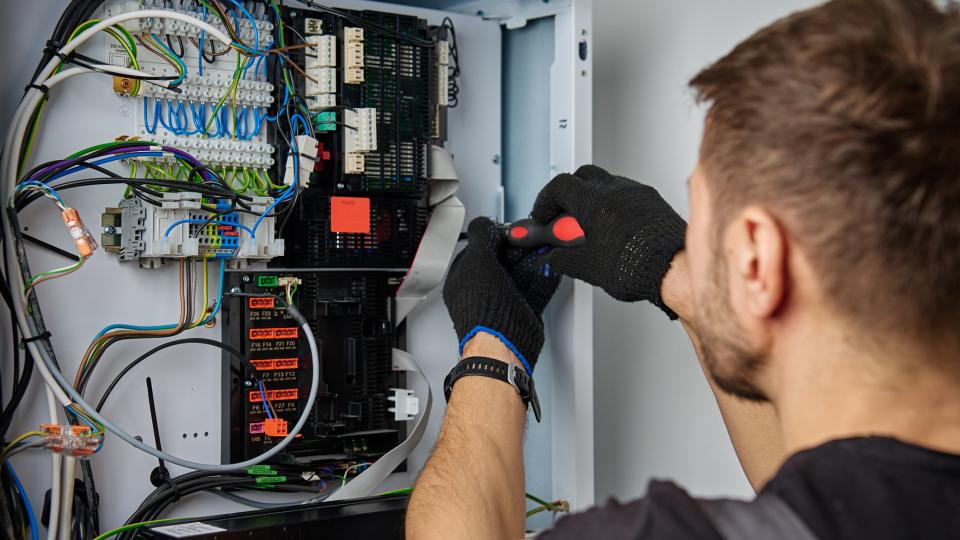
How to Avoid Dangerous Electrical Scams
A flickering light or tripped breaker can feel like a small nuisance, until the wrong repair turns it into a fire hazard. Electrical scams and careless electrical work are especially dangerous because the damage can hit your wallet and your home at the same time.
On an episode of Trust Issues, consumer investigator Dale Cardwell, senior producer Marnie Zambri, and Dari Payrow of TrustDALE Certified R.S. Andrews walk through a real case that shows how fast a simple repair can go sideways. Their advice comes down to one point: slow down, ask better questions, and never treat electrical work like a quick bargain purchase.
Why electrical work deserves a healthy fear
Dale Cardwell knows from personal experience how dangerous electricity can be. As a kid, he and his younger cousin wondered what would happen if they stuck a fork into a light socket. His cousin tried it first, got a jolt, and nobody repeated that experiment. The lesson stuck, and so did the respect for electricity.
That story sounds funny until you connect it to what happens in real homes. People ignore buzzing outlets, loose switches, warm receptacles, and breakers that keep tripping because the lights still come on, or the problem seems minor. However, electricity does not reward wishful thinking. A small issue can sit hidden behind a wall or inside a panel until it becomes expensive, destructive, or dangerous.
According to the National Fire Protection Association: 68% of home fires are caused by faulty wiring. And the consequences include deaths, injuries, and billions of dollars in property loss.
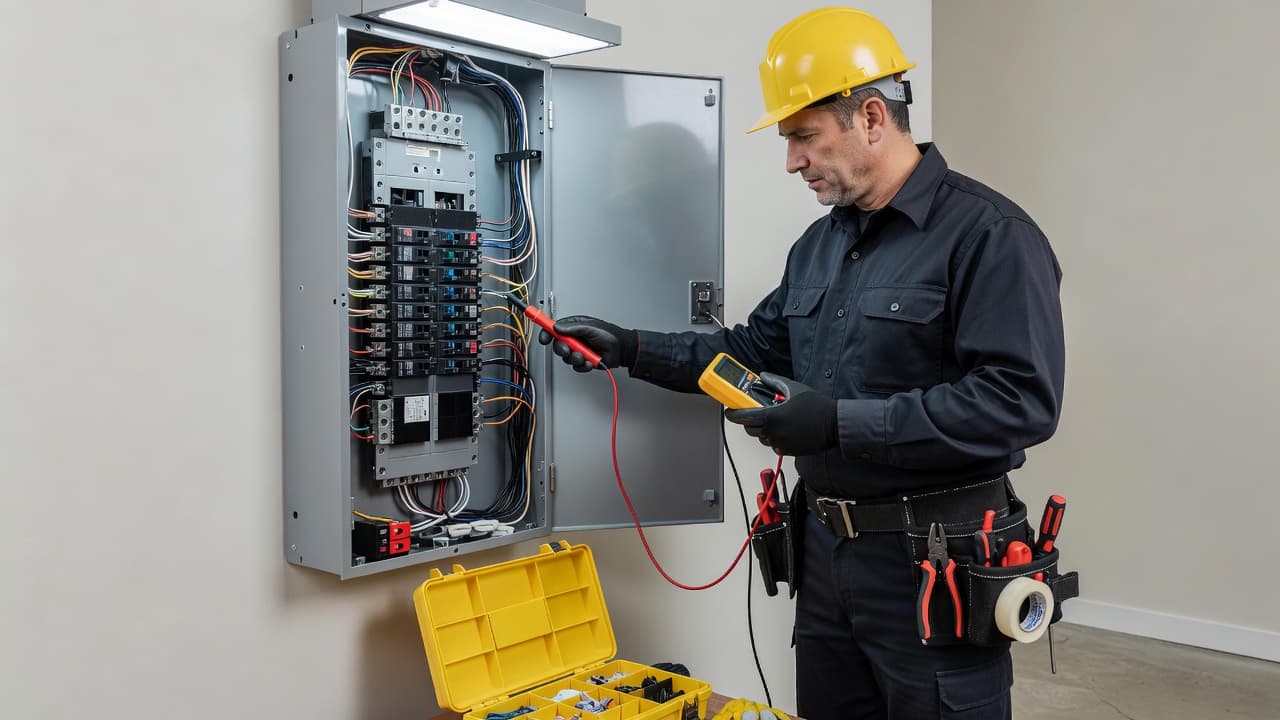 A lot of homeowners want to believe an electrical problem will stay small. It usually doesn't. According to Dari Payrow, common warning signs include flickering lights, discolored outlets, burning odors, buzzing sounds, plugs that no longer fit tightly in outlets, and old wiring in aging homes. Another red flag: electrical panels that show burn marks from arc flashing, even when the problem itself is not immediately visible.
Old-house charm does not excuse bad wiring
The concerns grow in older homes like those in Atlanta's Inman Park, where many houses are around 100 years old. In neighborhoods like that, it's easy to shrug off flickering lights or worn switches as part of the home's "character."
But Dari Payrow says that's not character. That's just an unnecessary safety hazard. "Character belongs in the style of the home, not in unsafe wiring behind the walls. You can keep older-looking fixtures and still update the electrical system around them. If you ignore those signs, the issue usually gets worse, costs more later, and increases the risk of fire." says Dari Payrow.
If a switch has to be taped off to keep a breaker from tripping, the problem has not been repaired.
That brings the conversation to one homeowner who learned that lesson the hard way.
Barbara Manson's $780 repair became a safety problem
Barbara Manson was having trouble with her garage door. It wasn't working correctly, and she did what most homeowners do under pressure: she picked up her phone and searched for the nearest electrician. The person she found promised he could get there in about 30 minutes, which felt like a relief.
That quick response came with a steep price. Barbara said the electrician charged her $780. After she wrote the check, he gave her a strange warning. He told her not to touch one particular switch, the one he had covered with electrical tape.
The next morning, Barbara's son Carl called to question the work. According to the story shared on the podcast, the electrician hung up before Carl could even get Barbara's name out.
The red flags were obvious in hindsight
Once you line up the details, the repair had warning signs all over it:
- The electrician replaced a breaker with the wrong brand for the panel.
- He covered a switch with tape instead of fixing the reason the breaker tripped.
- He stopped communicating as soon as the homeowner challenged the work.
Each one of those signs matters. Wrong parts in a panel are not a cosmetic issue. Taping over a switch is not a repair. Disappearing after payment is often a clue that the contractor knows the job will not hold up under scrutiny.
A licensed pro found the real problem fast
To check Barbara's repair, Dale brought in TrustDALE Certified R.S. Andrews. Their electrician found that the previous contractor had installed the wrong breaker and left the underlying problem unresolved. In Dari's team's view, the taped switch was a clear sign the work was never completed correctly.
The price issue was just as striking. According to R.S. Andrews, a proper fix should have cost around $350 to $400. Barbara had paid nearly double that for an unsafe result.
The outcome took a team effort. R.S. Andrews replaced the improper breaker with the correct one, and Dale's team helped secure a refund of $390, which was half of what Barbara originally paid. She got safer work, some of her money back, and a painful reminder that fast service is not the same as qualified service.
How to vet an electrician before work starts
The best time to avoid a bad electrical repair is before anyone touches the panel. Dari's advice is straightforward: start with credentials, then move to paperwork, then judge how the contractor communicates.
Ask for proof of license and insurance
A qualified electrician should be able to show that the company and the technician are properly licensed and insured. That matters because electrical work affects every part of your home. Load requirements, grounding systems, safety procedures, and code compliance all come into play, even on jobs that sound simple.
Insurance matters for a second reason. If someone gets hurt on your property or damages your home, poor coverage can leave you exposed. Dari said homeowners can even ask for a certificate of insurance before work begins.
Permits matter too. If local rules require one, do not let a contractor skip it. Permits are there to help make sure the work meets code and can stand up to inspection. Skipping that step may save time in the moment, but it can create larger repair bills and resale problems later.
A real estimate should answer basic questions
A written estimate is not optional. It should spell out the scope of the job, the parts being installed, labor costs, permit costs, and any added fees. It should also explain the warranties.
And it's important to understand the clear line between a product warranty and a workmanship warranty. The parts might carry a one-year, three-year, or five-year manufacturer warranty, depending on what is installed. Labor coverage is separate. As a rule of thumb, a workmanship warranty of at least one year is a fair place to start.
If the quote feels vague, keep asking. A good electrician should be able to explain the repair in terms you understand. A bad one often hides behind jargon, rushes you, or acts annoyed when you want details. Many of those same patterns appear in this guide to spotting fraudulent electricians.
A trustworthy electrician explains options
In the podcast, one of Dale's best questions was whether electrical repair is a finite science or whether there can be more than one correct option. Dari said there absolutely can be more than one path.
That matters because an honest electrician does not treat every problem like a one-answer sales pitch. In a real example from Dale's own home, an R.S. Andrews technician explained the pros and cons of adding a new circuit versus using an existing one. He said the existing circuit would probably be fine, which saved Dale money. That is what transparency looks like.
An electrician who educates you is usually easier to trust than one who pressures you. If someone refuses to explain tradeoffs, dismisses your questions, or insists on a costly fix without context, slow the process down.
If one quote comes in 25% to 50% lower than the others, treat it as a warning sign, not a bargain.
Cheap electrical work often becomes expensive electrical work after something fails, trips, burns, or has to be redone.
Modern electrical needs are putting more strain on old systems
Homes use more power than they did a generation ago. Between larger appliances, smart devices, home offices, and electric vehicles, the electrical panel carries more of the load than many homeowners realize.
Dari said one of the most common upgrade requests today is EV charger installation. Whole-home surge protection is another. He also stressed the importance of proper grounding, including grounding rods that can direct electrical energy away from the house in the event of lightning or other surges.
He noted that recent code updates have increased attention on surge protection. That makes sense when you consider how much expensive equipment sits inside the average home now, including computers, appliances, entertainment systems, and vehicle chargers.
EV chargers often reveal panel problems
A listener named Judy asked a smart question: why would an EV charger quote include a panel upgrade?
Dari's answer was that it depends on the home. Older panels may not have enough capacity. The distance from the panel to the garage also affects the job. In some cases, the existing panel may be outdated or may rely on equipment lines that raise safety concerns. He mentioned older Challenger panels as one example that can come up during these inspections.
Dale added his own experience. When his family looked into installing a charger, the project involved more than the charger itself. They had to think about where the car would sit, how the line would run, and whether the panel could support the added demand. The final answer was to skip the home charger because his daughter could charge affordably at Georgia Tech, but the bigger lesson was clear: an EV charger is often a panel conversation, not just a plug conversation.
Skip internet gadgets that promise easy bill savings
Another listener, Mary Beth, asked about an "energy crusher" she bought from Green Revolution more than a decade ago. She had not seen any noticeable reduction in her power bill and wanted to know if the device was a scam.
Dari did not sound impressed. He said those products are often marketed as surge protection for large appliances and may claim to cut energy use by around 8%. However, his view was simple: if you bought it online years ago and it has not changed your bill, it is probably outdated and not worth trusting.
His alternative was much more practical. Put your money into professional-grade surge protection and the overall health of the electrical system. That may not sound flashy, but it is a lot more credible than a mystery box that promises to shrink your utility bill.
Dale's checklist for hiring an electrician
If you want a quick reference, this table captures the strongest takeaways from the episode.
| What to do | What to avoid | Why it matters |
|---|---|---|
| Verify the electrician's license and insurance every time. | Don't assume a fast response means the contractor is qualified. | Credentials and coverage protect your home, your budget, and your liability. |
| Get a detailed written estimate before work begins. | Don't accept vague verbal pricing. | You need the scope of work, parts, labor, permit costs, and warranty terms in writing. |
| Ask whether permits are required for the job. | Don't allow work to start without required permits. | Permits help keep the work code-compliant and inspectable. |
| Ask the electrician to explain your options in plain language. | Don't hire someone who gets irritated by questions. | Transparency is one of the clearest signs that the contractor knows the work and respects the customer. |
| Compare quotes carefully. | Don't pick the lowest bid just because it is the cheapest. | A deeply discounted quote often means corners are being cut. |
| Leave major electrical repairs to licensed professionals. | Don't rely on DIY videos for serious electrical work. | Electrical mistakes can cause fires, injuries, and repeated repair costs. |
The bigger point is not to become an electrical expert overnight. It is to know enough to spot the warning signs before a contractor talks you into a bad decision.
Dale Cardwell's book, Don't Get Scammed, Get Smart: Seven Steps to Outsmart Today's Most Dangerous Post-COVID Scams, takes a deep dive into those warning signs and the patterns behind them. If you live in the Atlanta area, TrustDALE also maintains a list of vetted companies for services like HVAC, plumbing, and electrical work.

Final thoughts
A bad electrical repair can hide behind a working light switch, a taped outlet, or a low quote that sounds too good to pass up. That is why electrical safety starts long before the repair itself. It starts with who you invite into your home.
Barbara Manson's story is a good reminder that speed and confidence are not proof of skill. When the work is explained clearly, priced in writing, and backed by the right credentials, you have a much better chance of getting the job done right the first time. Want a deeper dive? Check out the Trust Issues podcast and watch Short Circuit: The Shocking Truth About Electrical Scams on the TrustDaleTV YouTube channel or wherever you get podcasts.