
You can often replace deck boards without replacing the frame, but only when the framing, connections, and footings are dry, stable, and structurally sound. New boards can hide serious rot or failing supports, leaving you with an attractive deck that isn't safe to use.
If your surface boards are splintered, faded, or rotted in spots, resurfacing may refresh your outdoor living space and save money. The first question to ask yourself is whether or not your deck is reaching the end of its expected lifespan? You can read more in TrustDALE's guide to wood deck lifespan to assess what age, weather exposure, and maintenance may have done below the surface.
Key Takeaways
- You can replace deck boards without replacing the frame when the joists, beams, posts, ledger, footings, and hardware are stable and structurally sound.
- Inspect the exposed framing for rot, movement, corrosion, water damage, poor connections, and drainage problems before buying replacement materials.
- New decking cannot correct a failing ledger, beam, post, footing, or other structural defect; widespread damage usually makes a rebuild the better investment.
- Choose replacement materials that match the existing frame, including board thickness, joist spacing, fasteners, expansion gaps, and drainage requirements.
- Compare detailed estimates that include demolition, disposal, structural repairs, permits, labor, materials, and finish work before signing a contract.
When Can You Replace Deck Boards Without Replacing the Frame?
You can replace deck boards without replacing the frame when the beams, joists, posts, ledger board, footings, and metal connections remain sound. The structural deck frame, rather than the surface boards alone, determines whether resurfacing is appropriate. Sun bleaching, peeling stain, isolated rot, and splinters usually affect decking first. Maintenance history and current framing condition both matter.
However, don't order new material based only on what you can see from above. Ask a qualified contractor to inspect the exposed frame before the project starts, especially if your deck is older, elevated, attached to the house, or often stays damp after rain.
Signs the Existing Frame Is Still Safe to Keep
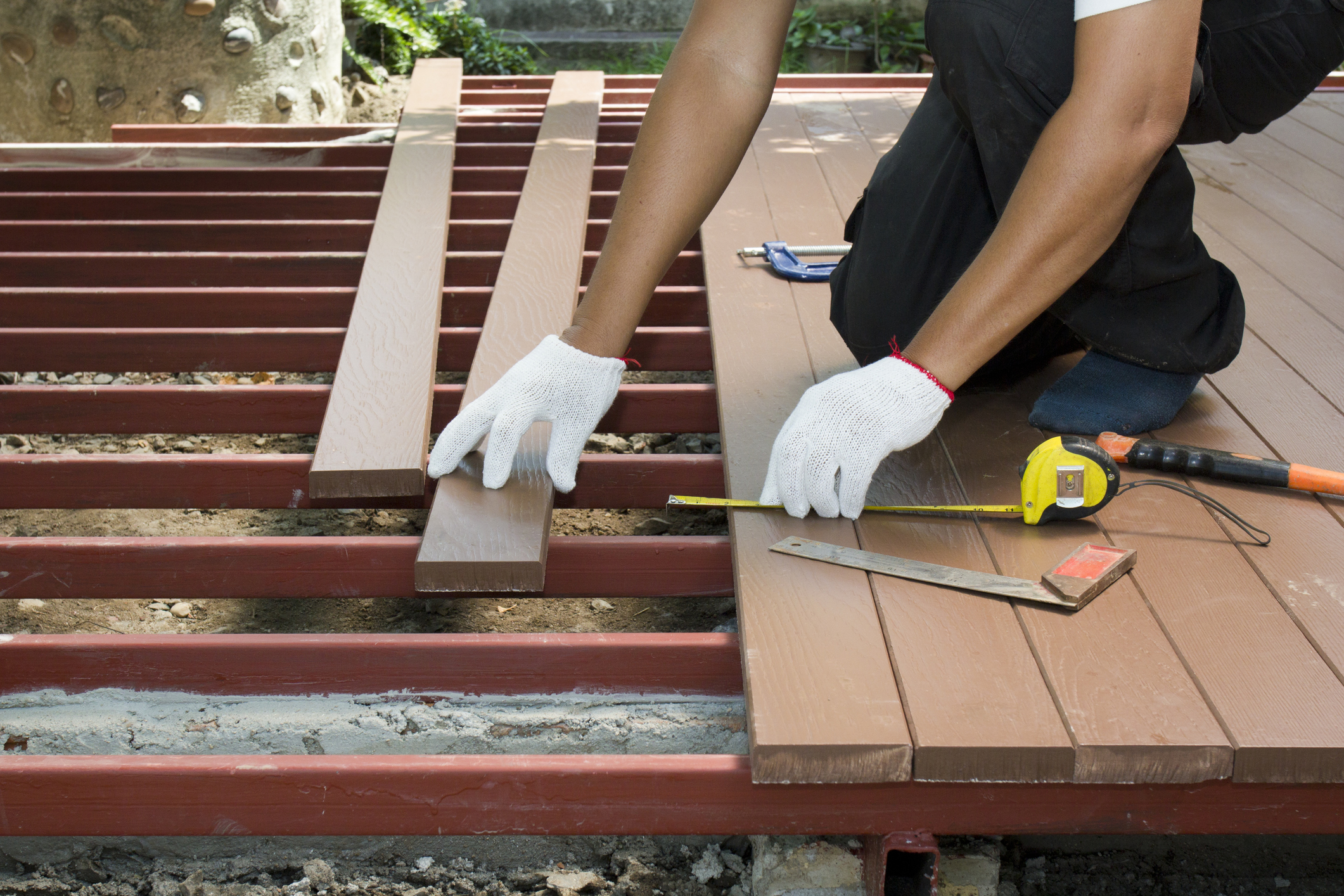
A good resurfacing candidate has straight, stable framing members with no widespread decay. Joists should feel firm when probed with an awl or screwdriver. Posts should not rock at their bases, beams should not sag, and metal hardware should be intact rather than badly corroded.
Pay close attention to the ledger, the board that connects an attached deck to your home. It should sit tightly against the house and have flashing that directs water away. A solid frame also needs properly supported joists, secure fasteners, and no obvious signs of water entering the house wall. The top boards can look rough while the structural system remains in good shape.
Red Flags That Point to a Full Deck Rebuild
Board-only replacement becomes a poor investment when the support system has failed. Covering weakened framing with new decking leaves the expensive part of the problem untouched.
Watch for these conditions:
- Several joists have deep rot, soft sections, splitting, or insect damage.
- Posts lean, crack, shift at the ground, or sit on deteriorated footings.
- Beams sag, show large checks near connections, or have decay where joists rest.
- The ledger is loose, improperly attached, missing flashing, or pulling away from the house.
- Water repeatedly collects under the deck or damages framing near the home.
- Existing stairs, guard rails, or framing cannot reasonably meet current local requirements.
Fresh decking can't restore the strength of a failed ledger, beam, post, or footing.
How to Replace Deck Boards While Preserving the Frame
Resurfacing requires more than pulling off old boards and laying new ones. A contractor should remove the boards carefully, avoid splitting joists, and inspect every structural member once the surface is open.
Next, clean the exposed frame and check it for damage and moisture. Replace compromised joists or blocking before installing new decking. Check drainage underneath, maintain airflow, and confirm that water won't remain trapped against the house.

What Tools Are Needed to Replace Deck Boards?
Basic tools for replacing deck boards may include a pry bar or cat's paw, hammer, drill/driver with appropriate bits, and a tape measure. You may also need a chalk line, circular or oscillating saw, and an awl or screwdriver for probing wood.
Wear safety glasses, gloves, hearing protection, and other appropriate personal protective equipment. Composite products may require product-specific bits or a compatible hidden-fastener driver. Hire a professional for elevated work or framing that appears unsafe or structurally questionable.
Choose Replacement Deck Materials That Fit Your Frame
Pressure-treated wood is widely available and can be economical, but it requires periodic maintenance. Western red cedar and redwood offer a natural appearance and decay resistance, though appearance, availability, and cost vary. Composite decking can reduce routine staining and is often made partly from recycled materials. PVC decking resists moisture but can cost more and has its own installation requirements. Hardwood decking is another material category to consider.
The replacement material must suit the existing frame. Board thickness, joist spacing, fastener type, temperature changes, and drainage all matter. Composite and PVC products often require specific gaps for expansion and contraction. They may also require hidden fasteners or joist spacing that differs from wood.
Consider maintenance expectations alongside appearance and upfront cost. Slip resistance also matters, particularly for stairs or areas that remain wet. Don't mix materials based on appearance alone. Read the manufacturer's installation instructions and ask the installer to confirm that the existing framing meets them.
Check the Details That Protect the Repaired Deck
With the surface removed, you can inspect details that are normally hidden. Check joist ends, blocking, hardware, flashing, guard rails and their post connections, stair stringers, and every fastener. Replace corroded connectors and loose hardware before new boards cover them.
Pressure-treated wood often needs field-cut ends treated with a compatible preservative. Proper board gaps also matter because they let water drain and help the boards dry. According to the International Association of Certified Home Inspectors, deck inspections should start with the foundation and supports, then move upward, as outlined in InterNACHI's illustrated deck inspection guidance.
Permit rules and building code requirements vary by city, county, and project scope. Ask your local building department whether structural repairs, railing work, stair changes, or a full resurfacing project requires a permit.
What Does It Cost to Replace Deck Boards and Keep the Frame?
Resurfacing usually costs less than rebuilding because you retain the frame, footings, and basic layout. An online cost calculator can provide a rough planning range, but it can't replace an inspection.
Your final cost depends on the deck's size, material choice, labor, demolition, hauling, site access, stairs, railings, permits, finish work, and structural repairs. Pressure-treated wood usually costs less upfront than composite or PVC boards. However, long-term maintenance expenses can affect the true cost of each material.
Hidden rot can change the estimate after old boards come off. Difficult access and multiple deck levels can also raise labor costs, making resurfacing less competitive with a complete rebuild.
Get at least three detailed estimates. Compare each contractor's assumptions with a cost calculator, then review the itemized prices for removing boards, installing new decking, repairing the frame, handling disposal, and completing stains or sealers. This format lets you compare resurfacing with rebuilding instead of relying on one bottom-line number.
Questions to Ask Before You Sign a Deck Contract
Ask every bidder to put the following answers in writing:
- Which joists, beams, posts, footings, and ledger connections did you inspect?
- What evidence shows that the current frame can remain in service?
- How will you price hidden rot or repairs discovered after board removal?
- Which board material, thickness, fasteners, and spacing will you use?
- Is deck railing work, repair, or replacement included in the quoted scope?
- Who obtains permits, removes debris, and handles final cleanup?
- What work is excluded, and what material and workmanship warranties apply?
Review payment terms before signing. A clear agreement states the scope, materials, project schedule, cleanup responsibility, warranty terms, and change-order process. Never accept vague language that lets a contractor substitute materials without your written approval.
Should You Hire a Professional for Deck Board Replacement?
Professional help is the safer choice for elevated decks, attached decks, stairs, guard rails, suspected ledger issues, structural movement, or visible rot. These areas carry loads and help protect against falls. A contractor familiar with your chosen decking product can also confirm joist spacing and fastening requirements before materials arrive.
When searching for a qualified deck builder, it is important to check insurance, local licensing or registration requirements, references, estimates, and the written contract. Or you can take the guesswork out of the equation by going to TrustDale.com where our Certified Partners have already passed a rigorous seven-point inspection and are backed by our $10,000 Make It Right Guarantee.
How to Avoid a Cheap Repair That Creates a Bigger Problem
Be wary of any contractor who won't inspect beneath the boards, offers a price without measuring the deck, or dismisses visible movement as cosmetic. A low quote may exclude demolition, framing repairs, disposal, permits, or finish work.
Also walk away when a contractor demands full payment upfront, skips required permits, or refuses to identify the decking brand, fastener system, and warranty terms. A reputable provider explains why resurfacing is appropriate, documents hidden conditions found during removal, and gets your approval before expanding the work.
Frequently Asked Questions
Can I replace deck boards without replacing the frame?
Yes, resurfacing is possible when the frame, connections, and footings are dry, stable, and structurally sound. Have the exposed framing inspected before installing new boards, especially on an older or elevated deck.
How do I know if my deck frame is still safe?
Sound framing should feel firm, remain reasonably straight, and show no widespread rot, sagging, movement, or severe corrosion. The ledger should be securely attached to the house with proper flashing, and posts should stand firmly on stable footings.
When should I rebuild the entire deck?
A full rebuild may be necessary when multiple joists, beams, posts, footings, or ledger connections have deep rot, movement, or serious attachment problems. Rebuilding may also be more practical when stairs, guard rails, or the framing cannot meet current local requirements.
What should I inspect before installing new deck boards?
Check joist ends, blocking, beams, posts, hardware, flashing, fasteners, stair stringers, guard rail connections, and drainage. Replace compromised structural members and corroded connectors before covering the frame with new decking.
Is it cheaper to replace deck boards than rebuild the deck?
Resurfacing usually costs less because the existing frame, footings, and layout remain in place. Hidden rot, difficult access, stairs, railings, permits, and material choices can significantly affect the final price, so compare itemized estimates for both options.
Make the Frame Decision Before Buying Deck Boards
Replace only the boards when the deck frame is structurally sound. Repair or rebuild when rot, movement, poor connections, inadequate drainage, or water damage affects the support system.
Compare itemized estimates for material cost, maintenance needs, and structural repairs before choosing resurfacing. Verify the contractor and get the full scope and coverage terms in writing.
Inspect the framing before buying materials, or schedule an evaluation with a qualified deck professional when the frame's condition is uncertain.