
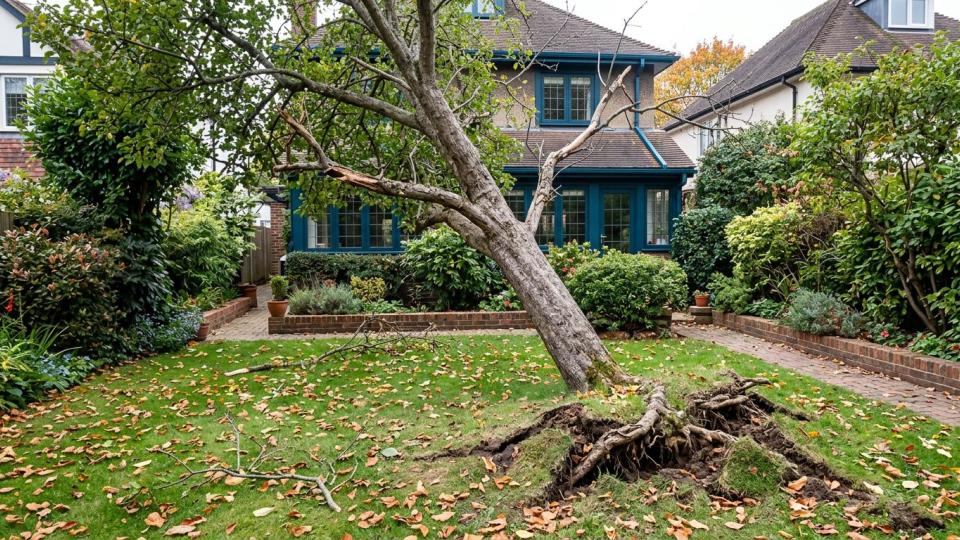
Now's the best time to take a hard look at your trees
The leaves are coming down, and suddenly you can see your trees' bones: every crooked trunk, dead limb and odd angle that was hidden all summer. That makes late fall one of the best times to spot trouble, and the timing couldn't be better. Winter wind, soaked ground and the occasional Georgia ice storm are on the way, and ice can add a tremendous amount of weight to branches.
So is that leaning tree in your yard a danger, or has it just always grown that way?
The short answer: you can't tell from the angle alone. A tree that's leaned for decades may be perfectly stable, while one that shifted a few degrees last week could be about to fall. The biggest warning signs are a lean that's new or getting worse, cracked or raised soil, damaged roots and defects in the trunk or branches.
What's underneath it matters just as much. A risky tree over an empty field is a very different problem from one leaning toward your bedroom, your driveway or a power line.
Key takeaways
- A new or worsening lean is urgent, especially with cracked or lifted soil at the base.
- An old lean can still become dangerous if roots are damaged or decay sets in.
- What the tree could hit matters. Homes, walkways, parking areas and power lines raise the stakes.
- Keep people and pets away from a suspect tree, and leave bracing or removal to professionals.
- Vet before you hire. Get insurance documents, licensing and a written scope before any work starts.
Crooked or dangerous? Start with what's changed
Instead of asking how much the tree leans, ask whether anything has changed. A trunk that slowly grew at an angle over decades is very different from one that shifted overnight, though neither history guarantees the tree is safe today.
According to the International Society of Arboriculture (ISA), assessing tree risk means looking at the tree's defects and the people or property it could hit. A full, green canopy doesn't prove the roots can hold the tree up.
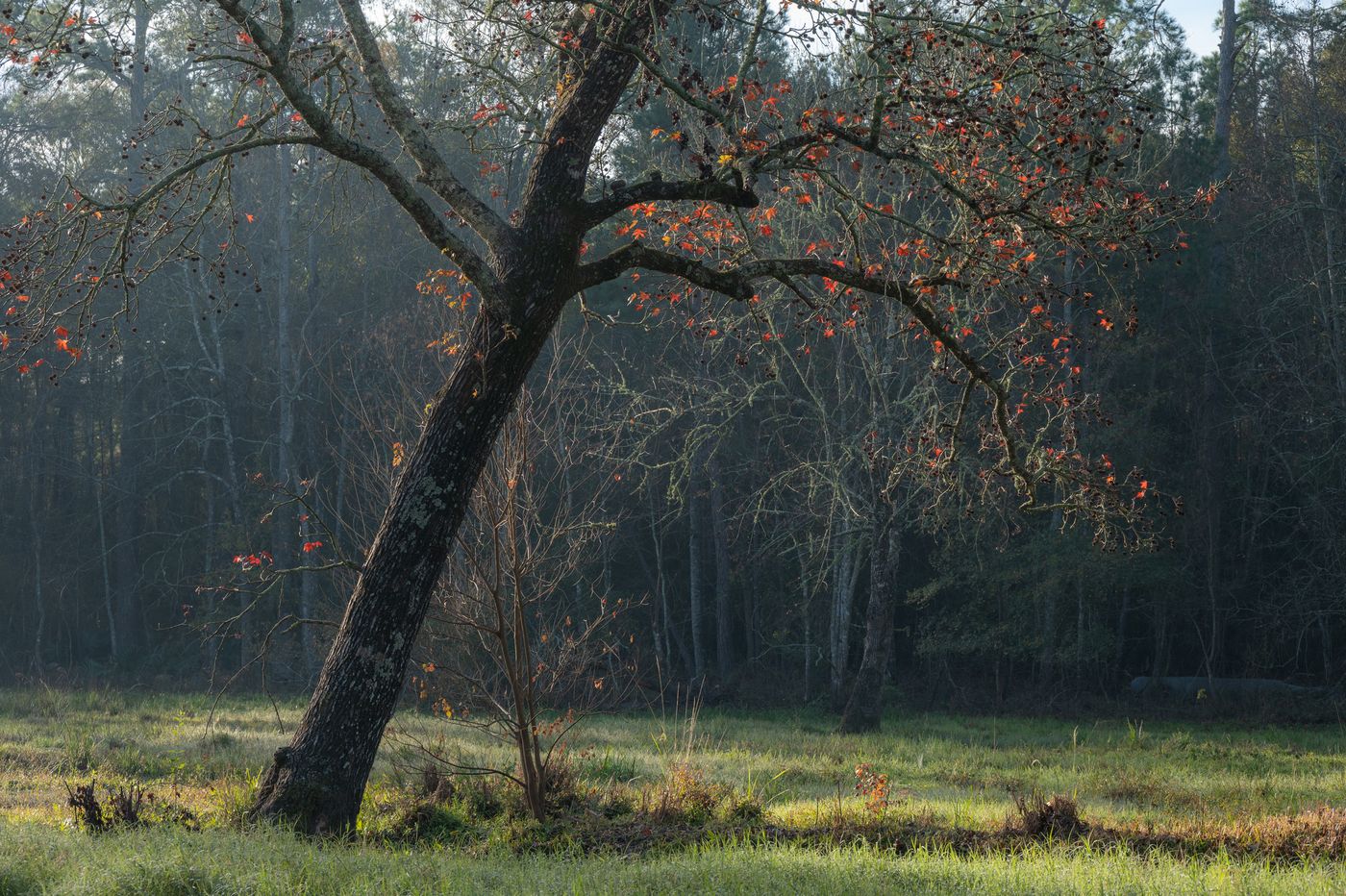
7 warning signs a leaning tree could fall
Signs the lean may be new
1. The lean is new or getting worse. The tree looks different after a storm, or the angle seems to be increasing.
2. The soil is cracked or lifted at the base, especially on the side opposite the lean. That can mean the root plate, the mass of roots and soil that anchors the tree, has started to pull up.
University of Florida IFAS Extension lists a fast-developing lean and heaving soil as reasons to call an arborist promptly. You don't need to know the cause before you keep people away and get help.
Signs an old lean needs attention
3. Exposed or damaged roots, such as roots cut during a project or broken by a mower.
4. Cracks, splits or cavities in the trunk.
5. Decay or mushrooms growing on the trunk or at the base. Fungi can signal rot inside.
6. Dead, broken or hanging limbs, or a snapped top, even if the trunk hasn't moved.
7. Recent digging nearby. Trenching, construction, a new driveway or utility work can damage roots you can't see.
None of these automatically means the tree has to come down. They mean the lean can't be judged on its own.
Tip: Dig up old photos of your yard. They can show whether the angle has changed. Just don't walk up to an unstable tree to snap a new comparison shot.
Why winter raises the stakes
Wind, soggy ground and ice
Strong winds push harder on a tree, and saturated winter soil can loosen its grip. Ice is the wild card: even a thin coating adds a lot of weight to every branch, and a tree that's already leaning or carrying a cracked limb has less room for error. Combine any of these with the warning signs above, and the risk goes up.
After a big storm, take another look from a safe distance, and call for an inspection if you notice a changed lean, new ground movement or damaged branches.
But don't let calm weather fool you. University of Florida IFAS Extension warns that broken or partially attached branches can fall with no wind at all.
What's in the tree's path?
The same defect means something very different over an empty corner of the yard than over a busy front door. Think about:
- At home: bedrooms, the driveway, sidewalks, play areas and power lines
- At a business: entrances, customer lines, employee parking and delivery routes
- During the holidays: where guests will park and walk
Don't forget the branches. A heavy limb can threaten an entrance even when the trunk leans away from it. And never assume a tree will fall only in the direction it's leaning.
Tell the arborist how often people use the area. A walkway that's busy all day is a bigger concern than a rarely visited corner.
Move the target if you can, safely
You can cut the risk right away by moving people and things out of harm's way, as long as you don't have to walk into the danger zone to do it:
- Block off the affected parking spaces
- Use a different entrance
- Move holiday decorations, grills or outdoor furniture away, if you can reach them without going under the tree
Never walk under an unstable tree to move a car or grab belongings. If a tree is threatening an occupied building, getting people out comes first.
Spotted a warning sign? Here's what to do
Right now
- Keep people and pets out of the fall zone. Give it at least the tree's full height in every direction, and more if you can, not just the side it leans toward.
- Stay off raised roots and out from under broken branches, even after the weather clears.
- Don't brace, rope, cable or cut the tree yourself. That's a job for a professional.
- If a tree or limb is actively falling and people are in danger, get to safety and call 911.
When to call an ISA Certified Arborist
Schedule an on-site evaluation if you notice:
- A recent or worsening lean
- Heaving or cracked soil at the base
- Damaged roots
- Cracks, cavities or decay in the trunk
- Dead or hanging limbs
When you call, describe what changed and whether the tree is near your home or other areas people use. You can find certified arborists at TrustDALE.com.
Ask the arborist whether the tree should be monitored, partly trimmed or braced, or removed. If they recommend keeping an eye on it, ask exactly what changes should prompt another visit. If they recommend keeping the tree, the plan should be one you can understand and follow.
Bonus: late fall and winter, when trees are dormant and bare, is often a good time for an arborist to see a tree's structure clearly.
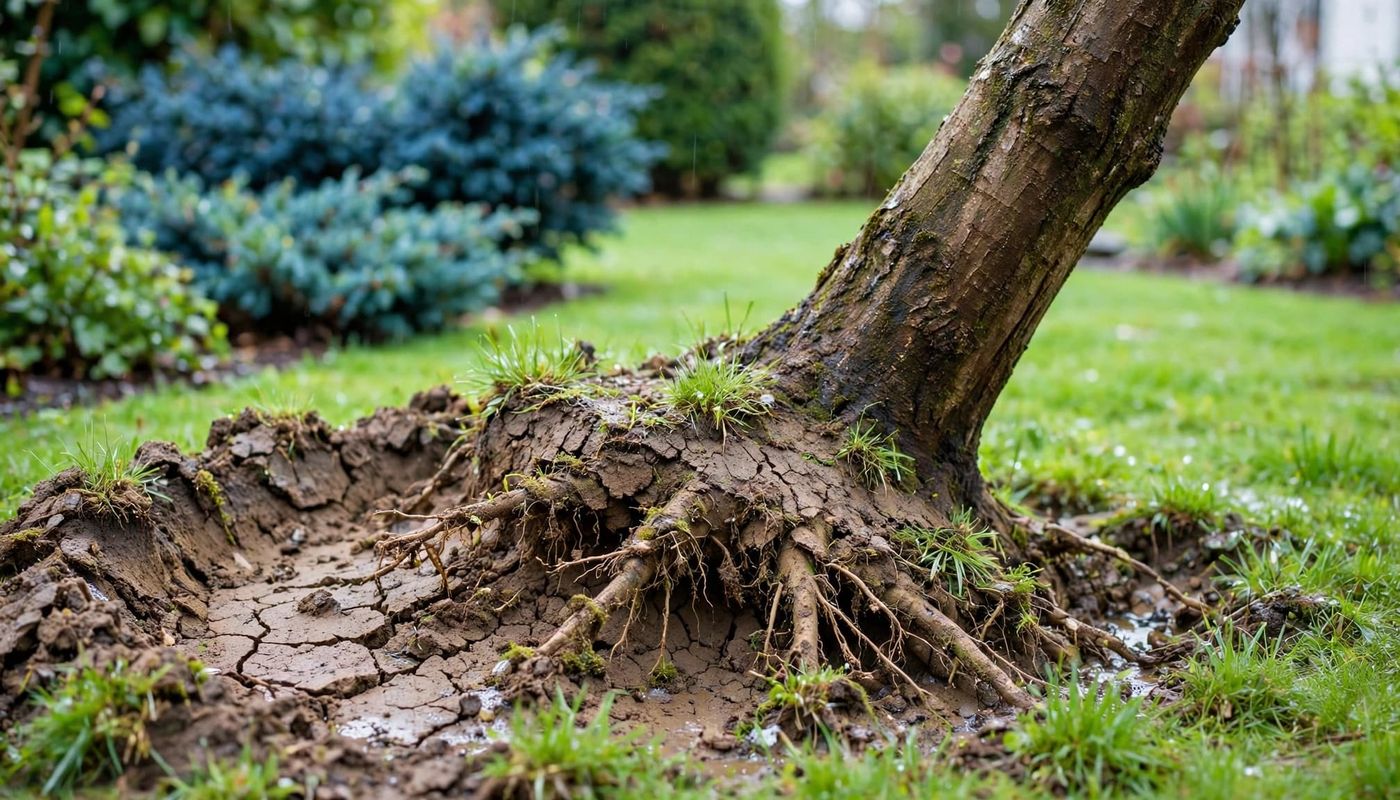
Before you hire a tree service
After a storm, door-knockers with chainsaws show up fast. Take a few minutes to vet anyone before they touch your tree.
Compare itemized estimates
Removal prices typically depend on the tree's size and location, how easy it is to reach, what's nearby (like your house or power lines) and the equipment and crew needed. Ask each company to spell out exactly what's included:
- Removal or trimming
- Hauling away the wood and debris
- Stump grinding
- Cleanup
Check licensing and insurance
- Licensing: match the company's legal name to the relevant licensing records. Requirements vary by state and city, and a general business license doesn't prove tree-care qualifications.
- General liability insurance: covers damage to your property.
- Workers' compensation: covers injuries to the crew, where required. One doesn't replace the other, so ask for both.
- Make sure the coverage fits the job. Ask whether the insurance covers tree work, not just landscaping, and whether subcontractors are covered. You can also call your own insurer to ask how the work affects your policy.
An expired certificate or a license number you can't confirm is a reason to pause. "I'll bring the paperwork later" isn't proof.
Get it in writing
Your written agreement should cover the work, cleanup and payment terms, and name the company actually doing the job. Don't sign or pay just because someone says the discount disappears when they leave your driveway.
Need a tree service you can trust? Find a TrustDALE Certified tree service at TrustDALE.com. Our Certified Partners pass our rigorous seven-point inspection and are backed by our $10,000 Make It Right Guarantee.