
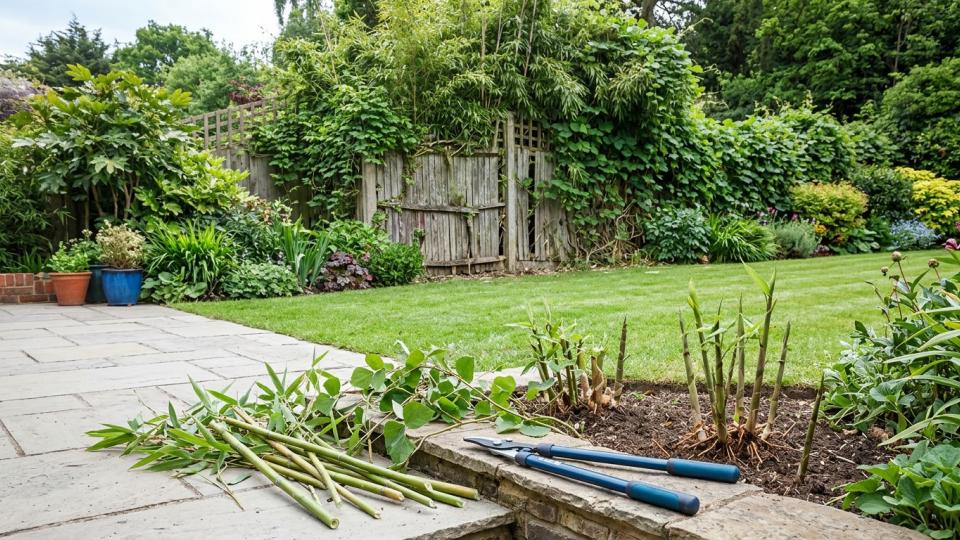
You plant a little bamboo at the edge of your yard as a fast and easy privacy fence. Next thing you know, it's everywhere.
Or you start to notice kudzu spreading in your yard.
So you pay someone to clear it out. The crew hacks it all down, hauls it off, and your yard looks great. A few weeks later? It's creeping right back.
Here's why: cutting kudzu vines or cutting down bamboo takes care of what you can see, but the roots underground are still alive and ready to push out new growth. A cleanup can look finished long before the plant is actually gone.
I know this fight firsthand. I've dealt with kudzu for years, and I battled bamboo when I lived in Durham, North Carolina. So I sat down with Brad Claymon of TrustDALE Certified Richmond Tree Experts to talk about invasive plants and real solutions for getting rid of them on our Trust Issues podcast.
The starting point is knowing what you're dealing with, because fast-growing and invasive don't mean the same thing.
Key Takeaways
- Kudzu can grow back after visible vines are cut because underground growth holds energy that supports new growth.
- Goats and mowing can reduce foliage, but they may not exhaust established roots. Lasting control can require repeated, property-specific work.
- The right removal plan depends on the affected area, site access, slope, nearby vegetation, and growth on adjoining property.
- Before hiring a contractor, ask what the work includes, how it will protect plants and water, and what follow-up is available.
Fast Growth Alone Doesn't Make a Plant Invasive
According to the U.S. Department of Agriculture's National Invasive Species Information Center, an invasive species is non-native to the ecosystem and harmful, or likely to cause economic, environmental or human-health harm.
That distinction matters. A plant doesn't become invasive simply because it grows quickly, and a non-native plant doesn't automatically cause problems wherever it grows.
For a homeowner, the concern is what the plant is doing. Is it spreading beyond the place where it was planted? Established growth can outcompete nearby vegetation or climb trees. Identify the plant before deciding how to respond.
Bamboo's appeal is easy to understand: it grows into a thick privacy screen. USDA identifies kudzu as Pueraria montana, a perennial vine familiar across the South. The Soil Conservation Service promoted it for erosion control, but that history doesn't mean it's appropriate for every property. Neither familiarity nor an attractive appearance tells you whether a plant belongs in a particular setting.

Kudzu Can Cover Trees and Add Stress
When I worked as a reporter in Birmingham, Red Mountain was covered with kudzu. Most of the television stations were located there, and the vine stretched across the mountain.
That kind of coverage explains why kudzu draws so much attention. The Nature Conservancy describes kudzu's aggressive spread through runners and underground growth. Under favorable growing conditions, the vine can reportedly grow one foot per day. Once established, the plant can extend across a property and climb the vegetation in its path.
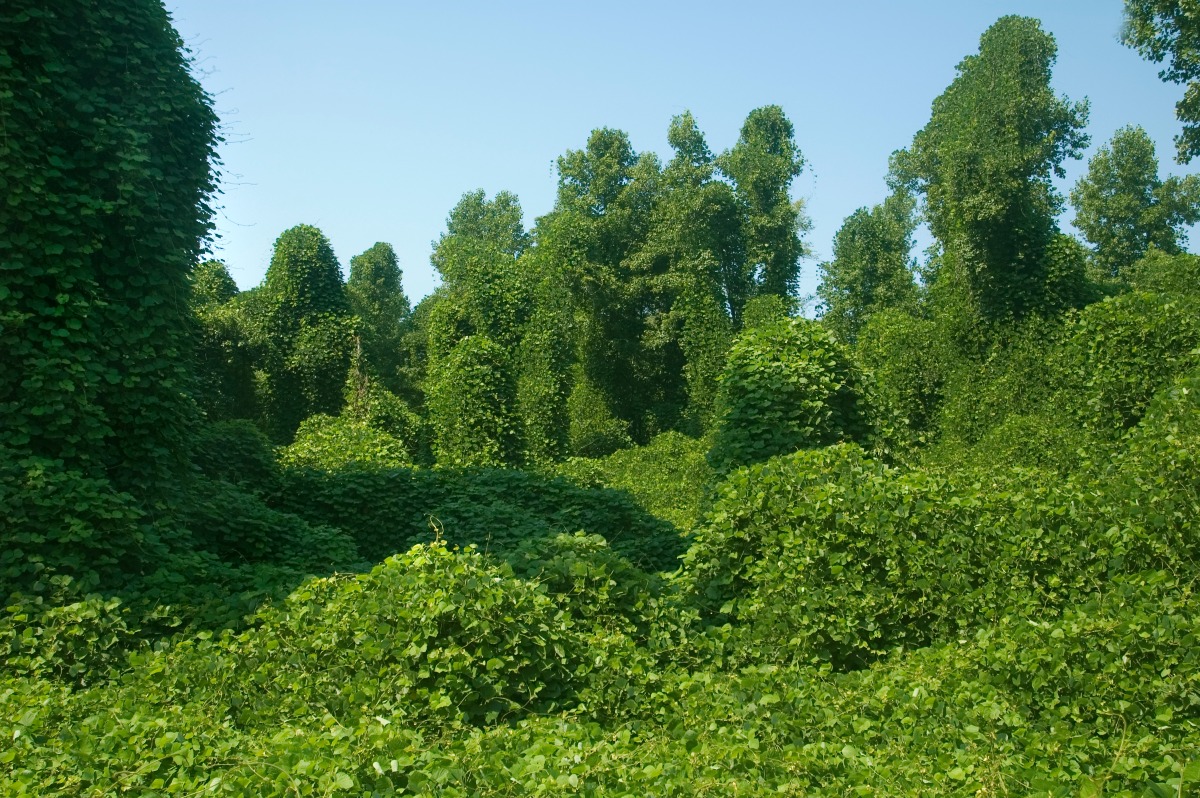 Kudzu can quickly takeover a yard
Claymon explained two ways that climbing kudzu stresses trees. First, the foliage can block sunlight from reaching parts of the canopy. That interferes with the tree's ability to carry out photosynthesis.
The vines also add weight. A tree carrying that extra load faces additional stress even before a homeowner notices a change in its condition.
For that reason, Claymon recommends responding promptly when kudzu starts climbing a tree. Addressing the growth early can make the work easier and less expensive than waiting until the vines cover a much larger area.
Goats Can Reduce Foliage Without Eliminating Kudzu
Marnie described living beside a large, undeveloped property covered in the vine. Goats sometimes came in to eat the growth, but the vines continued creeping over fences.
That experience gets to an important limitation of clearing visible vegetation.
Brad Claymon of Richmond Tree says:
"The goats are great for knocking it back, but they're eating the foliage. We're not getting to the root of the problem."
Mowing and grazing can reduce foliage, but may not exhaust established underground growth. The root crown is the stem base, while the wider root system extends underground and holds energy that supports new growth.
Cutting vines has similar limits. When homeowners ask how to get rid of kudzu, they should know that Martha Stewart's kudzu removal guide describes continued work to exhaust the roots.
This is the distinction I want homeowners to understand before paying for removal: visible clearing and lasting control are different outcomes. To control kudzu, a contractor may need repeated, property-specific work. Ask which outcome the proposed work is intended to achieve.
The Site Determines How Difficult the Job Will Be
A small patch near a fence presents a different job than a neglected hillside covered in kudzu. Claymon starts by assessing the property rather than treating every infestation as the same project.
Access is a major factor. He described work for the Tennessee Valley Authority on steep mountainsides, where reaching and working on the vegetation created challenges beyond the plant itself.
If removal could leave soil exposed on a slope, ask whether erosion control is needed. The right measures depend on site conditions and soil stability.
Nearby vegetation matters, too. A professional has to identify the trees and plants that should remain, then account for them when planning the work.
Why Waiting Can Increase the Work
Claymon sees a familiar pattern: a homeowner plans to address a patch soon, postpones it and eventually faces a much larger problem.
His point wasn't that every sighting requires a major removal project. It was that delay gives aggressive growth more time to occupy space and reach surrounding vegetation.
When you're comparing proposals, the contractor's explanation should reflect your property. The size of the affected area, access and nearby plants should help explain the recommended approach.
Chemical Controls Can Harm More Than the Target Plant
I don't want anyone hearing that professional control may involve chemicals and deciding to buy the strongest product available, then spray the whole yard.
Claymon warned that an unsuitable herbicide or careless application can damage plants you intended to keep. It can also create environmental problems, particularly around streams and other water sources.
Product Directions Matter
Using more product than directed doesn't make an application more responsible or effective. It increases the chance of unwanted consequences.
Claymon says, "The label is the law when it comes to chemical."
A brand name such as Transline doesn't establish that a product is appropriate for the site, target plant, or intended use. Review the current product label and ask the contractor to explain the proposed treatment and how they'll protect surrounding plants and nearby water.
Professional help matters when the work requires choosing and applying a treatment around vegetation you want to preserve.
Other Attractive Plants Can Create Problems
Kudzu and bamboo weren't the only plants Claymon identified as concerns around metro Atlanta.
He described non-native privet taking over underbrush in wooded areas and unlandscaped backyards. He also named invasive wisteria and English ivy among the plants his team encounters.
Wisteria makes the appearance problem clear. Its spring flowers can be beautiful, yet that doesn't tell you whether the particular plant is appropriate for the site or whether its growth is causing trouble.
Identify the plant before removal. Don't assume every flowering vine is the same, and check for native plants and other desirable vegetation you want to protect before cutting, digging or spraying.
Property Lines Don't Stop Unwanted Growth
One homeowner's removal project can remain difficult if the source of the vegetation sits next door.
Marnie raised this point directly: when kudzu is growing on a neighboring property, nearby yards may continue to receive new growth. The same boundary problem can complicate discussions about unwanted vegetation that started as intentional landscaping.
Before hiring someone, look beyond the patch inside your fence. Ask whether growth on adjoining land is likely to affect the result.
That doesn't require deciding who is at fault before addressing the problem. It requires understanding where the plant is coming from and whether the proposed work accounts for that source.
A plan limited to your side of the boundary should make clear what it can accomplish while growth remains nearby.
Ask What the Removal Estimate Includes
As a consumer investigator, I pay attention to the difference between a promise that sounds complete and a description of the work and its expected results.
"We'll cut it down" tells you much less than a plan that explains how the contractor will address continued growth.
Before agreeing to a kudzu removal job, ask:
- Will the work only remove visible vines, or will it also address the roots that support regrowth?
- What does the proposed work include, and what will remain afterward?
- How will nearby trees and other plants affect the approach?
- Does the price include hauling away the material being removed?
- What follow-up will the company provide if new growth appears?
These questions help you understand what you're purchasing. They also give the contractor a chance to explain why your property may need more than a surface cleanup.
Follow-Up Should Be Part of the Conversation
Claymon emphasized that established invasive growth often requires continued attention. Depending on the site, that may include persistent weeding. Ask how the company will assess progress and respond if the plant returns.
I also agree with his recommendation to observe work at your home. Watch whether the crew's work matches the explanation you received, and ask questions while the job is underway.
For help with invasive plants, you can TrustDALE Certified tree services at TrustDALE.com, including Richmond Tree Experts. Richmond Tree and all of our service providers have passed our rigorous seven-point inspection process and are backed by our free to you $10,000 Make It Right Guarantee.
Frequently Asked Questions
Does cutting kudzu get rid of it?
Cutting removes visible vines, but underground growth can support regrowth. Ask whether the proposed work addresses continued growth and what follow-up is included.
Can goats eliminate kudzu?
Goats can reduce foliage by eating it, but they may not reach the roots that support new growth. Grazing can knock kudzu back without eliminating it.
What should I ask before hiring someone to remove kudzu?
Ask whether the work addresses roots as well as visible vines, what material will be hauled away, and how the contractor will protect nearby plants. Find out what follow-up is included if new growth appears.
Can herbicide damage other plants or affect nearby water?
Yes. An unsuitable product or careless application can harm plants you want to keep and create environmental problems, especially near streams and other water sources. Review the current product label and ask how the contractor will protect surrounding plants and water.
A Cleared Yard Is Only Part of the Result
The strongest takeaway from my conversation with Claymon is that a yard's appearance doesn't tell the whole story. Kudzu can lose its visible vines while retaining the underground energy to grow again. And so can bamboo.
Before paying for removal, understand whether the work addresses that continued growth and what follow-up is included. A clear scope of work helps you distinguish a temporary cleanup from a plan intended to control the plant.