
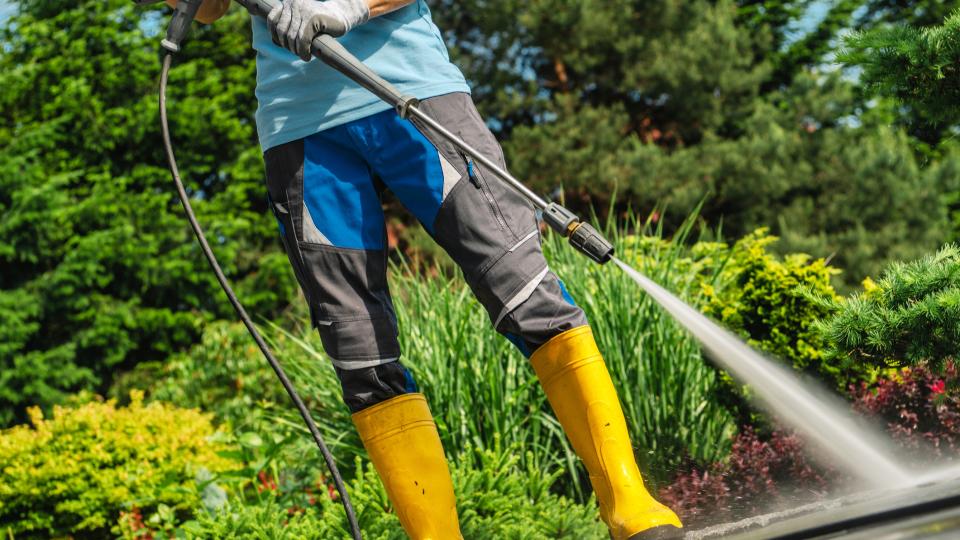
That green film on the siding, black streaks on the roof and grimy driveway didn't happen overnight. It creeps up on you until one day, you look at your house or driveway or deck and think "yuck." With holiday hosting just around the corner, you may be thinking about a refresh.
But blast the wrong surface with too much pressure, and you can strip paint, ruin shingles, gouge wood or leave permanent stripes in concrete. That's why the choice between soft washing and pressure washing matters more than most people realize.
The short answer: soft washing uses a cleaning solution and a gentle rinse. Pressure washing relies on the force of the water (and is sometimes called power washing). The right method depends on your surface, its condition and the manufacturer's care instructions, not on which one is fastest. That's also why typically pressure-washing is a job for the pros.
Key takeaways
-
Match the method to the surface. What's safe for a sturdy driveway can destroy a roof.
-
Never pressure wash asphalt shingles. Siding, wood, brick and concrete can be damaged too.
-
Know what's being sprayed. Ask for product names, labels and how plants and windows will be protected.
-
Ask where the dirty water goes. Runoff shouldn't flow straight into the storm drain.
-
Compare apples to apples. Get written estimates for the same scope of work.
Soft washing vs. pressure washing: what's the difference?
| Soft washing | Pressure washing | |
|---|---|---|
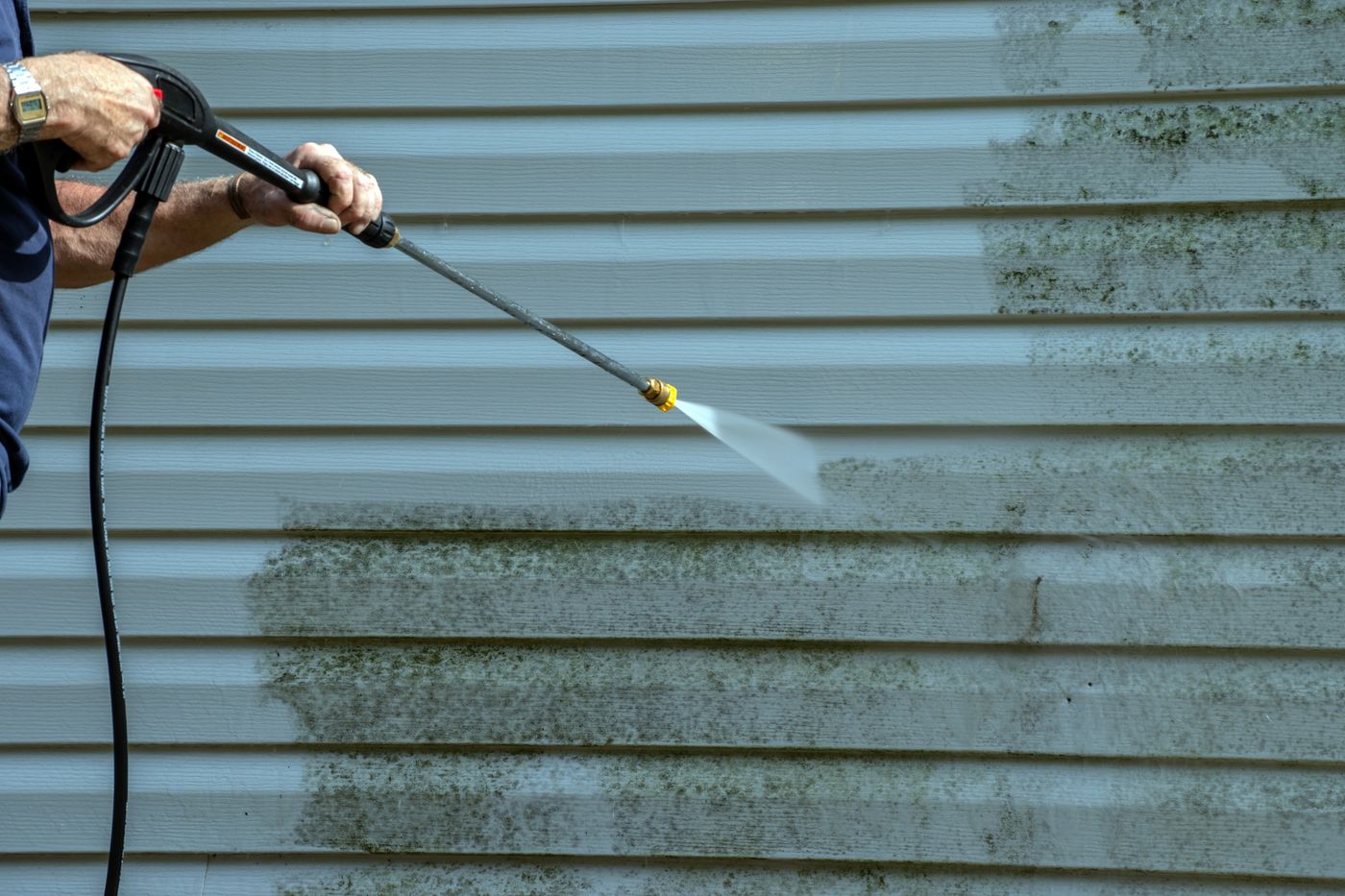
| How it cleans | A cleaning solution loosens algae, mildew and grime, then a low-pressure rinse removes it | The force of the water does most of the work |
| Uses cleaners? | Yes, that's the main tool | Sometimes |
| Typical uses | Roofs, siding, painted and delicate surfaces | Sound concrete, some driveways and walkways |
| Biggest risk | Wrong product or poor plant protection | Too much force for the surface |
How soft washing works
The contractor sprays on a cleaning product that breaks down algae, mildew, mold and dirt. After it sits for the right amount of time, a gentle rinse washes away the residue. How long it sits and how it's rinsed depend on the product's label.
Some treatments don't need rinsing at all. For example, the 30 SECONDS Spray & Walk Away label (hosted by the EPA) calls for spraying it on a dry surface with no rain expected for at least 12 hours. No scrubbing, pressure washing or rinsing afterward. It works gradually over time.
That's worth knowing when you compare estimates: are you paying for an instant clean, or a treatment that works gradually over time?
How pressure washing works
Pressure washing uses the force of the water to blast away dirt and buildup. Cleaners can be part of the process too, so the difference isn't just "chemicals vs. no chemicals." A good contractor adjusts the equipment and technique for each surface instead of using one setting everywhere.
Ask for a small test spot first. It can reveal damage or uneven cleaning before the whole surface is treated.
The PSI myth
You'll see a lot of talk about PSI (pounds per square inch), but there's no single "safe" PSI for soft washing. A machine's rating doesn't tell you how much force actually hits your house. That depends on the nozzle, how far away the wand is held and the operator's technique. Gas versus electric doesn't settle it either.
And remember: cleaning isn't repair. Washing won't fix worn paint, crumbling mortar or weathered wood. A good estimate should tell you which stains will come off and which damage will still be there afterward.
Which method is right for your surface?
The material is just the starting point. Its age, coatings, past repairs and wear all change what it can safely handle.
Roofs: go gentle
Don't pressure wash asphalt shingles. The force can strip the protective granules that shield your roof from the sun and weather. Follow the roofing manufacturer's cleaning guidance and ask exactly how the contractor will protect the roof.
Siding: low pressure, wide spray, plenty of distance
Too much pressure, or spraying too close, can damage the finish, force water behind panels or gouge wood siding. There's no single safe PSI for every vinyl or wood product. A careful contractor will:
- Use the lowest pressure that works
- Use a wide fan nozzle
- Keep a safe distance and keep the wand moving
- Switch to an even gentler method if the siding's condition or instructions call for it
For example, James Hardie's care guidance for its fiber cement siding recommends low-pressure water and a soft, nonmetal brush. If a pressure washer is used, it calls for a wide fan tip, at least 6 feet of distance and less than 1,500 PSI. Those numbers apply to that product only, so your contractor should identify your siding and follow its instructions.
Decks: wood and composite are different
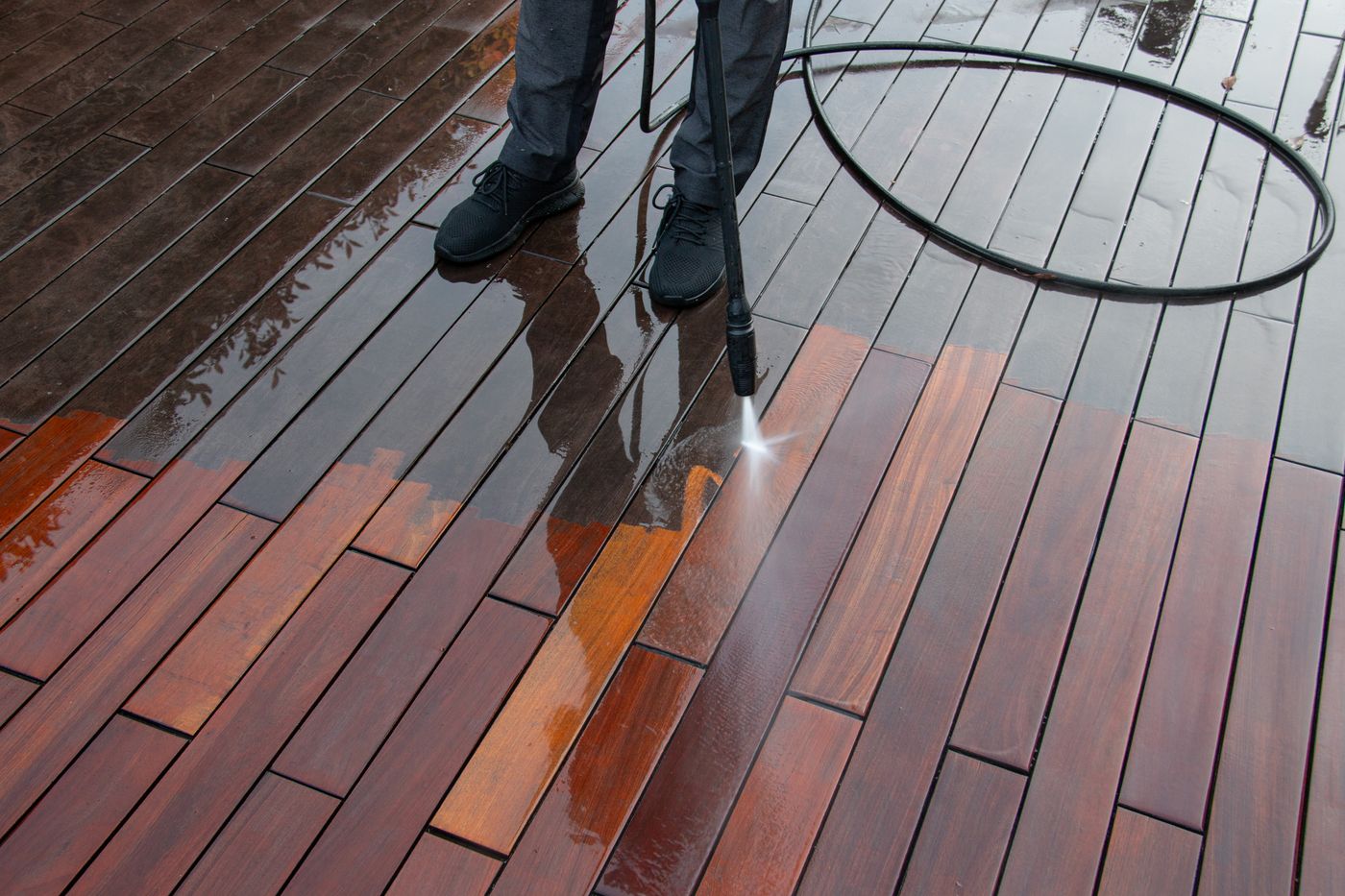
Too much pressure can gouge wood, raise splinters or leave uneven marks. If your deck has peeling stain or soft boards, cleaning can expose damage that's already there. Ask whether you're paying for a cleaning only, or prep work for re-staining.
Composite decking has its own care rules. Don't assume it can handle the same products or pressure as treated wood.
Brick and masonry: watch the mortar
Loose mortar and crumbling brick faces can break away under aggressive cleaning. Coatings and old repairs need attention too. Many stains on brick come off better with the right cleaner than with more pressure.
Concrete: tougher, but not invincible
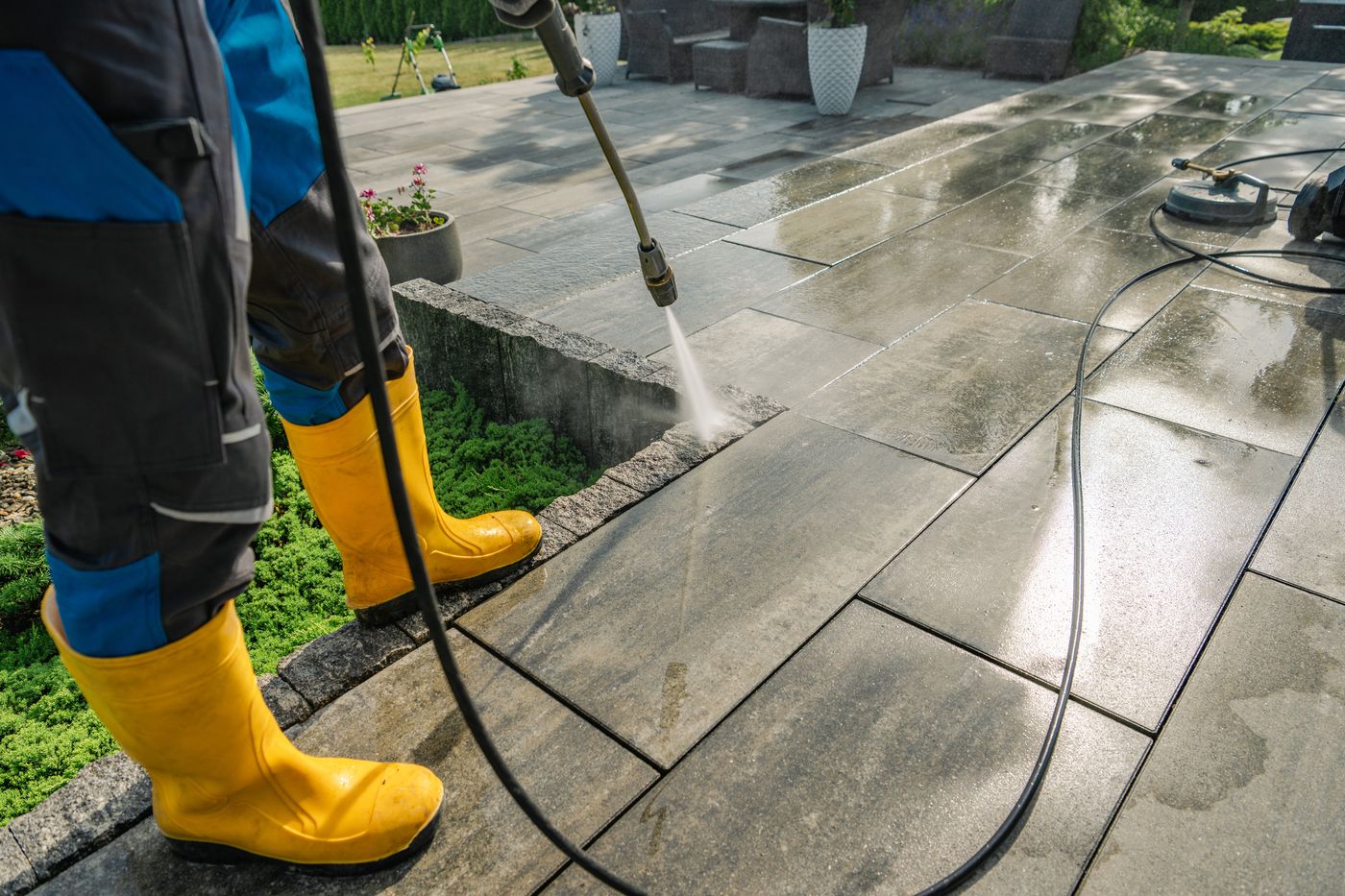
Solid, well-cured concrete can usually handle pressure washing. But too much force can etch the surface or leave visible stripes. New concrete, decorative or stamped finishes, patches and sealers need special care.
Before any work starts, point out repairs and coatings you know about. Your contractor should inspect them and put any limitations in writing. If something needs repair first, fix it before cleaning makes it worse.
What's in the spray, and where does it go?
Either method can cause damage with the wrong product or technique: stripped finishes, failed caulk, water getting into walls. And a sparkling house isn't much of a win if your shrubs die or dirty water pours into the storm drain.
Ask exactly what they're using
"Professional-strength cleaner" tells you nothing. Ask for the product name and label, and why it's right for your surface.
Every product has its own precautions.
The estimate should explain how the crew will protect plants, painted surfaces, metal fixtures and anything else nearby.
Two more things to know:
- "Biodegradable" doesn't mean harmless. It can still hurt plants or waterways. Ask about strength, how long it sits and how it's rinsed.
- Never mix cleaners. Bleach combined with ammonia or acids can release dangerous gases. That goes for DIYers too.
Ask where the dirty water goes
Even plain water picks up dirt, paint chips, oil, mold and other gunk as it cleans. So runoff planning matters even if no chemicals are used.
Wash water can carry pollutants even without detergent. Ask about what's being washed off, not just what's being sprayed on.
The University of North Carolina at Chapel Hill's power-washing guidelines handle wastewater differently depending on the cleaners used and what's in the water, and your contractor's plan should too. Local stormwater rules vary, but the crew should be able to explain how they'll keep contaminated water out of storm drains, whether that's drain covers, barriers or equipment that collects the water.
"We'll just rinse it down the driveway" isn't a plan.
How to hire the right pressure washing company
A low bid doesn't mean much if you don't know what's included. Decide which surfaces you want cleaned and what results you expect, then ask each company for a written estimate covering the same work. Some companies offer both methods, like low-pressure house washing plus driveway and deck cleaning, as shown in our Atlanta-area exterior cleaning profile.
7 questions to ask before you hire
- Why is this method right for my surface, its coating and its current condition?
- How will you adjust your equipment, and will you test a small area first?
- What products will you use, and what do the labels require?
- How will you protect plants, windows, outdoor outlets and light fixtures?
- Where will the wash water go, and how will you keep it out of storm drains?
- Can you show me current insurance and any required local license or registration?
- Does the written estimate list exclusions, cleanup and how to report damage?
If an answer is vague, ask again before you approve anything. Get any verbal promises, including what stains may not come off and any extra charges, added to the written agreement.
Check insurance, licensing and warranties
- Insurance: ask for a current certificate of general liability insurance, not just a verbal "we're covered." Workers' compensation rules vary by state and business type, so ask what covers the crew.
- Licensing: a general business license isn't the same as a specialized contractor license, and requirements vary. If a license is required and the paperwork doesn't add up, hold off.
- Warranty: find out what it covers, how long it lasts and how to report a problem. A promise to remove stains is not the same as responsibility for property damage.
Also compare payment terms. An unusually cheap bid may skip plant protection, runoff controls or cleanup.
Looking for a company you can trust? You can find TrustDALE Certified pressure washing companies on TrustDALE.com. Every certified partner has passed our rigorous seven-point inspection and is backed by our $10,000 Make It Right Guarantee.
Frequently asked questions
What's the difference between soft washing and pressure washing?
Soft washing uses a cleaning solution to loosen dirt, algae and mildew, followed by a low-pressure rinse when the product requires one. Pressure washing relies mainly on the force of the water, though cleaners may also be used.
Is power washing the same as pressure washing?
The terms are often used interchangeably to describe high-pressure cleaning. Some companies use "power washing" to mean hot-water pressure washing, so ask exactly what the service includes.
Can you pressure wash a roof?
Not an asphalt shingle roof. High pressure can strip the protective granules and shorten the roof's life. Follow the roofing manufacturer's cleaning guidance and ask the contractor how they'll protect your roof.
What PSI is safe for washing siding?
There's no single safe number for every siding. The force that reaches your house depends on the nozzle, distance and technique, not just the machine's rating. Follow your siding manufacturer's care instructions.
Is soft washing safe for plants?
It can be, with the right precautions. Some product labels call for wetting plants before and after application. Ask your contractor what product they'll use and how they'll protect your landscaping.
What should a pressure washing estimate include?
The method, products, prep work, runoff controls, cleanup, price and how damage will be handled. Compare estimates for the same scope of work, and ask for proof of insurance and any required licensing.
The bottom line: more pressure isn't more clean
The right cleaning method fits your surface and its condition. Higher pressure doesn't automatically mean better results, and even a gentle soft wash needs the right product and a plan for the runoff.
Check your roof, siding and deck care instructions first. Then ask contractors how they'll prevent damage and handle the dirty water, and compare written estimates for the same work. A clear plan and an accountable company protect your home better than the lowest price or a promise to make everything look brand new.
Ready for a cleaner home, without the damage? Find a TrustDALE Certified pressure washing company, backed by our $10,000 Make It Right Guarantee.