
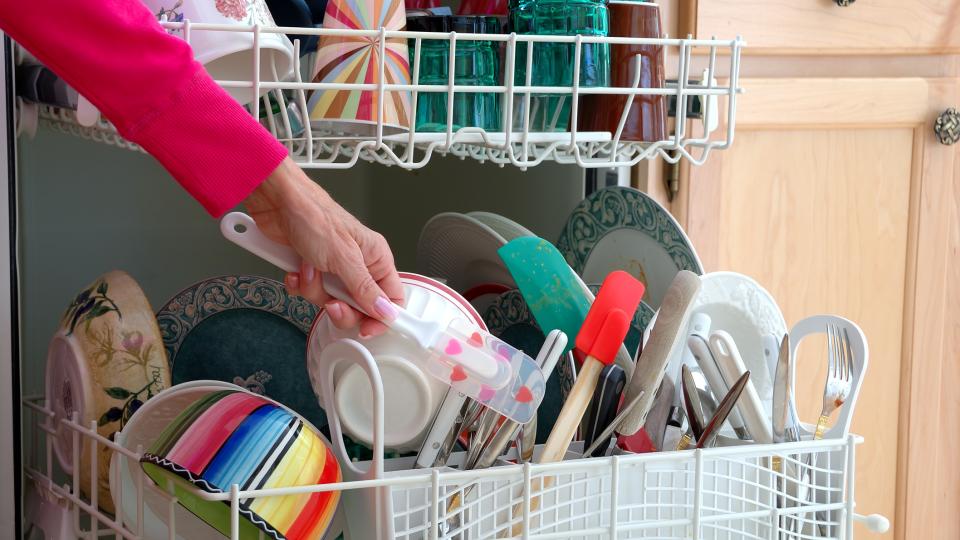
Few kitchen chores are more irritating than unloading a dishwasher full of wet glasses, damp bowls, and plastic containers holding small pools of water. Why your dishwasher leaves dishes wet often has a simple answer, not proof that the appliance has failed.
Start with the basics before paying for a service call. Check the rinse aid, wash cycle, rack loading, incoming water temperature, and drying time. Once you rule out those factors, you can better judge whether the dishwasher needs professional repair.
Key Takeaways
- Rinse aid, proper loading, hot incoming water, and an appropriate drying cycle can resolve many wet-dishwasher problems.
- Plastic items, bowls, cups, and crowded racks commonly retain water even when the dishwasher is working normally.
- Run a complete test cycle with heated dry after making one change at a time, and allow at least 30 minutes before unloading when appropriate.
- Cold dishes after a heated cycle, recurring error codes, unusual odors, leaks, or breaker trips may indicate a failed component or safety issue.
- Avoid removing panels or testing electrical parts yourself; arrange qualified service when basic troubleshooting does not restore heat.
Why Your Dishwasher Leaves Dishes Wet
A dishwasher leaves dishes wet when moisture can't drain or evaporate effectively, but that doesn't always signal a fault. A heated drying system adds heat after the wash cycle. Condensation-drying systems rely on heat retained by dishes after a hot final rinse. Moisture collects on the cooler stainless-steel interior, then drains through the dishwasher's drainage system.
This process works well for glass and ceramic because they hold heat. Plastic items cool quickly, so they often stay wet even when the dishwasher operates normally. Bosch, KitchenAid and Whirlpool provide model-specific drying guidance, so check your owner's manual before comparing your machine with another brand or model.
Rinse Aid Helps Water Slide Off Dishes
Rinse aid reduces water's surface tension. Instead of forming water droplets that cling to glassware and bowls, water sheets off and drains more easily. That improves drying and can reduce water spots.
Check the dispenser before changing anything else. If it's empty, refill it with dishwasher rinse aid, then run a normal load. Whirlpool's dishwasher drying guide also recommends increasing the dispenser setting one step when dishes remain wet, but only if your owner's manual allows that adjustment.
More rinse aid isn't always better. Excess product can leave a film or cause sudsing, so make one small change at a time and compare results.
Plastic, Bowls And Crowded Racks Hold More Water
Plastic containers, lightweight lids and reusable cups retain less heat than china or glass. You may need to hand-dry them even after a successful cycle. Whirlpool notes that plastic items may not dry completely during a normal dishwasher cycle.
Improper loading can make the problem look worse. A bowl placed upright catches water. Two cups pressed together block airflow. Nested plates prevent rinse water from draining away and reduce drying performance.
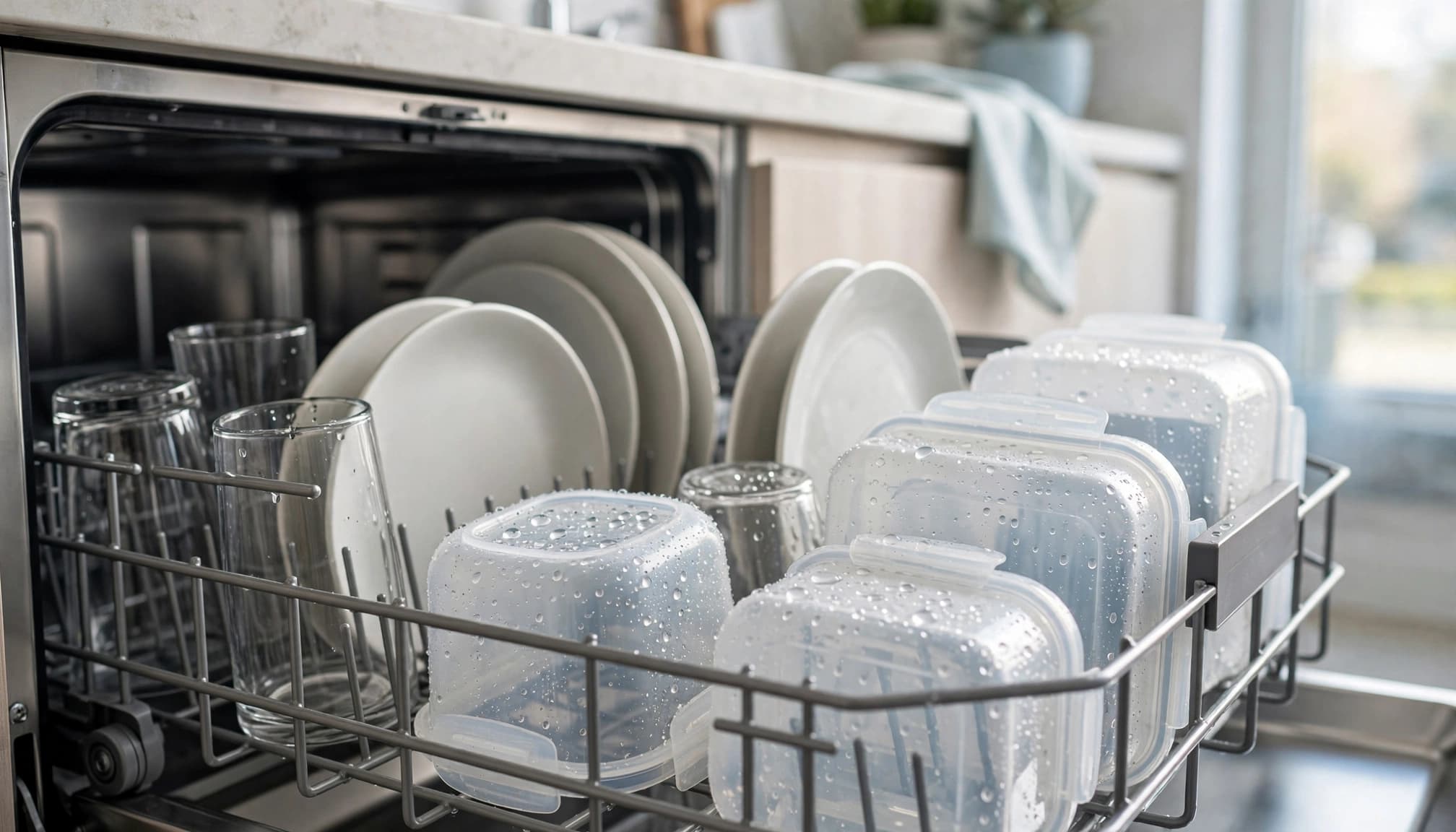
Angle bowls and cups downward, leave space between pieces and place plastic items where your manual recommends. Bosch's wet-dishes support also points to proper loading and dispenser settings as key parts of drying.
A dishwasher can complete its drying cycle normally while trapped water in a nested bowl makes the entire load appear wet.
Simple Dishwasher Drying Fixes You Can Try Today
If your dishwasher leaves dishes wet, start with the least expensive checks. Confirm the rinse aid dispenser is filled before changing multiple settings. Run one complete wash cycle after each change so you can identify what helped.
Check The Cycle, Water Temperature And Drying Time
An Energy Saver, Eco or air dry setting may use little added heat or skip an active dry cycle. These options can improve energy efficiency, but they may leave dishes wetter. Choose heated dry, extended heat dry or the sanitize cycle when your machine offers them and your owner's manual approves them.
KitchenAid's heated-dry guidance explains that rinse aid works alongside a heated option to improve drying. Test one complete wash cycle with the enhanced setting, then compare glass, ceramic and plastic items. Plastic items may still retain some moisture, even with extra heat.
Before starting the dishwasher, run hot water at the kitchen sink until it feels hot, usually 30 to 60 seconds. Whirlpool recommends incoming water around 120 degrees Fahrenheit. Starting with hot water helps the dishwasher reach an effective wash and final-rinse temperature sooner.
After the cycle ends, wait before unloading. On models that dry by allowing moisture to evaporate or drain, waiting at least 30 minutes can help. Your manual may give different advice, especially if the door opens automatically at cycle end.
Reload The Dishwasher For Better Drainage
Improper loading can trap moisture and reduce cleaning results. Reload the dish racks so water can drain from each item and spray arms have room to move.
- Keep plates vertical in the bottom rack's slots when the manual's layout supports it.
- Place cups, lightweight containers and plastic items in the top rack. Angle bowls and cups downward toward the rack tines.
- Separate forks, spoons and knives in the silverware basket so water cannot pool between them.
- Keep tall pans, cutting boards and oversized utensils from blocking spray arms, vents or the detergent dispenser.
- Avoid packing items tightly together, even when you are trying to reduce the number of loads.
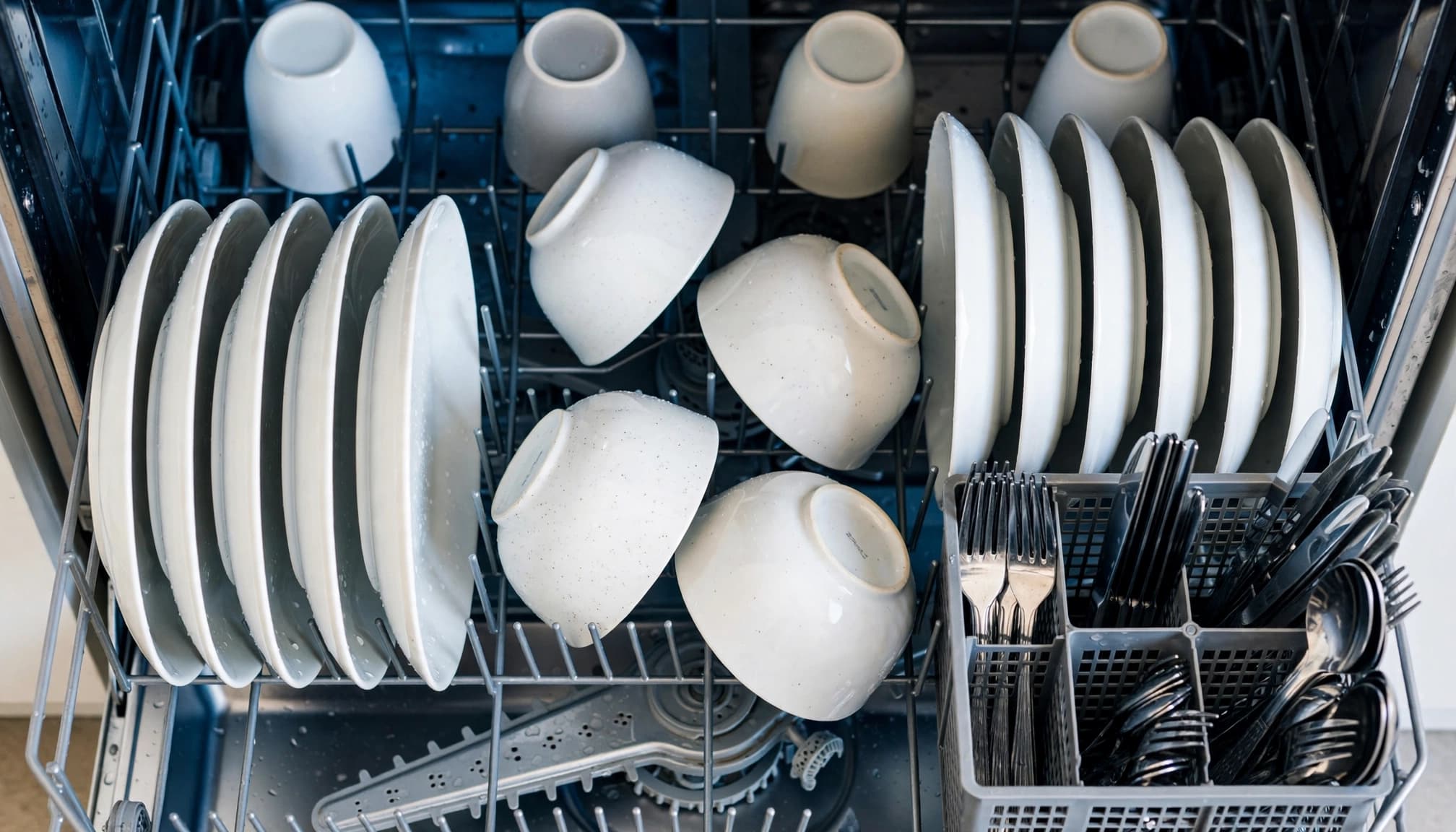
A crowded rack can trap water long after the cycle ends. It can also prevent detergent and rinse water from reaching every surface.
A Five-Minute Test Before You Book Service
After correcting the loading and adding the recommended drying aid, run a full wash cycle with heated dry. This quick test can help explain why your dishwasher leaves dishes wet. Near the end of the dry cycle, carefully open the door after the dishwasher stops. Look for steam or water droplets, and check whether a ceramic plate or glass feels warm without touching internal parts.
Warm dishes with moisture mainly on plastic, bowls, or cup bottoms usually indicate normal drying limits or loading issues. Consistently cold dishes after a heated setting suggest a different problem. The dishwasher may not be heating the water or completing its drying phase.
If your manual permits a reset, turn the dishwasher off at the breaker for about one minute. Restore power, then run a short cycle. If your manual provides the option, you can repeat the test with extended heat dry. Bosch permits this type of reset for some error conditions, but follow the instructions for your exact model.
Don't remove access panels, probe electrical connections, or try to test the heating element yourself. A dishwasher combines water, high heat, and electrical components. Observing the cycle results provides useful information without creating a safety risk.
When A Dishwasher Drying Problem Signals A Failed Part
When a dishwasher leaves dishes wet despite correct loading and the recommended drying setting, a component problem may be involved. Depending on the model, the cause could include a heating element, drying fan, vent assembly, vent fan motor, high-limit thermostat or electronic control.
A damaged heating element may show visible cracks, blisters or discoloration if it’s accessible inside the tub. However, a normal-looking component can still fail. Don’t rely on appearance alone, and don’t remove panels or attempt to remove it.
Warning Signs That Require Immediate Attention
Stop using the dishwasher and arrange service if you notice electrical or safety symptoms. These problems go beyond ordinary wet dishes:
- The dishwasher trips the breaker or repeatedly loses power.
- You smell burning plastic, hot wiring or an unfamiliar electrical odor.
- A complete wash cycle ends with dishes that are completely cold.
- The control panel displays recurring error codes.
- The dishwasher leaks, makes unusual grinding sounds or fails to complete cycles.
GE's heating-element safety guidance warns that a heating element can remain hot after use. Never touch it while it’s hot, and stop the cycle if you suspect overheating.
Know When To Stop Troubleshooting
Call a qualified appliance technician when basic changes don’t restore heat or when warning signs appear. The technician should test the heating circuit, thermostat, vent system and controls before recommending replacement parts.
Ask for a written diagnosis, an itemized estimate and warranty terms for both parts and labor. Confirm any licensing or insurance requirements that apply in your area. A valid repair finding may be that parts and labor make replacement the better value, but you deserve a clear explanation of that conclusion.
For ongoing appliance problems, review TrustDALE's guidance on professional dishwasher repair. When you need qualified appliance repair, you can find Vetted Home Service Providers backed by our $10,000 Make It Right Guarantee on TrustDale.com. Arrange a service appointment with a qualified technician when troubleshooting no longer resolves the problem.
And if you want to take a deeper dive into why it's so important to have a reliable professional when your appliances need service, check out this episode of our Trust Issues podcast- IN A FIX: Appliance Repair Scams that Leave Customers Cold.
What A Responsible Repair Diagnosis Should Cover
If your dishwasher leaves dishes wet, a reputable technician should do more than replace the most obvious part. You should expect a diagnosis that connects the symptom to a tested cause. For example, cold dishes after a heated setting could involve the heating element, thermostat, wiring, control board, or a model-specific safety fault. Each possibility should be tested before a replacement is recommended.
Before approving work, ask what failed, how the technician confirmed it, and whether the estimate includes the service call, labor, part, and tax. You should also ask whether the repair carries a warranty and whether the part is new, refurbished, or manufacturer-approved.
Price alone doesn't tell you whether a repair is fair. The dishwasher's age, the part's cost, and the likelihood of additional failures all matter. TrustDALE's appliance repair cost guide can help you review an estimate before authorizing the work.
How To Keep Your Dishwasher Drying Properly
Good dishwasher maintenance can reduce how often a dishwasher leaves dishes wet, though it can't prevent every damp load. Keep rinse aid on hand, check the dispenser routinely, and choose a drying setting that matches the load. Use air dry for suitable loads, and follow your owner's manual before selecting extended heat dry for many plastics or deep bowls. Keep spray arms clear and avoid placing tall items over vents.
Follow your owner's manual when cleaning the filter. Food residue and mineral buildup can affect water circulation and the drainage system, leaving soil and moisture behind. Clean the door gasket and inspect the lower rack for damaged tines that could make loading awkward.
Routine care won't repair a failed heater, fan, or control. It can prevent simple residue, drainage, and loading problems from being mistaken for a breakdown. Even a well-maintained dishwasher may leave some plastics damp.
Frequently Asked Questions
Why are my dishes still wet after the dishwasher cycle?
Plastic items, crowded racks, trapped water, an empty rinse aid dispenser, or an air-dry setting can all leave dishes damp. Check the loading pattern, refill the rinse aid, and select heated dry if your owner's manual allows it.
Does rinse aid really help a dishwasher dry dishes?
Yes. Rinse aid helps water sheet off glass, ceramic, and other surfaces instead of clinging as droplets. Use the recommended product and increase the dispenser setting only if your manual permits it.
Why does my dishwasher dry glass but not plastic?
Plastic cools quickly and does not retain enough heat for condensation drying to work as effectively. Some moisture on plastic containers, lids, and cups is normal, even when the dishwasher is operating properly.
Should I run the kitchen faucet before starting the dishwasher?
Run the hot water at the sink until it feels hot, usually for 30 to 60 seconds. Starting with hot water helps the dishwasher reach an effective wash and final-rinse temperature sooner.
When should I call a dishwasher repair technician?
Arrange qualified service if dishes remain completely cold after a heated cycle or if the dishwasher trips the breaker, smells like burning plastic, leaks, displays recurring error codes, or fails to complete cycles. Do not remove panels or test electrical components yourself.
The Right Next Step for Wet Dishes
Start with the low-risk fixes. Check the dispenser, choose an enhanced drying option, and leave space between items. Run the tap until the water is warm, then allow time for the load to dry after the cycle.
Some moisture on plasticware is normal. If your dishwasher leaves dishes wet and they remain cold after heating, treat it as a repair issue rather than a loading problem. Reliable dishwasher drying depends on heat, drainage and proper airflow, and electrical warning signs always call for qualified service.