

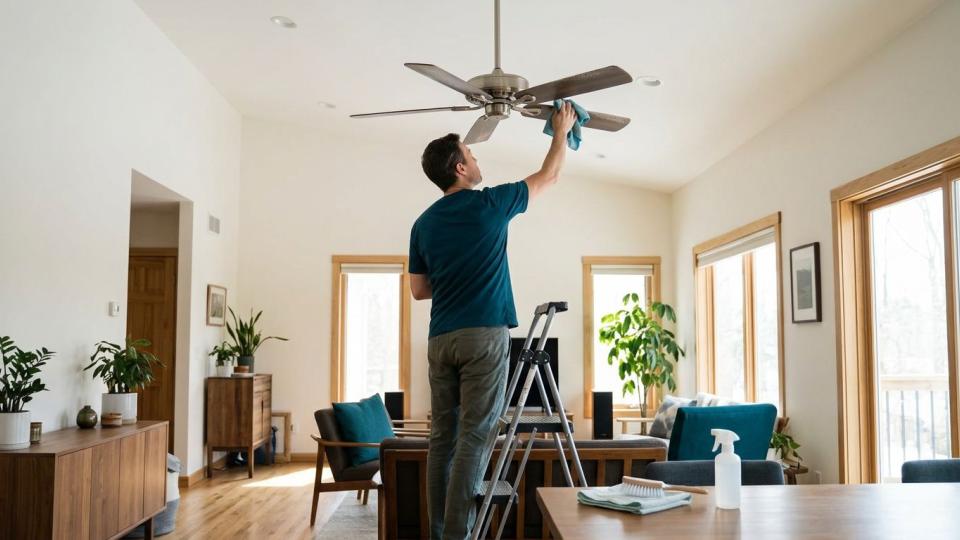
You've just finished vacuuming. The house looks great. Then, five minutes before your holiday guests arrive, you look up and spot it: a thick layer of dust on the ceiling fan.
We've all been there. Some spots in every home quietly collect dust, grease, lint and sticky residue because they're above eye level, tucked behind something heavy or hidden inside an appliance.
The good news? Most of them just need basic cleaning, not harsh disinfectants or pricey specialty products. Here are seven places you're probably forgetting to clean, plus the right (and safe) way to tackle each one.
The 7 Forgotten Spots at a Glance
| Spot | What builds up | Before you start |
|---|---|---|
| 1. Door handles, light switches and other high-touch surfaces | Fingerprints, residue and dust | Spray the cloth, not the switch |
| 2. Ceiling fans and light fixtures | Dust and loose debris | Turn them off and let bulbs cool |
| 3. Refrigerator coils and drip pan | Dust and lint | Check the manual first |
| 4. Range hood filters | Grease and grime | Check whether the filter is washable |
| 5. Garbage disposal and sink splash areas | Food residue | Disconnect power as the manual directs |
| 6. Washer and dryer lint and vent areas | Lint, detergent residue and moisture | Remember the lint screen isn't the vent |
| 7. Behind furniture and appliances | Dust, crumbs and pet hair | Only move what you can handle safely |
Key Takeaways
- Clean high-touch surfaces regularly, but save disinfecting for when it's actually needed.
- Follow your appliance instructions. Filters, access panels and cleaning methods vary by model.
- Cleaning the dryer lint screen and maintaining the dryer vent are two different jobs. One doesn't replace the other.
- Stay safe. Use a stable step stool, and get help before moving heavy furniture or appliances.
Hiring a cleaner? Write down exactly what you want done, and get the scope and price, including any extra charges, in writing.
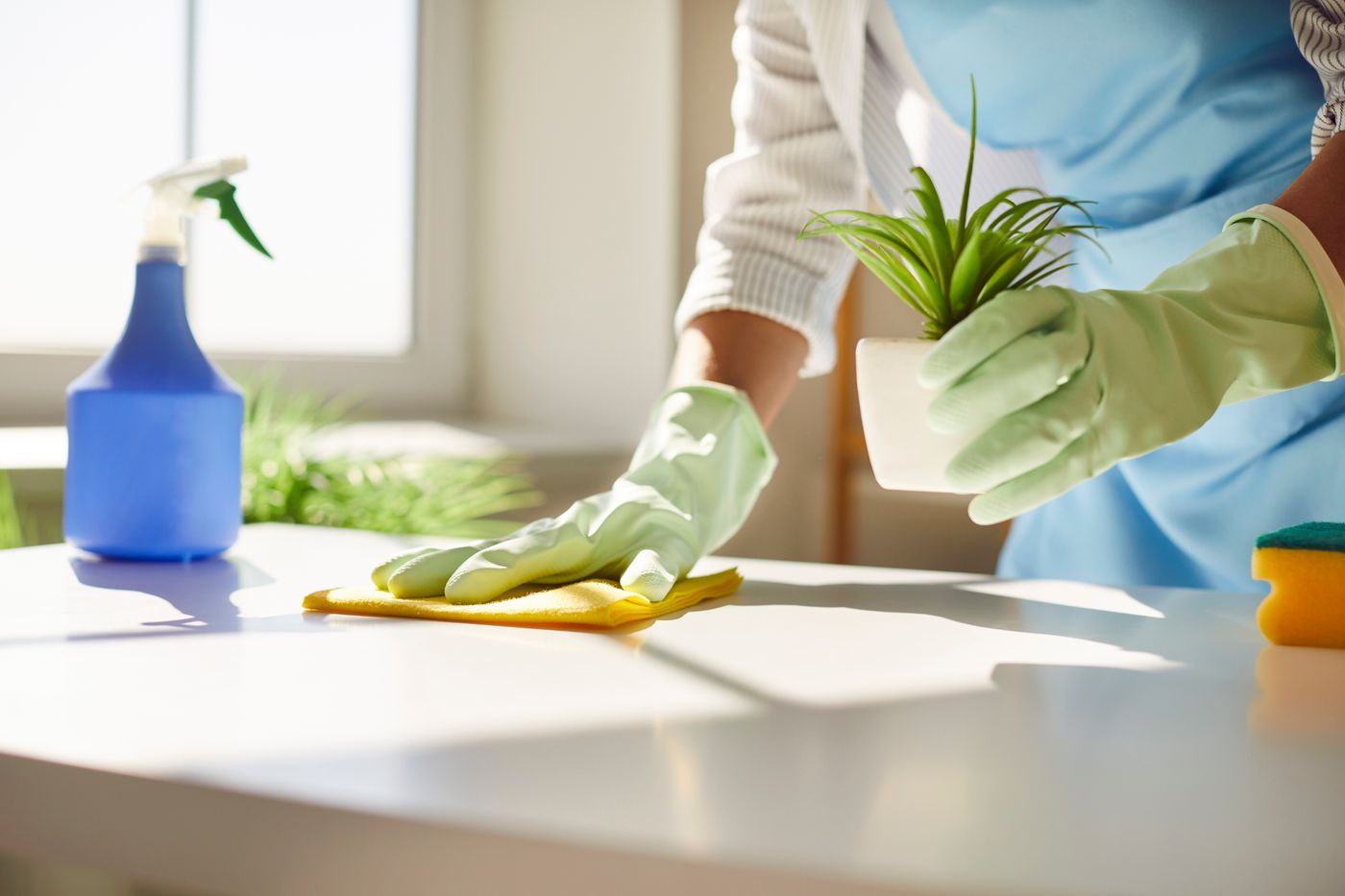
7 Places in Your Home You're Probably Forgetting to Clean
These spots, along with window tracks and blinds, are easy to miss because they're out of sight. Take a quick look at each one before you grab your supplies.
1. Door Handles, Light Switches and Other High-Touch Surfaces
Fingerprints and grime build up fast on the things you touch every day:
- Doorknobs and door frames
- Light switches
- Cabinet pulls
- Appliance handles
- Tables
Don't forget to clean both sides of doors you use a lot, not just the side facing the room.
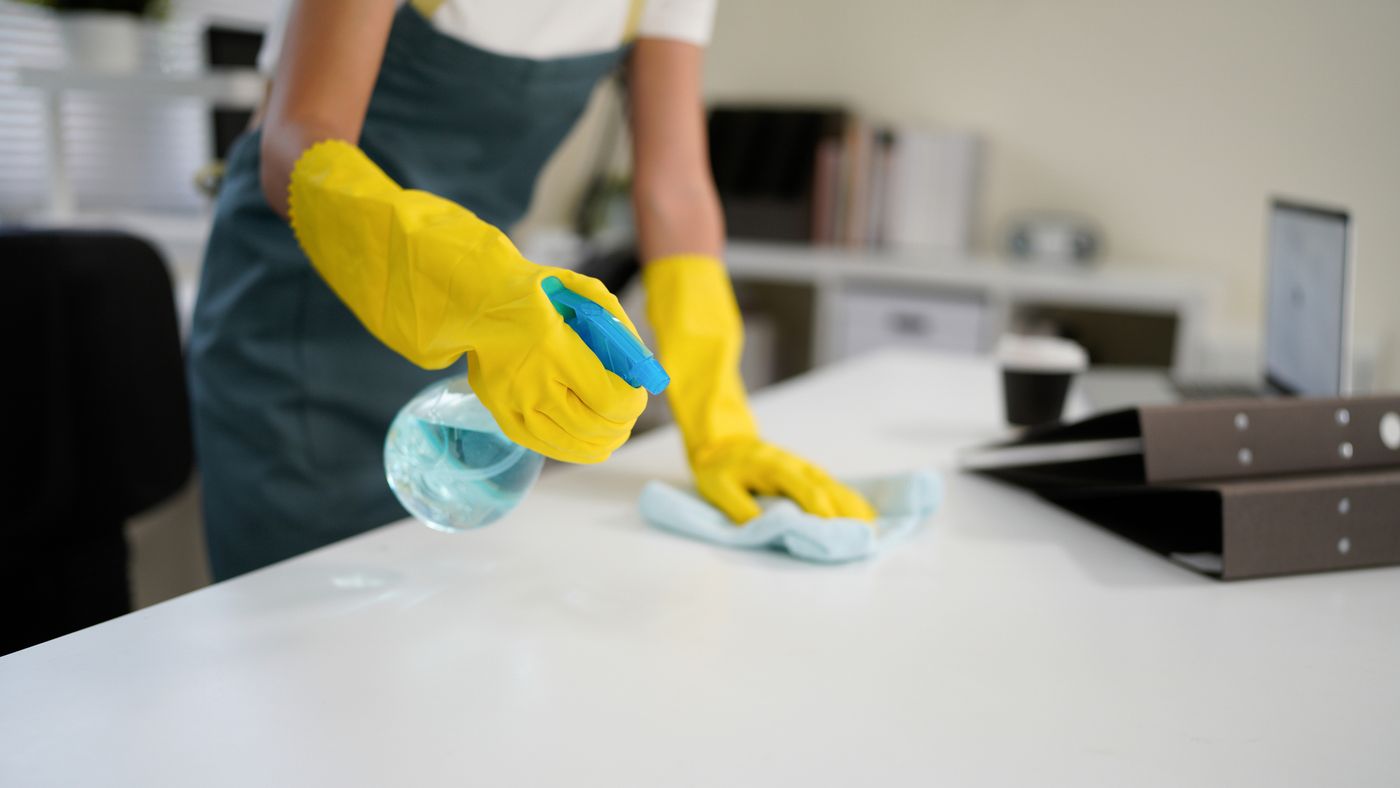
The Centers for Disease Control and Prevention (CDC) recommends cleaning high-touch surfaces regularly, and gives daily cleaning as an example. Plain soap and water usually do the job, as long as they're safe for the surface.
How to clean them: Spray cleaner onto a cloth instead of directly onto switches or electronic controls. Keep the cloth damp, not dripping.
You may want to disinfect when someone in your home is sick or at higher risk. But you don't need to break out the disinfectant every time you see a fingerprint.
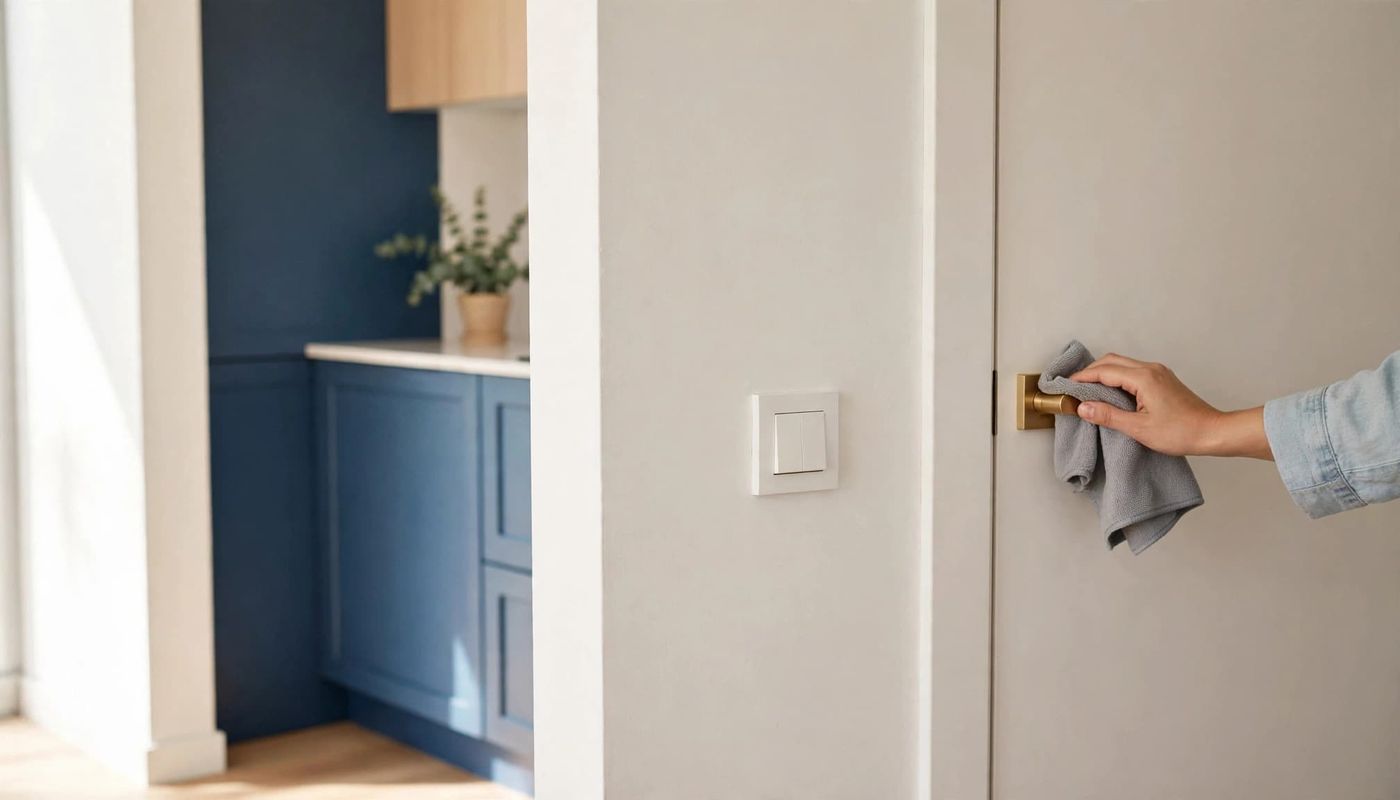 high touch areas like door knobs are worth a daily wipe down
2. Ceiling Fans and Light Fixtures
The tops of fan blades and light fixtures collect dust you can't see from the floor. Clean these before you vacuum so you're not knocking dust onto a freshly cleaned floor.
Before you start:
- Turn off the fan and wait for the blades to stop.
- Turn off the lights and let the bulbs cool.
- Follow the fixture's instructions for shutting off power before you wipe it down.
How to clean them: Stand on a sturdy step stool and use a microfiber cloth or a vacuum attachment. Try to catch the dust as you go instead of brushing it into the room.
Never stand on a wobbly chair or stretch farther than you comfortably can. If you'd need a ladder you're not comfortable using, leave this one for someone who can help.
3. Refrigerator Coils and Drip Pan
Dust and lint can build up around your refrigerator's condenser coils, which release heat from the fridge. If your model has an accessible drip pan, check it for residue, too.
Read your fridge's manual first. It tells you which parts you can safely reach and whether to unplug the refrigerator before you start.
How to clean them: Where the manual allows, gently remove dust with a soft brush or vacuum attachment. Don't bend the coil fins, disturb any wiring or force a tool into a tight space.
Follow the manual for the drip pan, too. Don't assume it pulls out, and never tip or drag a heavy refrigerator just to reach it.
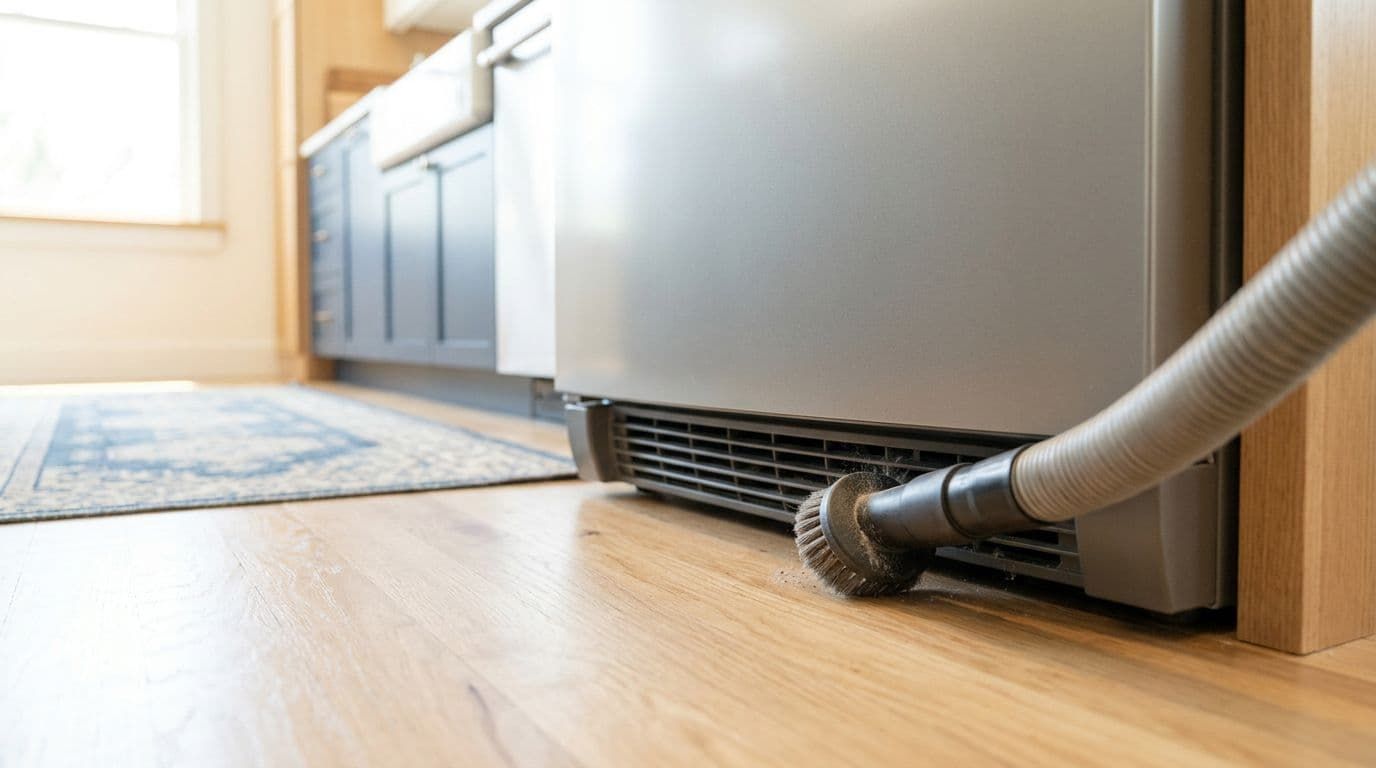 vacuum refrigerator vent with a brush attachment
4. Range Hood Filters
Cooking grease and grime coat your range hood filter and trap dust. Wiping down the outside of the hood won't touch what's built up inside the filter.
Before you start: Turn off the hood and let the cooktop cool. Then follow the manufacturer's instructions to remove the filter, holding it so it doesn't drop onto the stove.
How to clean it: It depends on the type of filter. Some are washable, and others need to be replaced. Don't assume a filter is dishwasher-safe just because it looks like metal mesh.
Use the method the manufacturer recommends, and let washable filters dry as directed before putting them back. Keep water away from the fan motor, controls and electrical parts.
5. Garbage Disposal and Sink Splash Areas
The disposal opening, the rubber splash guard and the edges around the sink are all separate surfaces. If you only clean the sink basin, grime can stay hidden under the guard and around the drain.
Before you start: Check your disposal's manual. Disconnect the power as directed, and never put your hands inside the disposal.
How to clean it: If the manual allows you to clean under the splash guard with a brush, follow its method. Don't assume the guard pulls out, or that a homemade cleaning mixture is safe for every disposal.
Clean the sink edges with a product that's safe for your sink's finish. Then check around the base of the faucet and any seams where water splashes for leftover food residue.
6. Washer and Dryer Lint Screens and Vent Areas
Dryer: Your lint screen catches debris, but lint can also build up around the slot it slides into. Follow your dryer's instructions to clean the screen and any area you can easily reach, without pushing lint deeper inside.
Here's what a lot of people don't realize: a clean lint screen doesn't mean a clean dryer vent. Inspecting and maintaining the vent is a separate job, especially if it runs through walls or exits somewhere hard to reach.
Washer: Check the detergent drawer and the rubber door seal for detergent buildup, trapped debris or moisture. Follow your washer's cleaning instructions, not a method meant for the dryer.
And don't assume every washer has a filter you can clean yourself. Opening the wrong panel or drain fitting can send water all over your floor.
7. Behind and Under Furniture and Appliances
Dust, crumbs and pet hair pile up under sofas, beds and cabinets you can move. Dust and pet hair can also carry allergens. And baseboards and wall edges nearby can stay dirty even when the open floor looks spotless.
Before you start:
- Only move what you can handle safely, especially appliances.
- Protect your floors, and don't drag furniture across finished flooring.
- Leave enough slack in appliance cords and hoses so they don't stretch or get pinched.
- Never pull an appliance by its power cord, water line or vent connection.
How to clean it: A vacuum attachment can often reach narrow gaps, including behind the toilet, without moving anything. Just remember that a robot vacuum can't clean spaces it can't fit into. Pick up small objects first, especially where kids or pets spend time, and wipe down the baseboards while you're there.
How to Clean Forgotten Spots Safely (Without Wearing Yourself Out)
You don't have to tackle all seven at once. Add one forgotten spot to your routine at a time. How often you repeat each one depends on your appliance instructions, how much you use the space and what you find when you look.
Cleaning vs. Disinfecting: Do You Really Need Both?
According to the CDC's household guidance, regular cleaning removes most germs in most situations. Disinfecting is generally needed when someone is sick or at higher risk.
If you do need to disinfect:
- Clean first. Remove dirt and residue before you disinfect.
- Pick the right product. Choose one labeled for your surface and for the germs you want to control.
- Follow the label's contact time. The U.S. Environmental Protection Agency (EPA) explains that contact time is how long the surface has to stay wet for the disinfectant to work. Spraying and wiping right away may not be enough.
Never use disinfectants on food. Only use them on surfaces that touch food if the label allows it, and follow any rinsing instructions.
Keep Yourself, Your Family and Your Appliances Safe
- Open a window or turn on a fan, and use only as much product as the label says.
- Wear gloves or eye protection when the label tells you to.
- Keep cleaning products away from kids and pets.
- Never mix cleaning products. The CDC's bleach safety guidance warns that mixing bleach with ammonia or other cleaners can create dangerous fumes.
- Unplug appliances when the instructions say to, and keep liquids away from switches, motors and electrical parts.
Before you try a new cleaner, read both its label and the care instructions for the surface. Don't assume vinegar is safe for every surface or that it works as a disinfectant. And remember: a product that cuts grease like a champ can still ruin a finish that can't handle it.
Deep Cleaning FAQs
How can I tell if my dryer vent needs attention?
Clothes taking longer to dry, or lint showing up around the vent area, are signs to look into it. Follow your dryer's troubleshooting instructions, and call a qualified pro if the vent is blocked, damaged or hard to reach. Don't just keep running extra drying cycles to make up for poor airflow.
Should I clean my heating and cooling ducts myself?
Wiping off a vent cover you can reach is not the same as cleaning the ductwork inside your walls. Follow your system's instructions for removable covers, but leave the ductwork to a qualified professional. If you suspect mold, pests or damage, have it assessed instead of trying to fix it with a vacuum attachment.
What should I do if a cleaning product damages a surface?
Stop using the product and air out the room. Read the product label and the surface's care instructions before you try to clean it up. Don't use another chemical to try to undo the damage. Take photos and keep the packaging in case you need repair advice.
Can I clean refrigerator coils without moving the fridge?
It depends on your model. Some coils are reachable through a grille on the front. Others need access from the back, or aren't meant for homeowners to clean at all. Follow the manual, don't force any panels and get help before moving a heavy refrigerator.
When is it worth hiring a cleaning service?
When you're short on time, can't safely reach certain areas, or just can't keep up with recurring chores. Before you compare offers, write down exactly what you need cleaned. Then get the scope, schedule and price in writing, including supplies, any extra charges and whether appliance or vent cleaning is included.
Start With Just One or Two Spots
Pick one or two forgotten areas you can reach safely this week, and add others as you have time. A simple plan and the right instructions matter more than treating every dusty corner like an emergency.
Want Help With the Heavy Lifting?
For recurring house cleaning, consider TrustDALE Certified maid services. Every TrustDALE Certified maid service has passed our rigorous seven-point inspection process and is backed by our free to you $10,000 Make It Right Guarantee.