
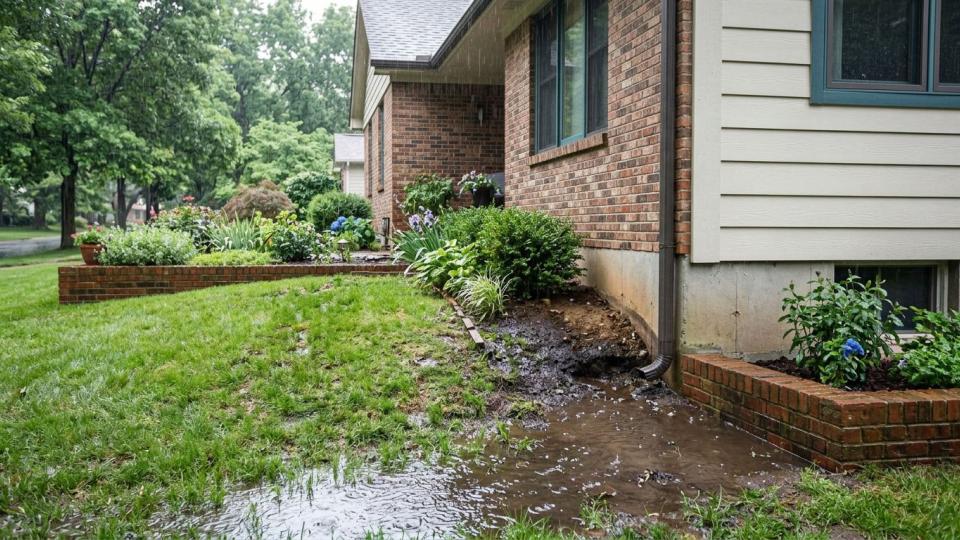
Hurricane Isaias is headed for the Gulf Coast, and forecasters expect heavy rain to spread across the Southeast this weekend. If you've ever found a damp basement wall after a big storm, now's the time to ask a simple question: which way does water flow in your yard?
If the ground around your house slopes toward the foundation instead of away from it, every downpour sends runoff straight to your basement walls. The good news? You can check this yourself in about 10 minutes, with a tape measure and a garden hose.
Here's how to spot the warning signs, test your slope and figure out whether you need a quick fix, a new gutter setup or a call to a pro.
Can Poor Grading Send Water Into My Basement?
Yes, poor grading can send rainwater toward your foundation. When your yard tilts toward the house (called negative grading), runoff pools against the walls and can seep into your basement or crawl space.
But grading isn't the only culprit. Here's what to keep in mind:
- Aim for a 6-inch drop over 10 feet. That's the slope the International Residential Code calls for, though your local code has the final say.
- Downspouts are often the real problem. A roof can dump hundreds of gallons in one spot during a heavy storm.
- Follow the water all the way. A fix only works if the water ends up somewhere safe, not in another low spot.
- Compare written estimates, not just prices. The best bid explains the cause and where the water will go.
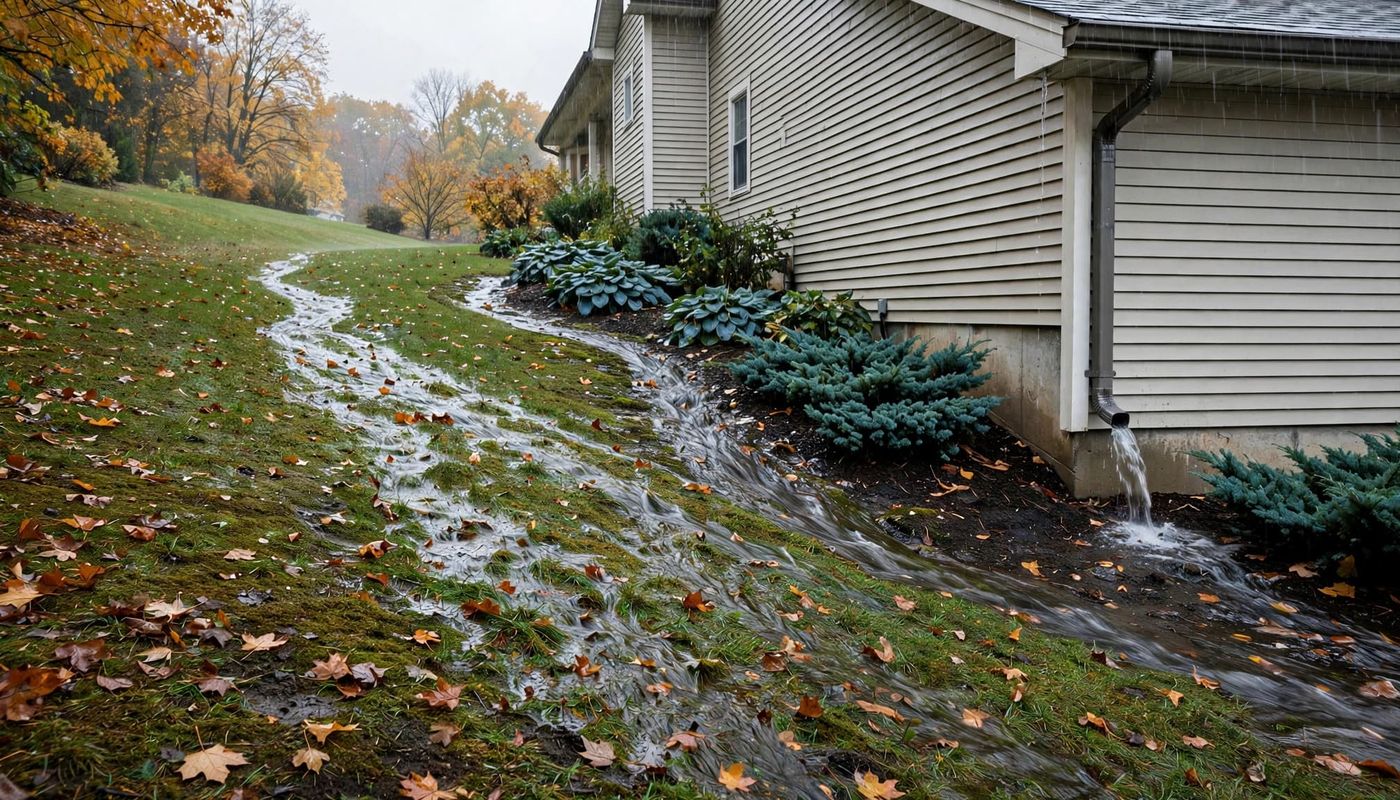 water needs to flow away from your house, not toward it
5 signs water is heading for your foundation
The best time to check is during a normal, steady rain, before the storm arrives. Grab an umbrella and walk the perimeter of your house. Look for:
- Puddles hugging the foundation that linger long after the rain stops.
- Washed-out soil or mulch along the walls, or little erosion channels pointing at the house.
- Water pooling under downspouts instead of flowing away.
- Damp spots, stains or a musty smell on basement walls or along the floor edges.
- White, chalky residue (called efflorescence) on concrete or block walls. It's a sign water has been soaking through.
Snap photos and jot down the time. If the indoor dampness lines up with rainy days, you've got a strong clue.
One caution: these signs point to a drainage problem, but they don't prove bad grading is the cause. Water can also sneak in through window wells, cracks or a leaky pipe. And once the hurricane arrives, stay inside. No drainage check is worth being outdoors in high winds or lightning.
The 6-inch rule, explained in plain English
The International Residential Code (2021 edition and newer) says the ground should drop at least 6 inches over the first 10 feet away from your foundation. That's roughly a 5% slope.
Here's the part people get wrong: it doesn't mean piling 6 inches of dirt against your house. It means the ground 10 feet out should sit 6 inches lower than the ground right next to the wall.
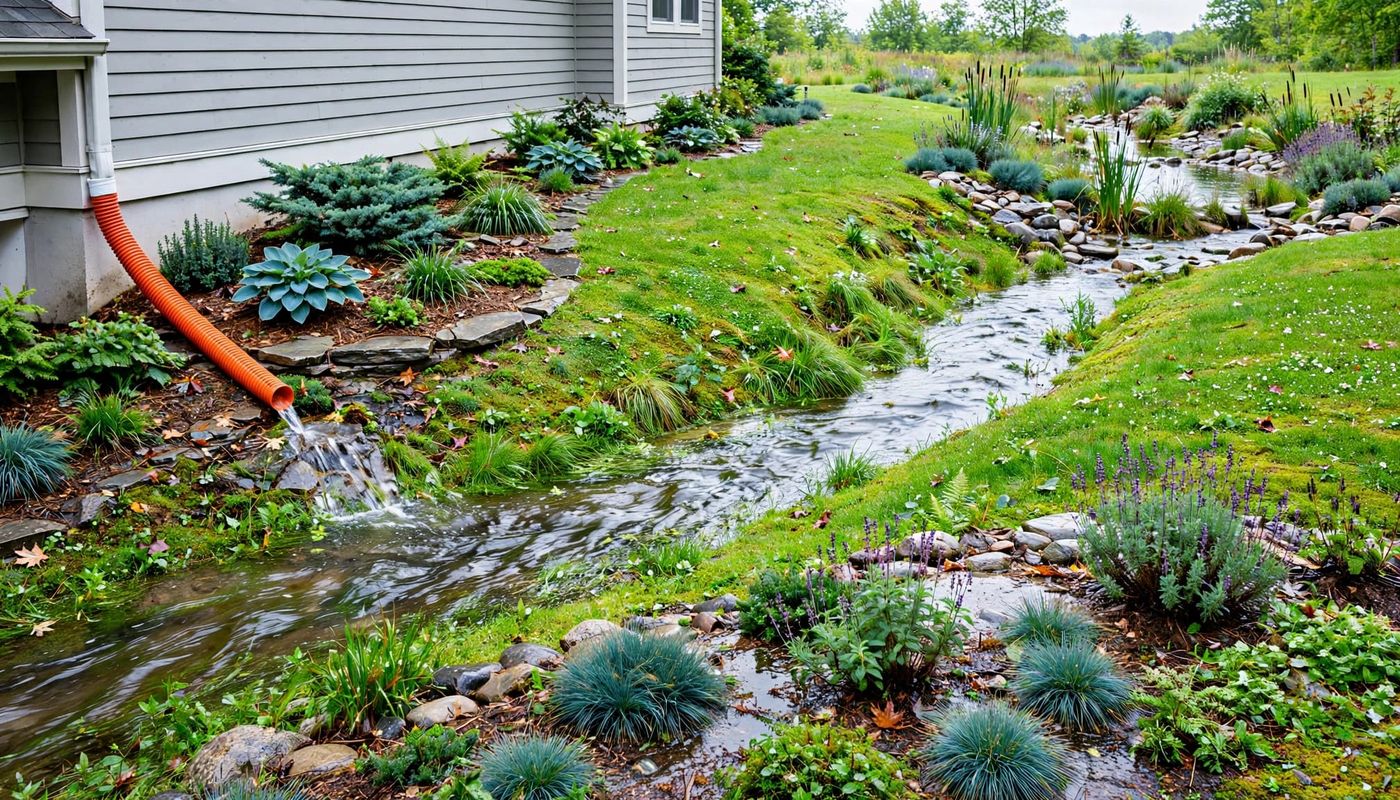
If a fence, driveway or property line makes that slope impossible, the code calls for a drain or a swale (a shallow, grassy channel) to carry water away instead. Your city or county decides which version of the code applies, so check with your local building department before you start moving soil.
Test your slope in 10 minutes
You'll need two stakes, string, a line level (about $5 at any hardware store) and a tape measure.
- Drive one stake into the ground right next to your foundation.
- Drive a second stake 10 feet straight out into the yard.
- Tie the string to both stakes and use the line level to make it perfectly level.
- Measure from the string down to the ground at each stake.
- Subtract. If the ground at the far stake is at least 6 inches lower, you're in good shape. If it's less, or the ground is actually higher out in the yard, you've found a problem.
Repeat this on every side of the house. Grading problems often show up in just one or two spots.
Don't bury your siding. If you add soil, keep it below the siding and away from vents and weep holes. Many codes require several inches of clearance between the soil and wood framing or siding.
Follow the water: it's not always the dirt
A perfectly sloped yard can still flood your basement if something upstream is dumping water in the wrong place. Think of it like detective work: where does the water start, where does it travel and where does it end up?
Downspouts: the usual suspect
Just one inch of rain on 1,000 square feet of roof produces about 620 gallons of water. Your gutters funnel all of it to a few downspouts. If those dump right at the foundation, grading alone can't keep up.
The U.S. Department of Energy's Building America Solution Center recommends discharging downspouts onto sloped ground at least 5 feet from the foundation, or into an underground catchment at least 10 feet away. It also warns against tying downspouts into your foundation drain. These are best-practice guidelines, not universal code.
The key test: where does the water go after the extension? If it empties onto ground that slopes back toward your house, you've just moved the puddle.
Driveways and patios
Concrete that tilts toward the house acts like a funnel. Even if your lawn drains well, a sloped driveway or patio can deliver a steady stream straight to the foundation.
Low spots, edging and clogged drains
Soil around a foundation settles over the years, often creating a shallow moat. Landscape edging, raised beds and retaining walls can also trap water that used to drain freely.
Check any drain grates you can reach for leaves and mud. And if you have a buried drain, find where it comes out. A pipe that disappears underground with no visible outlet may be clogged, crushed or going nowhere.

Your before-the-storm checklist
Got a day or two before the rain hits? Knock these out:
- Clear leaves and debris from gutters and downspouts.
- Reconnect any loose or disconnected downspout sections.
- Add splash blocks or extensions so water lands at least 5 feet from the house, on ground that slopes away.
- Clear drain grates, window wells and swales.
- Move stored boxes and valuables off the basement floor.
- Test your sump pump, if you have one, by pouring a bucket of water into the pit.
- Take "before" photos of your basement walls so you can spot new water afterward.
Quick fixes to skip
- Painting over damp walls. It hides the stain but doesn't stop the water.
- Pointing water at your neighbor. Redirecting runoff onto someone else's property can create legal trouble.
- Digging near the foundation in a hurry. Always call 811 to have utility lines marked before you dig, and don't excavate against the foundation without a plan.
When it's time to call a pro
Some drainage fixes are weekend jobs. Others aren't. Call a drainage or waterproofing professional if:
- Water keeps reaching your foundation even after you've fixed the gutters and downspouts.
- You can't figure out where the water is coming from.
- The fix needs major regrading, a retaining wall or buried drains.
- You see bowing walls, widening cracks or doors that suddenly stick. Those call for a foundation inspection, too.
Bring your photos and notes. A contractor visiting on a sunny day can't see what happens in a downpour, so your rain-day evidence is gold.
If the problem is severe, it's a job for the pros. You can find TrustDALE Certified experts in regrading and drainage at TrustDale.com.
Already dealing with water in your basement? You can also find TrustDALE Certified waterproofing experts who are Certified TrustDALE Partners. All of these pros have passed TrustDALE's seven-point inspection and are backed by our $10,000 Make It Right Guarantee at TrustDale.com.
How to compare drainage estimates
A cheap bid means nothing if it covers different work. Before you compare prices, make sure every proposal answers these questions:
| What to ask | Why it matters |
|---|---|
| What's causing the water? | A fix without a diagnosis is a guess. |
| Where will the water end up? | A drain is only as good as its exit. Ask for a sketch. |
| What materials, pipe size and depth? | Lets you compare buried systems apples to apples. |
| How will added soil be compacted? | Loose fill settles and recreates the low spot. |
| Who handles permits, utility marking and property lines? | Keeps you out of trouble with the city and the neighbors. |
| What does the warranty actually cover? | Materials, labor and performance are three different promises. |
| What are the payment milestones? | Avoid paying most of the bill before work is done. |
A few more tips:
- Verify the license and insurance with your state's licensing board, and ask for a current certificate of insurance. (Or let TrustDale do it for you!)
- Read the warranty fine print. Get the length, exclusions, transferability and any maintenance you're responsible for in writing. A "lifetime" promise means little without written terms behind it.
- Question unusually low bids. They aren't proof of a scam, but they can hide skipped steps, cheaper materials or unlicensed subcontractors.
- Look past the monthly payment. If financing is offered, check the interest rate, fees and total cost.
Frequently asked questions
Can bad grading cause a wet basement?
Yes. Runoff that collects next to your foundation can seep through cracks and joints, and soaked soil pushes water against the walls. But plumbing leaks, high groundwater and window wells can cause the same symptoms, so a good inspection looks beyond the slope.
How do I know if my yard slopes toward my house?
Watch where water flows during a steady rain, or run the 10-minute stake-and-string test above. If the ground 10 feet out isn't at least 6 inches lower than the ground at your wall, the grading needs attention.
Can grading be fixed without digging near the foundation?
Often, yes. Many yards need only minor soil adjustments, a swale or better downspout routing. Ask any contractor whether their plan involves digging next to the foundation and how they'll protect existing waterproofing and buried utilities.
Is the 6-inch slope required everywhere?
No. It comes from the International Residential Code, which each city or county adopts and amends on its own. Your local building department can tell you what applies, including alternatives when a property line or structure blocks the ideal slope.
How far should downspouts drain from the house?
U.S. Department of Energy guidance recommends at least 5 feet onto ground that slopes away, or 10 feet if piped underground. Distance alone isn't enough, though. The water also needs to land somewhere it won't flow back toward your house or onto a neighbor's property.
How much does it cost to fix yard grading?
It depends on how much soil needs to move, how far, and whether drains are part of the fix. A small regrading job costs far less than buried drains or waterproofing. The only way to know is a written estimate based on an on-site assessment.
The bottom line: fix the source, not the symptom
Bad grading can absolutely send rainwater toward your foundation, but it's rarely the whole story. Before Isaias's rain arrives, clean your gutters, extend your downspouts and take a quick walk around the house to see where water collects.
If water keeps finding its way in, don't settle for a patch job. Get a written proposal that explains what's causing the problem and exactly where the water will go. That's how you protect your home for this storm and the next one.