
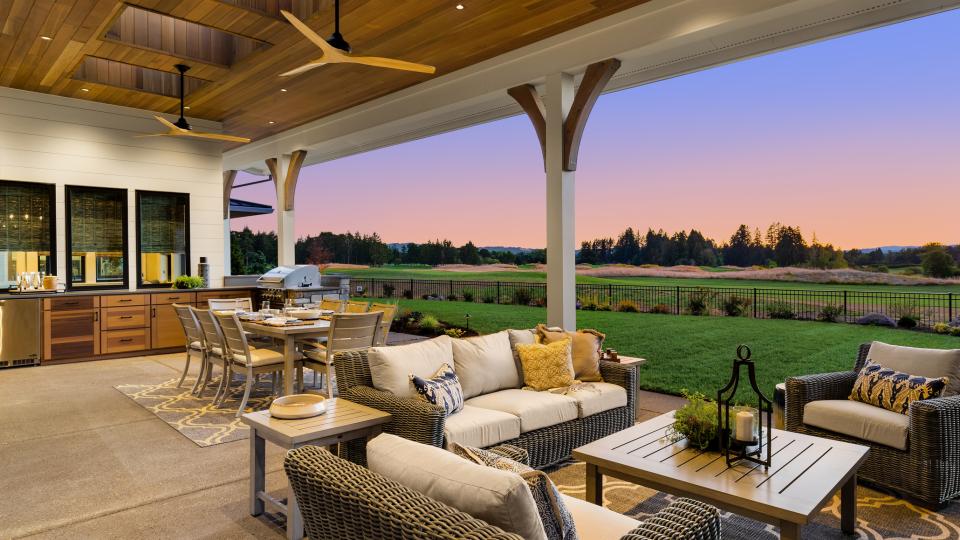
Dreaming of a new patio before the holidays?
The summer heat has finally broken, the evenings are cool and you're picturing friends gathered around a fire pit or a new grill station by Thanksgiving. It's a great thought. But is October really the right time to break ground?
The short answer: yes, fall can be a great time to build, as long as your project can be finished and protected before freezing weather arrives. In metro Atlanta, the first frost typically shows up sometime in mid-to-late November, so the clock is already ticking.
What fall doesn't guarantee is a discount or a faster crew. Your real protection is a written plan that accounts for the weather, permits and materials. Here's how to tell whether your project fits the calendar, and how to avoid the costly surprises that catch homeowners off guard.
Key takeaways
- Simple patios fit fall easily. Outdoor kitchens with gas, electric and plumbing need more time and more inspections.
- Cold is a concrete killer. Fresh concrete that freezes too early can lose more than half its strength.
- Ask for the latest safe start date. A good contractor can tell you when it's too late to begin.
- Compare itemized bids. A low price often means missing prep work, not a seasonal deal.
Why fall can work in your favor
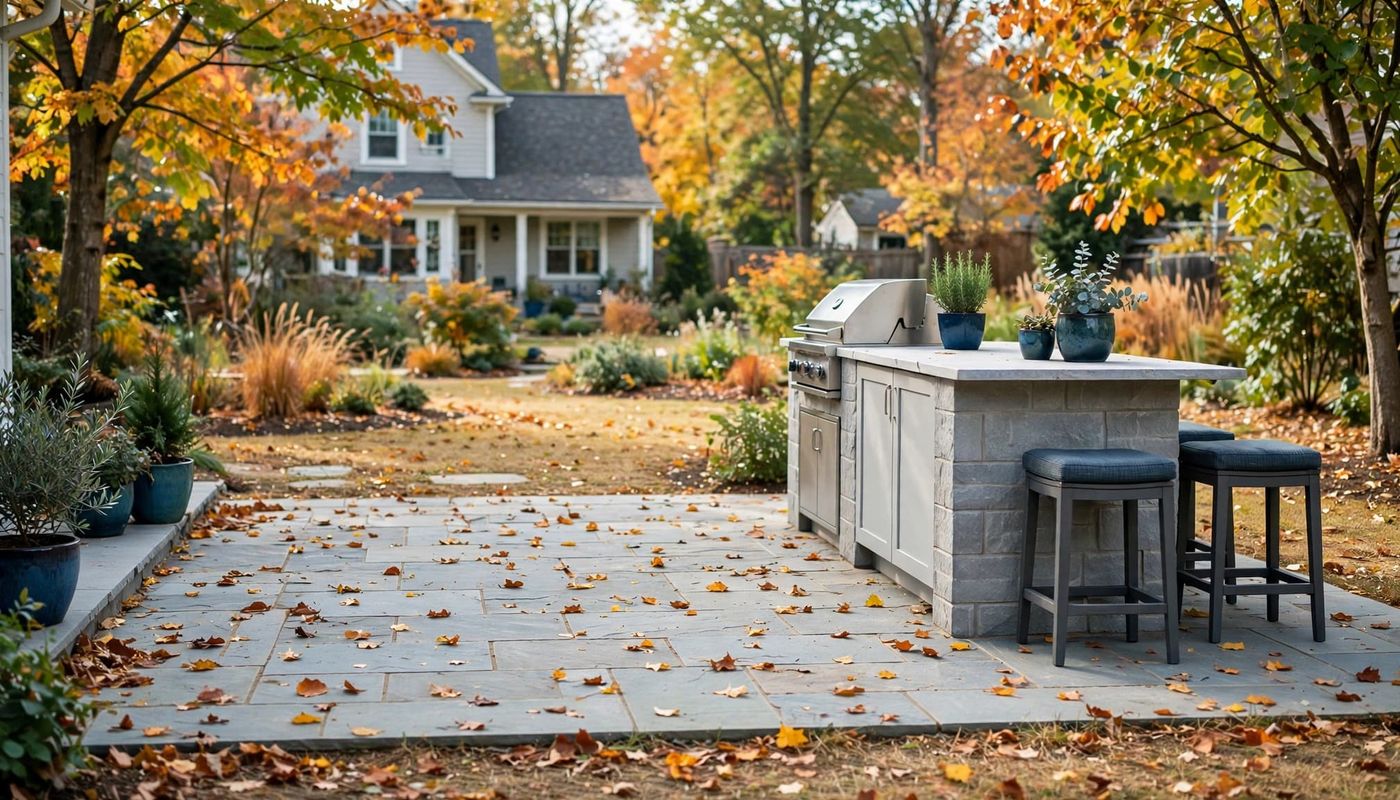
Mild, dry fall weather is honestly great for outdoor construction. Crews can dig, grade and compact a patio base without fighting summer heat or spring mud. Equipment can roll across your yard without tearing it up.
There's also a practical perk: if your patio is done before winter, it's ready the moment spring arrives. No waiting in line when every other homeowner calls a contractor in April.
The catches nobody mentions
Fall weather has a few curveballs:
- Shorter days. Less daylight means fewer working hours per day.
- Rain delays. A wet week can stop excavation and leave soil too soggy to compact properly.
- Cold nights. A sunny 65-degree afternoon tells you nothing about what fresh concrete will face at 3 a.m.
Ask your contractor whether the schedule builds in weather days. If the plan only works when every single day is perfect, that's a red flag.
Ask for the "latest safe start date"
This is the most useful question you can ask. A good contractor can work backward from your area's typical first freeze and tell you the last realistic day to begin. That date should account for material delivery, inspections and curing time.
If the answer is "last week," waiting until early spring may be the smarter move. Starting a project you can't protect is a recipe for cracked concrete and a do-over.
Patio vs. outdoor kitchen: know what you're really building
The pavers and countertops are the fun part. But much of the cost and schedule lives underneath: demolition, soil correction, drainage, retaining walls and utility lines. An outdoor kitchen adds appliances, gas, electric and plumbing, each with its own inspection.
Use this table to make sure your plan covers everything:
| Project piece | What to confirm before you book |
|---|---|
| Patio surface | Material, size, base prep and drainage |
| Kitchen island | Appliance openings, structural support and countertop details |
| Utilities | Gas, electric and plumbing work, plus inspections |
| Covered area or pergola | Structural design, permits and appliance clearances |
The bigger the project, the more the order of work matters. Gas lines and electrical conduit need to go in before trenches are closed and the patio is poured.
Looking for a builder? You can explore Affinity Outdoor Living on TrustDALE to check their service area and project offerings.
Thinking about building in phases?
Patio now, kitchen next spring? That can be a smart way to spread out the cost. Just plan the utility routes and appliance locations before the patio goes in. Otherwise you may end up paying someone to cut up the brand-new patio you just bought.
What cold weather does to concrete and masonry
There's no single outdoor temperature where concrete work suddenly becomes impossible. But cold changes everything about how it cures, so your contractor needs a real plan.
Fresh concrete and freezing don't mix
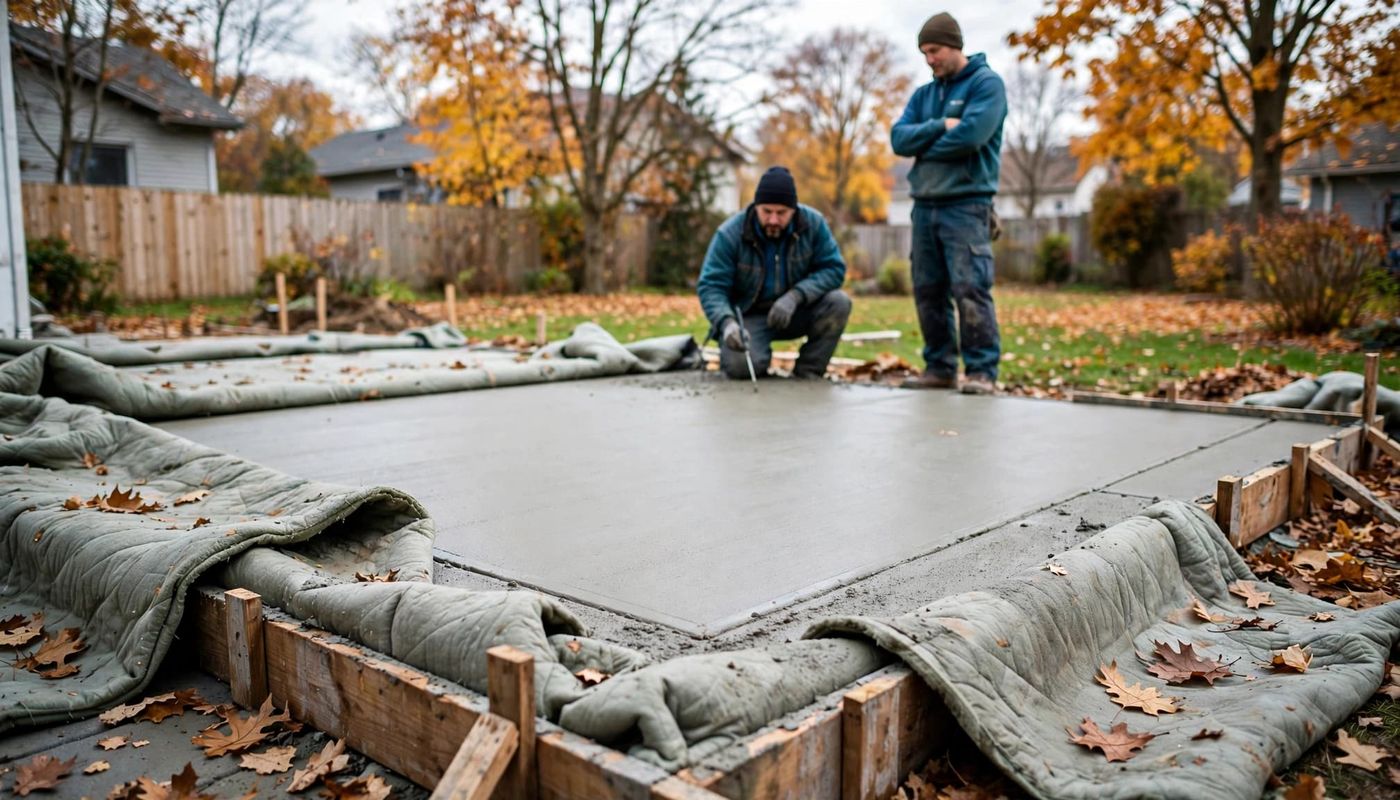
According to the National Ready Mixed Concrete Association, fresh concrete can freeze when its own temperature drops below about 25°F. If it freezes before reaching 500 psi of strength, it can lose more than 50% of its potential strength. That's a patio that cracks, flakes or crumbles years early.
Note that this refers to the concrete's temperature, not the air. Cold also slows curing, so everything takes longer.
Ask your contractor:
- What concrete mix will you use for cooler weather?
- Will you use insulating blankets, heaters or temperature monitoring?
- Who pays for that protection if a cold snap hits?
- When can we walk on it, and when can the kitchen island go on top?
That last one matters. Concrete that's safe from freezing still isn't ready to hold a heavy stone island or a delivery truck.
Mortar, grout and adhesives need their own plan
Stone veneer, block and tile follow different cold-weather rules than concrete. Make sure your contractor follows the manufacturer's instructions for storing, installing and protecting each product.
Permits and "call before you dig"
Gas, electrical, plumbing, drainage and structural work may each need a separate permit and inspection. Check with your city or county before work starts.
Before anyone digs, someone must call 811 to have public utility lines marked, and wait for all utilities to respond. Keep in mind that 811 usually doesn't mark private lines, like irrigation or wiring to a detached garage or shed. You may need a private utility locator for those.
Outdoor kitchen tips: pick appliances first
Here's a mistake that costs homeowners real money: building the island first and shopping for the grill later. If the appliance doesn't fit the opening or needs more clearance, you're paying to rebuild.
Before construction is approved, get the model numbers and installation manuals for every appliance. Then confirm:
- Each appliance is rated for outdoor use.
- The fuel type (natural gas or propane) matches your gas supply.
- The design meets the manual's ventilation, clearance and service-access requirements.
A grill can physically fit a countertop opening and still be installed in a way that violates its instructions and voids the warranty.
Don't let your sink freeze
If your outdoor kitchen has a sink, ask a licensed plumber how the water supply and drain will be protected from freezing. Get a written winterization routine that covers shutoffs and anything that needs draining.
Also ask: is winterizing included in the price, or is it extra? If the project wraps up in mid-November, someone needs to winterize it almost right away.
Watch your warranty clock
Find out when each appliance warranty starts: at purchase, at delivery or at installation. Buying a grill in October that you won't fire up until April could burn six months of coverage.
One last safety note: a kitchen that looks finished isn't necessarily ready to use. Don't light the grill or flip on the fridge until gas and electrical connections have been tested and inspected.
Is there really a fall discount?
Maybe, maybe not. There's no reliable evidence that fall brings a nationwide price drop on patios or outdoor kitchens. A "fall special" is a sales pitch, not proof of value.
The better way to save money is to compare apples to apples.
Get three itemized bids for the same design
Each estimate should spell out:
- Excavation, grading and base prep
- Materials and appliances
- Gas, electrical and plumbing work
- Permits and inspections
- Cleanup and haul-away
- Allowances and anything excluded
Pay special attention to the work you'll never see once the patio is done. A low bid often means skipped demolition, drainage or base prep, and those shortcuts show up later as cracks, sinking and puddles. If two prices are far apart, ask each contractor to explain the difference in writing.
Still choosing materials? TrustDALE Certified Partner America's Best Choice's patio listing describes several options you can discuss as you define your project.
Check credentials before you sign
- License: Look it up with the state or local licensing board. A number on a business card doesn't prove it's valid or covers this type of work.
- Insurance: Ask for current proof of insurance that covers the work being done.
- Subcontractors: Find out who's doing the excavation, gas and electrical work.
- Contract details: The contract should name the responsible company and say who handles permits, inspections and weather protection.
Want a shortcut? TrustDALE Certified patio and outdoor-living partners have passed a rigorous seven-point inspection, and qualifying services are backed by our $10,000 Make It Right Guarantee. You can find them at TrustDALE.com.
Get it in writing: delays, payments and warranties
Fall projects are more likely to hit weather or inspection delays. A handshake promise won't settle an argument about who pays when that happens. Your contract should.
Protect your payments
- Start date and sequence: Get the expected start date and order of work in writing, plus how you'll be told about delays.
- Site protection: Ask how they'll secure and protect an unfinished project during a pause.
- Milestone payments: Tie each payment to completed work, not vague dates. Deposit limits vary by state and city, so check local rules.
- Change orders: Any change, including surprise site conditions or a different appliance, should list the added cost and schedule impact before you approve it.
A "sign today and save" deal that requires immediate payment is your cue to slow down. A reputable contractor will give you time to read the contract.
Know which warranty covers what
There are usually two kinds of coverage: the contractor's workmanship warranty and the manufacturer's product warranty on pavers, countertops and appliances. They're not the same. A manufacturer may replace a defective paver but won't pay to tear out and reinstall it.
For every warranty, write down who's responsible, what's covered, what's excluded and who to call. If someone promises a "lifetime" warranty, ask whose lifetime, whether it transfers if you sell and what maintenance you're required to do.
Close out the job the right way
Before you make the final payment, make a punch list of unfinished items and collect:
- Final inspection approvals
- Appliance manuals and instructions
- All warranty paperwork
- Winterization instructions, if you have a kitchen with water lines
Frequently asked questions
Is fall a good time to build a patio?
Often, yes. Mild, dry weather is ideal for digging and base prep. The key is finishing and protecting the work before freezing temperatures arrive, so start planning early in the season.
Can you pour concrete in cold weather?
Yes, with the right precautions. Contractors may use a cold-weather mix, insulating blankets, heaters and temperature monitoring. Fresh concrete must be kept from freezing until it reaches about 500 psi, or it can lose more than half its strength.
How long does it take to build an outdoor kitchen?
It depends on the design, permits and utility work. A simple grill island takes far less time than a full kitchen with gas, electric, plumbing and a roof. Ask your contractor for a written schedule that includes inspections and weather days.
Are patios cheaper to build in the fall?
Not necessarily. There's no guaranteed seasonal discount. You'll save more by comparing three itemized bids for the same design than by chasing a "fall special."
Do I need a permit for a patio or outdoor kitchen?
A basic patio may not need one, but gas lines, electrical circuits, plumbing and covered structures usually do. Rules vary, so check with your city or county building department before work starts.
What happens if the weather delays my project?
That should be spelled out in your contract. Look for terms covering how delays are communicated, how the site is protected and whether cold-weather protection costs extra.
The bottom line: build when you're ready, not just because it's fall
Fall can be a fantastic time to build a patio or outdoor kitchen, as long as the weather, permits and your contractor's schedule leave enough time to do it right. Cold-weather protection needs to be part of the plan from day one, not an afterthought.
Get detailed bids now, ask for that latest safe start date and choose a contractor who can clearly explain the sequence, the weather precautions and who's responsible for what. Readiness beats the calendar every time.
Ready to get started? Find a TrustDALE Certified patio and outdoor-living pro, backed by the $10,000 Make It Right Guarantee.