

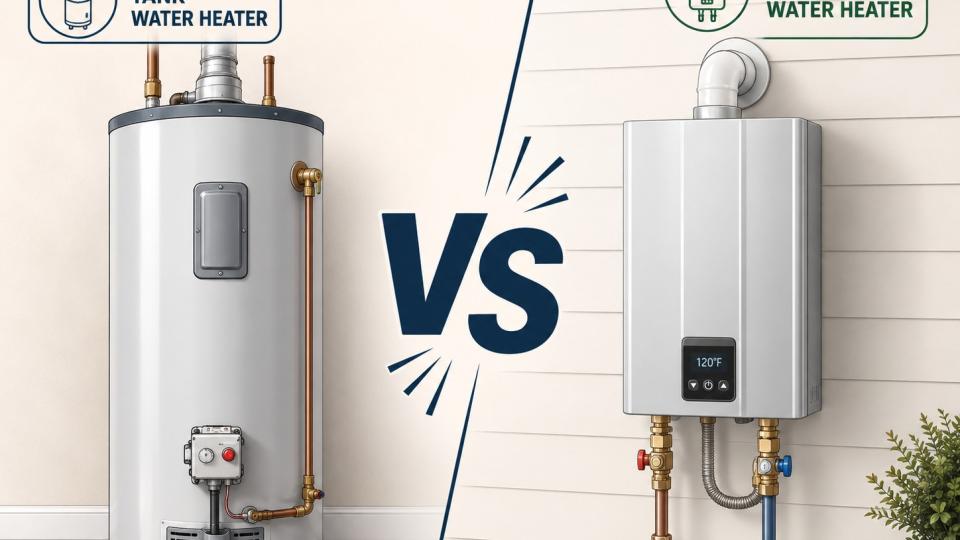
A water heater usually gets ignored until the shower turns icy, the utility room floor gets suspiciously damp, or the old tank starts making sounds that belong in a submarine movie. Then, suddenly, homeowners are staring at two options that sound simple on the surface: traditional tank or tankless. The choice can feel bigger than expected because it touches daily comfort, installation cost, energy use, space, and how your household actually lives.
In this blog, you’ll learn how tank and tankless water heaters work, where tankless systems shine, when a storage tank still makes sense, and how to think through the decision without getting dazzled by the word “endless.” You’ll also see why having a qualified plumbing expert, like TrustDALE certified partner R.S. Andrews, matters when the right answer depends on your home’s plumbing, fuel source, usage pattern, and budget.
The Real Difference Is How Hot Water Gets Delivered
A traditional tank water heater stores a set amount of heated water, often tucked into a closet, garage, basement, or utility room. Once that stored supply gets used, the tank needs time to heat more. That’s why a late morning shower can feel like punishment after laundry, dishes, and two teenagers have already taken their turn.
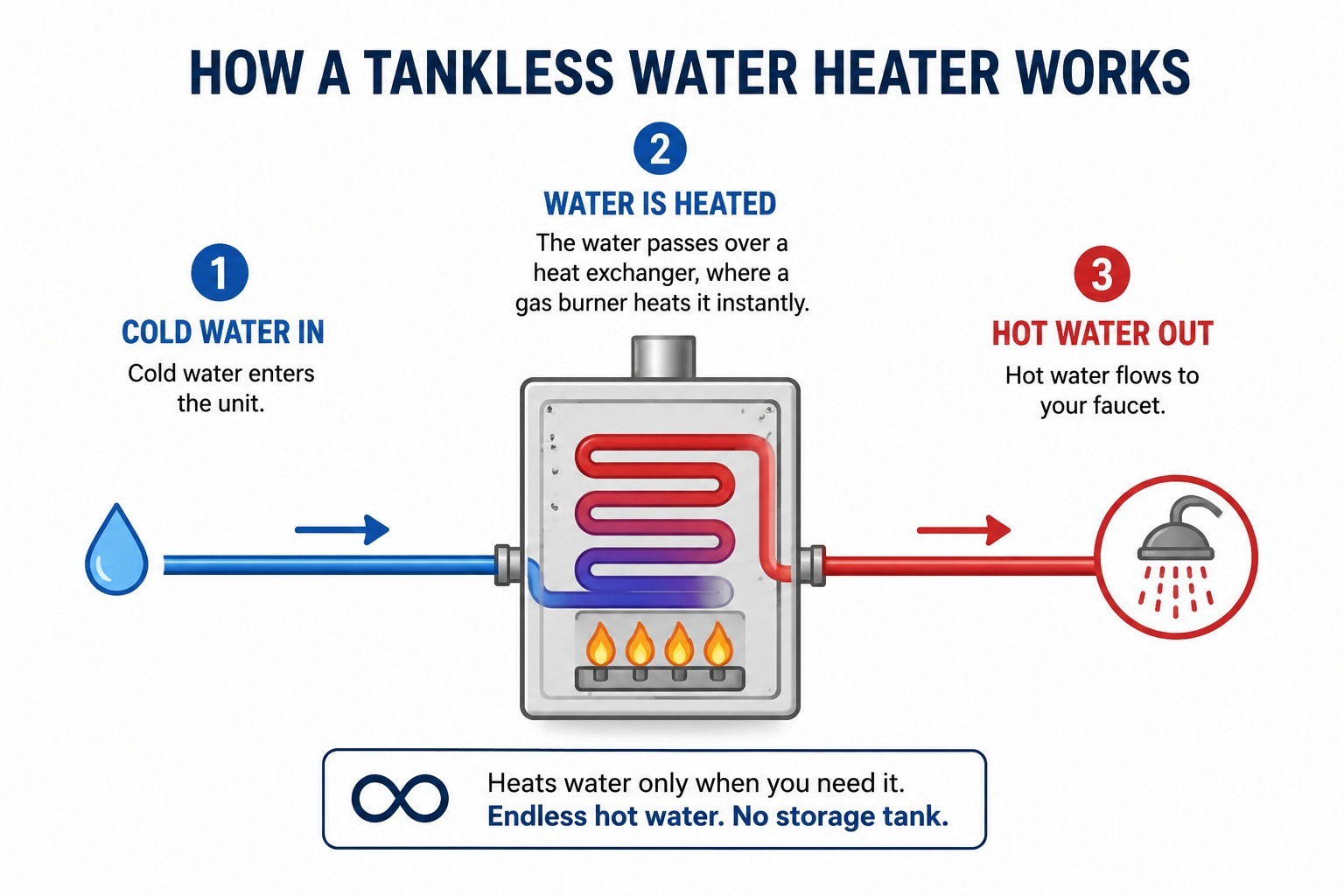
A tankless water heater works differently. It heats water as it moves through the unit, without keeping a large reservoir hot all day. The U.S. Department of Energy explains that tankless models avoid the standby energy losses associated with storage tanks, though their hot water output depends on flow rate and household demand. A large home running multiple showers, a dishwasher, and laundry at once may push even a strong gas tankless unit to its limit.
Where Tankless Starts Looking Tempting
Tankless systems appeal to homeowners who want steady hot water, more usable space, and a system that isn’t constantly heating water in a tank. They’re often wall mounted, which can open up cramped utility areas, and they can be a smart fit for households where hot water use comes in frequent waves rather than one massive morning rush.
Energy savings can be real, but they shouldn’t be treated like magic beans. ENERGY STAR reports that certified gas tankless water heaters can save a family of four about $95 per year on gas bills compared with a standard gas storage model. That number is useful, but your savings will depend on local energy rates, the system being replaced, installation details, and how much hot water your household uses.
The Budget Conversation Needs Room to Breathe
Tankless water heaters typically cost more up front than traditional tank systems. The unit itself may be pricier, and installation can involve venting changes, gas line considerations, electrical work, or plumbing adjustments. In some homes, the upgrade is straightforward. In others, the house needs a little backstage renovation before the new system can perform properly.
That’s where many homeowners get tripped up. A tankless water heater can be a smart long term investment, especially for homeowners planning to stay put, but it may not be the best choice for someone who needs the lowest immediate replacement cost. A conventional tank still has a place, especially when the household’s hot water demand is predictable, space isn’t a concern, and the existing setup can accept a replacement with minimal changes.
Match the System to the Household, Not the Sales Pitch
The right water heater depends less on trendiness and more on habits. A couple in a smaller home may love the efficiency and compact design of tankless. A family with several bathrooms, back to back showers, and heavy appliance use needs a careful look at gallons per minute, fuel type, incoming water temperature, and whether one unit can keep up.
It’s also worth thinking about patience. Tankless systems don’t necessarily mean instant hot water at every faucet. The water still has to travel through the pipes. Larger homes may need recirculation solutions if the goal is faster hot water at distant bathrooms or kitchens. That detail often gets lost in casual conversations, and it can be the difference between a satisfying upgrade and a homeowner wondering why the “instant” system still takes a while at the tap.
Why R.S. Andrews Is a Strong Call for This Decision
R.S. Andrews has served Metro Atlanta homeowners since 1968, and water heaters are part of the company’s core plumbing work. Their team handles traditional tank systems, tankless water heater repair, installation, maintenance, and replacement. For homeowners weighing options, that matters because the best recommendation should come after looking at the home, not after glancing at a brochure.

They also bring practical consumer protections into the conversation: licensed plumbing expertise, 24/7 emergency availability, upfront pricing, and technicians who can explain whether your current system is worth repairing or whether replacement makes more financial sense. A water heater decision is easier when someone can inspect the setup, talk through real usage, and give you a transparent estimate before work begins.
The Bottom Line on Going Tankless
Tankless water heaters can absolutely be worth it for the right home. They’re especially appealing when space is tight, hot water demand is steady, energy efficiency matters, and the homeowner is comfortable investing more up front for long term performance. A tank system may still be the better fit when budget, simplicity, or existing plumbing conditions point in that direction.
Before choosing, get a professional assessment from a plumber who works with both systems. TrustDALE certified partner R.S. Andrews can help Metro Atlanta homeowners compare tank and tankless options clearly, price the work honestly, and install the system that fits the way the home actually uses hot water.