

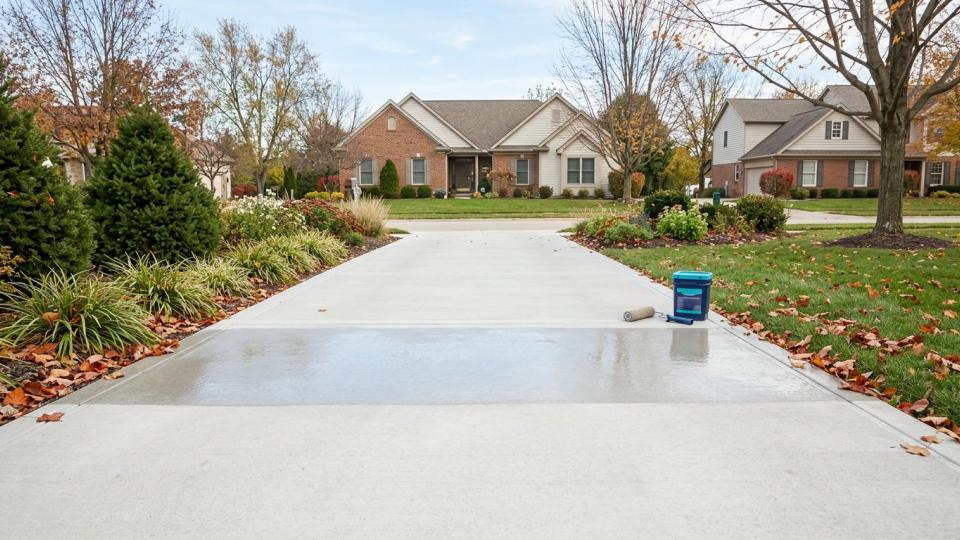
The window to seal is closing
In metro Atlanta, the first freeze usually arrives sometime in mid-to-late November. That leaves just a few weeks of mild, dry weather to protect your driveway before winter, and you've probably already seen the "seal it now!" flyers in your mailbox.
So is it worth it?
The short answer: sealing a healthy concrete driveway before winter can help keep out water and deicing salt. But it won't fix cracks, flaking or bad drainage. Whether it makes sense depends on how old your concrete is, what shape it's in, the product you choose and whether the weather cooperates.
Seal at the wrong time, or over the wrong problem, and you've wasted your money. Here's how to tell whether your driveway needs sealer, a repair or simply more time.
Key takeaways
- Sealer prevents; it doesn't repair. It can reduce water and salt damage on sound concrete, but won't fix existing problems.
- New concrete needs time. Many sealers require at least 28 days, and the product label has the final say.
- Not all sealers are alike. Penetrating sealers soak in; acrylics leave a coating on top.
- Weather matters. Check temperature, rain and overnight lows for the entire drying period.
- Fix the real problem first. Sinking slabs, big cracks and puddles need repair, not a coating.
How winter damages your driveway
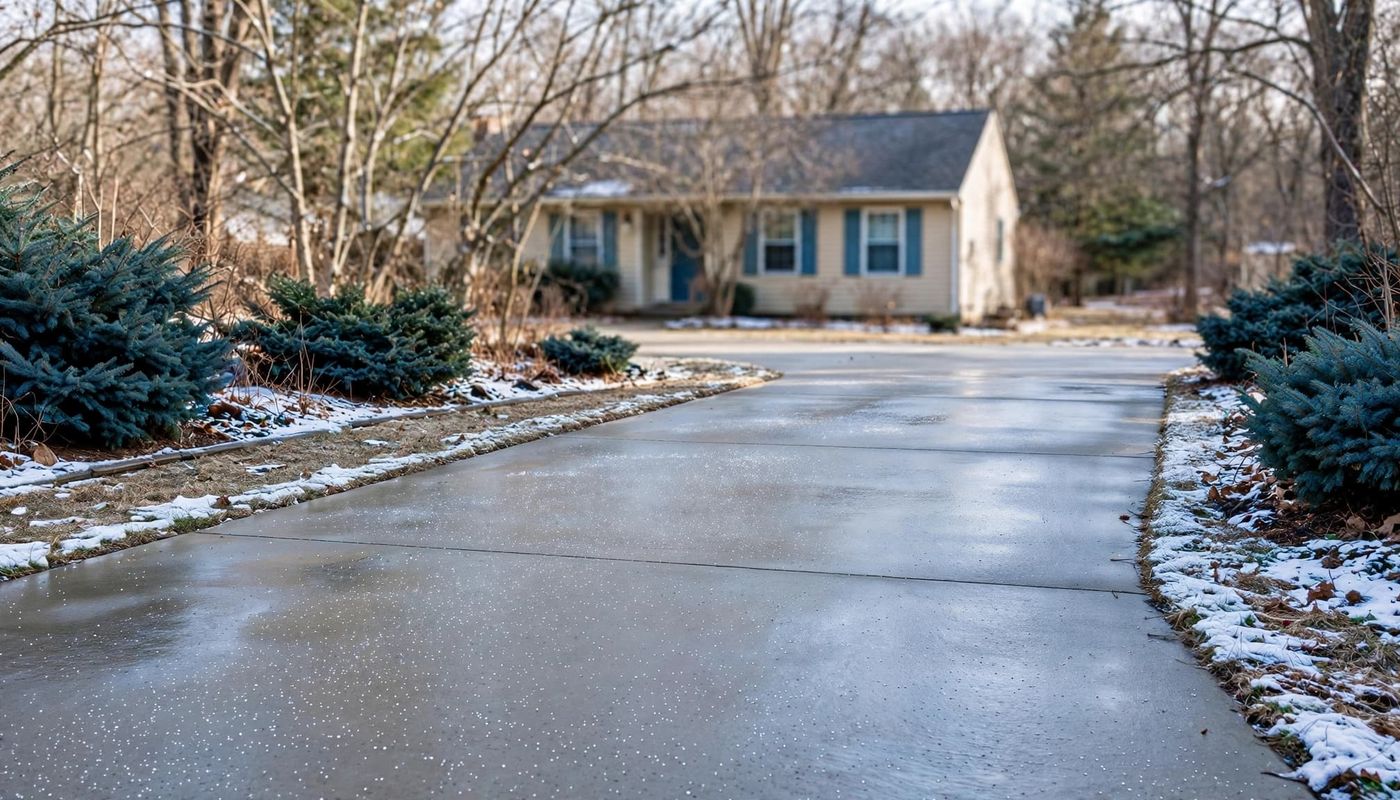
Concrete looks solid, but it's full of tiny pores. According to University of Nebraska-Lincoln Extension, water soaks into those pores, then expands when it freezes. Over and over, that pressure pops off small flakes from the surface. That flaking is called scaling.
Deicing salt makes it worse. Salt dissolves into the water that seeps in, and salt crystals forming inside the concrete can cause damage of their own. A driveway that gets wet and freezes again and again faces more than a cosmetic problem.
How well your driveway holds up also depends on how it was built:
- Air-entrained concrete contains millions of tiny air bubbles that give freezing water room to expand. It handles winter much better.
- The right mix and proper curing make concrete stronger and less absorbent.
That's why you should be skeptical of anyone promising to "winter-proof" any driveway. A sealer can protect the surface, but it can't make up for weak or poorly built concrete. A good contractor will tell you the difference.
When to seal, and when to wait
Good candidate for sealing
A solid driveway with no flaking, crumbling or major cracks, and a surface that still soaks up water, may benefit from a penetrating water repellent. It also needs to be clean, old enough and dry enough to meet the product's requirements.
Brand-new concrete? Be patient
For most penetrating sealers, 28 days is a common minimum age for new concrete. It's a guideline, not a hard rule. Some products are made for fresh concrete, and cold weather can slow things down.
Curing and drying aren't the same thing, either:
- Curing helps the concrete gain strength.
- Drying affects how much moisture is inside, and how well a sealer can soak in.
University of Nebraska-Lincoln Extension recommends letting new concrete air-dry for at least 30 days before its first freeze. If your driveway was poured recently, that timeline matters.
Neither number is permission to seal automatically. The instructions for the specific product you choose always come first.
Already flaking or crumbling? Stop
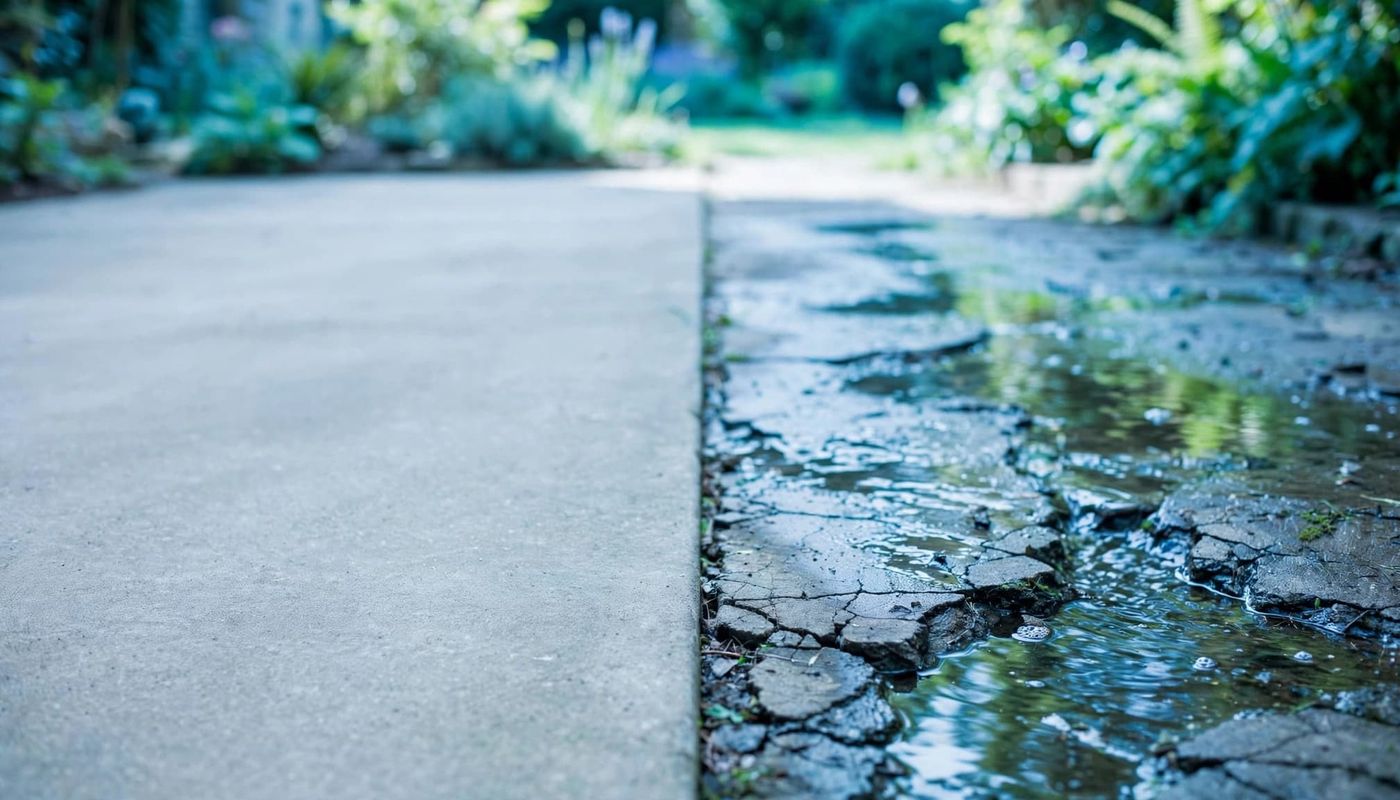
If the surface is actively scaling, crumbling or breaking off in chunks (spalling), get the cause checked first. Sealer won't bring back concrete that's already gone, and it can hide a problem that keeps getting worse.
Which concrete sealer should you use?
"Concrete sealer" covers several very different products. Before comparing prices, know what each one does.
| Sealer type | What it does | What to watch for |
|---|---|---|
| Penetrating (silane or siloxane) | Soaks into the surface and repels water, while letting vapor escape | The concrete has to be able to absorb it |
| Film-forming (acrylic) | Leaves a coating on top that can change the look, often adding shine or darkening color | Appearance, slipperiness and how often it needs reapplying |
| Cure-and-seal | Helps fresh concrete cure while adding protection | Only use one that's specifically labeled for fresh concrete |
Penetrating sealers don't leave a visible film, so you may barely notice them, but they reduce how much water soaks in. Research on penetrating concrete sealers shows their performance depends partly on how well the concrete absorbs them.
Acrylics change how your driveway looks and feels, which can be a plus or a minus.
Choose based on what the product is designed to do and its documented performance, not the label's marketing. If your driveway is decorative or was sealed before, make sure the new product is compatible with what's already there.
Read the label before you check the forecast
The product's technical data sheet should spell out limits for:
- Air and surface temperature
- How dry the concrete needs to be
- How long it needs to stay rain-free
- Freezing temperatures during drying
For example, one New York State Department of Transportation specification requires air and concrete temperatures of at least 40°F during application and until the sealer is dry to the touch, and no application if bad weather is expected within 12 hours. Those are examples, not universal driveway rules, but they show why the specific instructions matter.
Check the overnight low, not just the afternoon high. A warm, sunny afternoon doesn't help if temperatures drop below freezing before the sealer is ready. And remember that walking on the driveway and parking on it may have different wait times.
Avoid these costly sealing mistakes
Mistake #1: Sealing a dirty driveway
Dirt, oil and old coatings can keep a penetrating sealer from soaking in. Clean thoroughly first, and remove any old coating or curing compound if the product requires it.
Mistake #2: Pressure washing and sealing the same day
This is a big one. After pressure washing, water can stay trapped in the pores even when the surface looks dry. How long it takes to dry depends on temperature, humidity, sun and the concrete itself, so a "wash it and seal it" same-day schedule can backfire.
Your driveway can look dry while moisture underneath still blocks the sealer.
Mistake #3: Sealing over water, ice or frost
Never apply sealer over puddles, ice or frost. Some products allow slightly damp concrete; others need it completely dry. The label tells you which.
Mistake #4: Thinking more is better
Piling on extra sealer or adding a second coat of an incompatible product can cause peeling, cloudiness or a slippery finish. Stick to the coverage rate and application method on the label.
Hiring it out? Get a written plan
"Premium concrete sealer" doesn't tell you what you're buying. Ask for the exact product name and its technical data sheet with the estimate. The proposal should explain:
- How the surface will be cleaned and prepped
- The area being treated and how much product will be used
- How it will be applied
- When you can walk and drive on it again
- What happens if the forecast turns bad (a written rescheduling policy beats a promise to beat the cold)
- Whether there's an existing coating, and whether the new product is compatible
Also, be clear on what you'll see. A penetrating sealer may barely change the look, while an acrylic can add gloss or darken the color.
A 4-step checklist before you buy sealer
Work through these in order. If any step turns up a problem, solve it before moving on. Buying the sealer first can pressure you into using it before your driveway is ready.
- Check age and condition. When was the concrete poured? Look for flaking, cracks, worn spots and any existing coating.
- Watch the water. After a rain, note any puddles that linger, water running toward the house or water pooling next to sunken sections.
- Choose the right product. Pick one made for exterior concrete and deicing salt exposure that's compatible with your surface.
- Plan around the weather. Leave time for cleaning, drying, application and the full no-traffic period, all within the label's temperature and rain limits.
When sealer isn't enough
Some problems need a repair, not a coating. Get a professional assessment if you see:
- Puddles that sit for hours after rain
- Sunken or tilted sections
- Large cracks or trip hazards
- Widespread flaking or crumbling
A sinking slab is a support problem underneath the concrete, not a surface problem. Patching the crack may make it look better without fixing what's causing it.
Depending on what's wrong, a contractor might recommend drainage correction, crack or joint repair, slab lifting or replacement. Each solves a different problem, so they shouldn't show up on an estimate as interchangeable options.
Also, "sealing" a crack isn't the same as sealing the surface. A water-repellent sealer won't fill an open crack just because both jobs use the word "seal."
Compare proposals by scope, not just price
Ask every contractor one simple question: what problem will this work solve? A sealing-only quote and a repair-plus-sealing quote aren't the same job, even if they look similar on paper.
- For repairs: ask whether the work addresses surface damage, a sinking slab or drainage. If leveling is proposed, ask how they'll decide whether the concrete is in good enough shape to lift.
- For sealing: compare prep work, how much product will be used and how long you'll stay off the driveway. A cheaper bid may skip the cleaning or coating removal another contractor includes.
- For warranties: look at what's actually promised. Appearance, water repellency and repair performance are three different things. Find out which work is covered, for how long and whether there are maintenance requirements.
Keep the product information and receipts together, so any future contractor knows what's already on your driveway.
Getting help
When you request an assessment, describe what you're seeing: where water collects, which sections have moved and whether flaking is spreading. Photos taken right after a rain are especially helpful, since puddles may be gone by the time a contractor visits.
A good recommendation connects the damage you can see to a specific fix, instead of jumping straight to selling you a coating.
Need a driveway repair or leveling pro? Find a TrustDALE Certified driveway specialist at TrustDALE.com. Our Certified Partners have passed our rigorous seven-point inspection and are backed by our $10,000 Make It Right Guarantee.
Frequently asked questions
Is it worth sealing a concrete driveway?
For a sound driveway that still absorbs water, a sealer can help reduce damage from freeze-thaw cycles and deicing salt. It won't fix existing cracks, flaking or drainage problems, so assess the concrete's condition first.
How long should new concrete cure before sealing?
Many penetrating sealers call for at least 28 days, but always follow the product's label. Some products are designed for fresh concrete. University of Nebraska-Lincoln Extension also recommends at least 30 days of air-drying before new concrete's first freeze.
Can you seal concrete in cold weather?
Only within the product's temperature limits. Many sealers need the air and concrete to stay above a minimum temperature, such as 40°F, until the product dries. Check the overnight low, not just the daytime high.
What's the best sealer for a concrete driveway?
It depends on your goals. Penetrating silane or siloxane sealers repel water without changing the look much. Acrylic sealers add a visible coating that can enhance color or shine but may need reapplying more often. Pick one made for exterior concrete and salt exposure.
Can I pressure wash my driveway right before sealing it?
You can clean it first, but give it time to dry. Water can stay in the pores even when the surface looks dry, and that moisture can keep the sealer from soaking in.
Will sealer fix a flaking driveway?
No. Sealer can't replace concrete that's already flaked off. Have the cause assessed first, since active scaling may point to a deeper problem.
The bottom line: seal only when your driveway is ready
Sealing before winter makes sense when the concrete is in good shape, the product fits your driveway and the forecast meets the label's requirements. Prep and timing matter just as much as the sealer you buy.
If your driveway is sinking, holding puddles or actively flaking, fix those problems first. The right sealer can cut down on winter damage, but lasting protection starts with concrete that's ready for it.
Need help with your driveway? Connect with a TrustDALE Certified concrete pro, backed by our $10,000 Make It Right Guarantee.