

You refill the pool, then notice the water line has dropped again only days later. During the hottest part of summer, evaporation from a swimming pool can be brisk, but a leak may also hide in plumbing, a liner, the shell, or equipment.
If your pool losing water has become a weekly concern, don't keep adding water and hoping the problem disappears. A simple bucket test, a few careful observations, and a documented diagnosis can protect your equipment, budget, and family's swimming time.
Key Takeaways
- Track the water level, and investigate losses above about 2 inches weekly without heavy use or backwashing.
- Use this pool checklist: complete a bucket test, record water levels, and request contractor documentation.
- Look for damp soil, air in the pump, cracks, and repeated refilling as warning signs.
- As a pool owner, document refills and request a written diagnosis and detailed repair scope before approving repairs.
Is Your Pool Losing Water or Just Evaporating? Start With the Weather and Water Level
A pool can lose water every day under normal conditions. Heat, direct sun, wind, low humidity, active swimmers, swimming lessons, splashing, fountains, spillways, and backwashing can all move water out. A filter system in backwash mode can also discharge water intentionally.
During very hot, sunny weather, a drop of roughly 3 to 5 millimeters per day may occur. According to the National Oceanic and Atmospheric Administration (NOAA), July 2026 was the hottest on record across the United States. So it's no surprise that your pool water may be evaporating more quickly than you're used to.
Still, a pool losing water faster than about 2 inches per week needs a closer look. This is especially true without a pool party, backwashing, or a water feature running heavily. Compare similar weather and usage periods before drawing conclusions. Record a baseline water level by marking the water line on the tile or skimmer face with a small piece of tape. Check it at the same time each day.
Why Record Southeast Heat Can Make Evaporation Look Like a Leak
Recent heat across the South has made normal evaporation look alarming. NOAA's July 2026 national climate report reported the warmest July in the contiguous United States' 132-year record, with above-average temperatures extending into parts of the Gulf Coast and Southeast.
Hot air, intense sunlight, and wind pull moisture from the water's surface. Humid, calm, or rainy conditions usually slow that loss. The U.S. Drought Monitor's late-August summary also described persistent heat and dry conditions across much of the South, which increase evaporative demand.
Heat explains some water loss, but it doesn't clear a pool of suspicion. Compare measurements from similar weather periods instead of treating one blazing afternoon as proof of a leak.
Use the Bucket Test to Check for a Pool Leak at Home
The bucket test gives you a practical baseline before you spend money on repairs. It compares water loss from your pool with water loss from a container exposed to nearly the same conditions.
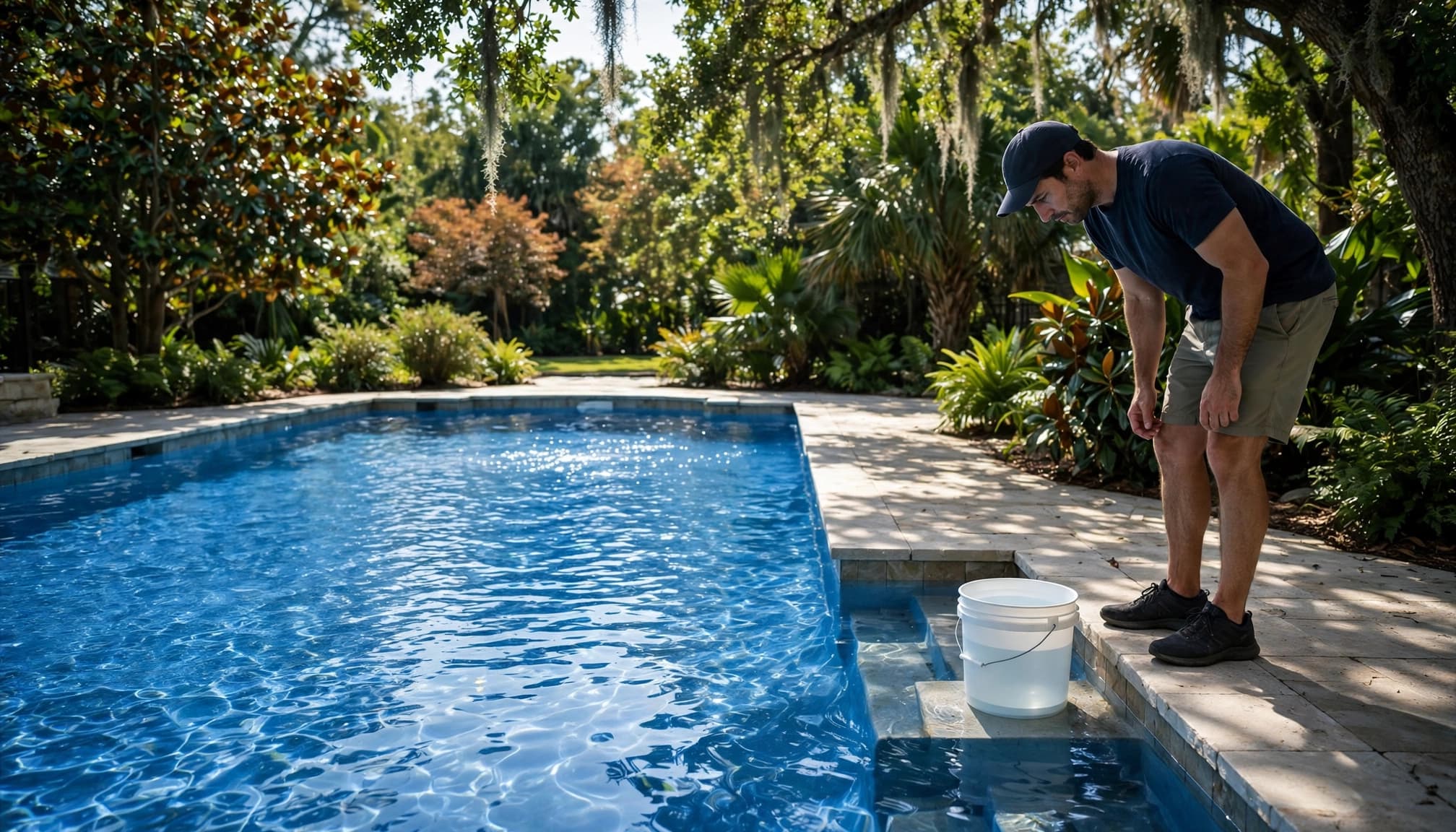
Follow these steps:
- Turn off the automatic fill valve so it doesn't mask water loss.
- Fill a clean container with a known gallon capacity, such as a 5-gallon bucket, to several inches below the rim.
- Place the bucket on a pool step, with the water inside close to the surrounding water level.
- Mark the water level inside the bucket and outside it. Make the exterior mark near the skimmers or on a clearly visible tile line.
- Keep the pump water level above its intake, keep swimmers out, and don't add water for 24 hours.
- Compare both marks after 24 hours. Repeat for another 24 hours if the difference is close or weather changes.
Keep the bucket where children cannot trip over it, climb on it, or move it. Remove it promptly when you finish the test.
Atlantis University's overview of pool leak checks also identifies the bucket test as a useful way to separate evaporation from a possible leak.
How to Read the Difference Between the Bucket and the Pool
If the bucket and pool water lines drop by about the same amount, evaporation is the likely cause. If the pool falls more than the bucket, water is likely escaping somewhere else.
A difference of one-quarter inch or more beyond the bucket's drop over 24 hours is worth investigating. Wind, a moved bucket, or inconsistent marks can create a small mismatch, so repeat the test before authorizing a costly repair.
A bucket test doesn't locate a leak. It tells you whether the pool is losing more water than weather alone would explain.
Look for These Signs That Water Loss Is More Than Evaporation
A falling water line is only one clue. Walk the pool, deck, yard, and equipment pad before you call anyone. Take photos and write down what you see.
Visible, Structural, and Water-Quality Clues
Look for soggy soil, wet patches near the pool, unexplained settling, or cracks in the pool walls, decking, or shell.
Failure points vary by construction and pool models. A vinyl liner may show wrinkles or tears, while a fiberglass pool or concrete pool may show shell, fitting, or movement concerns. Semi inground pools can also develop wall or settling issues.
A rising water bill or frequent refilling also matters. Track how often you add water and estimate the gallon capacity of each refill. Replacing water repeatedly can increase sanitizer, balancing chemical, and other pool supplies usage.
For routine chemistry, a pool store can perform a basic water check or review a water sample. A routine water test doesn't confirm a leak or locate escaping water. If algae returns quickly, diluted sanitizer may be part of the problem, although algae alone doesn't prove a leak.
Don't allow the water level to drop below the minimum level listed in your pump or manufacturer's instructions. A pump that pulls air can lose prime, run poorly, and cause pump or other pool equipment problems.
What the Pump-On and Pump-Off Test Can Tell You
A leak detector may compare water loss while the circulation and filter system run and while they stay off. More loss while the pump runs can point toward pressurized plumbing, return lines, fittings, or equipment connections.
Inspect skimmers, return jets, and other fittings for possible connection problems. Automatic cleaners, hoses, and related cleaning equipment should also be checked for abnormal water discharge.
Similar loss in both tests can point toward the liner, shell, light niche, skimmer, or another non-pressure area. The comparison helps narrow the search, but it doesn't replace pressure testing or a full inspection.
Why Ignoring a Pool Leak Can Cost More Than Extra Water
Water loss creates a chain reaction. You may spend more on water, sanitizer, balancing chemicals, and algae treatment. Meanwhile, a low water level can leave the pump vulnerable.
Water escaping underground can also wash away soil or contribute to movement around the deck. Before calling a contractor, record the water level, weather, pump status, damp areas, refill dates, and estimated gallon capacity. If the issue is seasonal, document these details before pool closing. Past repair records can also shorten the diagnosis.
Know When to Call a Pool Leak Detection Professional
Call a qualified pool professional when your bucket test shows a meaningful difference, refilling becomes routine, or water loss continues in cool or calm weather. Act promptly if you see damp ground, cracks, a failing pump prime, air bubbles returning through the system, or water loss that changes when the equipment runs.
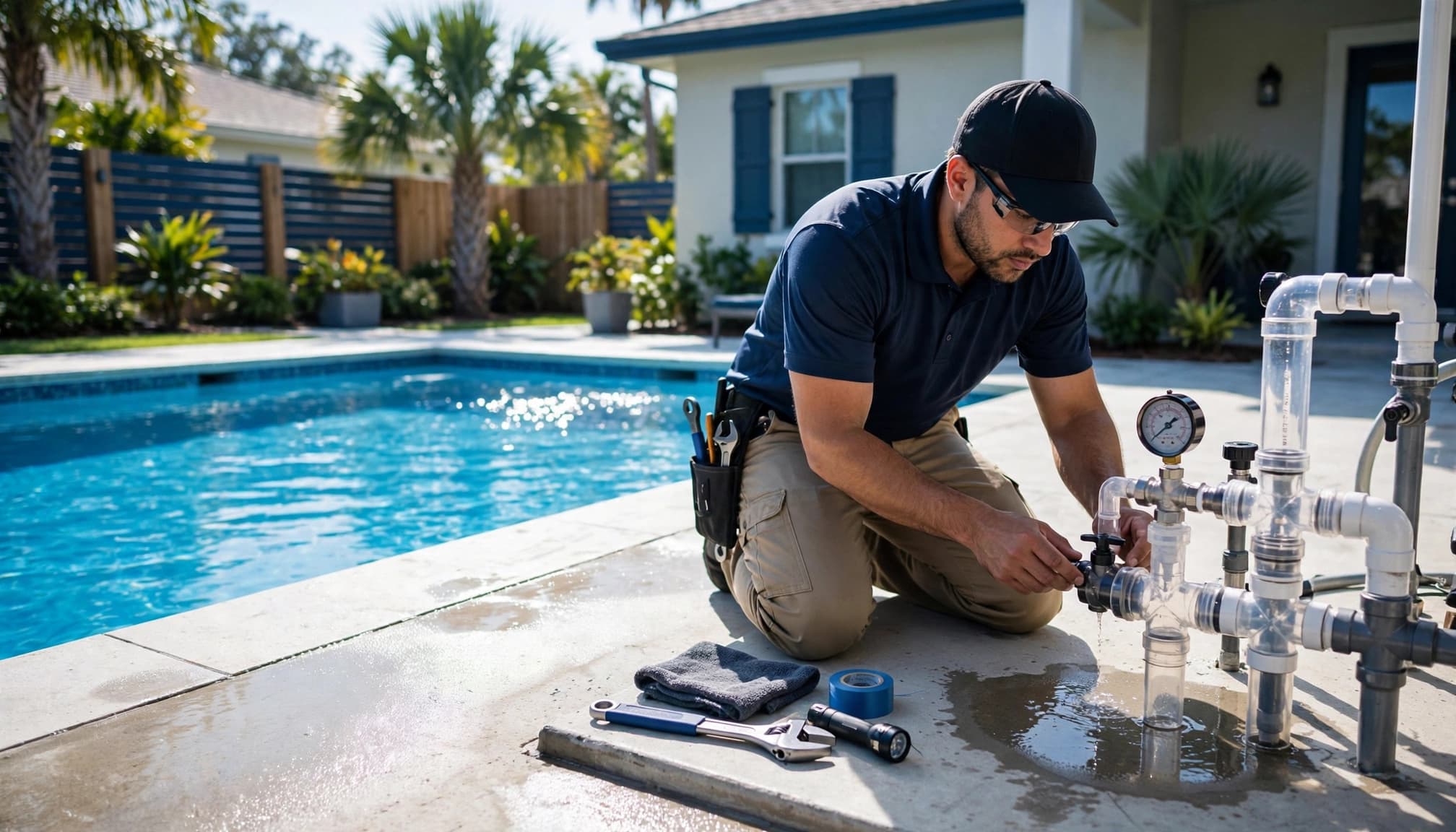
A capable provider may use dye testing around fittings, pressure testing on plumbing lines, acoustic listening equipment, plumbing isolation, or other diagnostic tools. Depending on the design, the provider may isolate the filter system from plumbing lines during testing. No single method is conclusive for every leak.
The goal is to identify the source before opening a deck, draining the pool, replacing a liner, or proposing resurfacing. Routine pool supplies and chemical adjustments can't replace a confirmed diagnosis. A pool store may help review a water sample and correct water balance, but it generally can't confirm an underground plumbing leak.
Ask for a written diagnosis that names the suspected leak area, the method used to confirm it, itemized pricing, the expected timeline, and warranty terms. Confirm whether the inspection fee applies to repair work. Get at least three detailed estimates for a major repair, then compare the diagnosis as closely as the price.
You can find vetted Pool Pros to repair your pool or install your dream pool on TrustDale.com. Certified partners have passed TrustDALE's rigorous seven-point inspection process and qualifying work is backed by our $10,000 Make It Right Guarantee.
And if you want a deeper dive into pool installation and maintenance, check out our Trust Issues podcast:
Questions to Ask Before You Approve Pool Leak Repairs
Ask whether the contractor found the source or only suspects it. Request an explanation of how the diagnosis was confirmed, whether the proposed work truly requires the contractor to drain a pool, and what parts or materials will be used.
Also ask whether the repair should be completed before pool closing or can safely wait, who handles any required permits, how long the repair should last, and what the workmanship warranty covers. Reject vague estimates, unexplained service charges, same-day pressure tactics, or claims that every water-loss issue requires a complete resurfacing or replacement.
Frequently Asked Questions
Can you run the bucket test with the automatic fill valve on?
No. An automatic filler can hide a leak by replacing escaped water. Turn it off during the test, then monitor the water level so the pump doesn't run with insufficient water.
Does a pool cover stop evaporation completely?
A properly fitted cover can substantially reduce evaporation, especially overnight and during windy weather. However, it won't repair a leak, and water can still escape through plumbing or structural defects.
Can you use food coloring to find a leak yourself?
You can place a small amount of dye near a suspected crack, fitting, or light niche when the water is still. If the dye moves toward one spot, that area may need professional inspection. Don't add dye throughout the pool, because it can stain surfaces or cloud the test.
Does a leak always mean you must drain the pool?
No. Many plumbing, skimmer, light, fitting, and liner repairs don't require complete draining. A contractor should explain why draining is necessary before you approve it.
Will homeowners insurance pay for a pool leak?
Coverage depends on your policy, the cause of the leak, and the resulting damage. Discovering damage during pool closing doesn't determine coverage by itself. Sudden damage may receive different treatment than gradual wear, so call your insurer before demolition or major repairs.
Protect Your Pool Before Water Loss Gets Expensive
Summer heat can speed evaporation, especially after long stretches of hot, dry weather. However, a pool that drops faster than the bucket or keeps losing water under mild conditions needs attention.
Repeat the test when results are unclear, then add weather, water-level, refill, pump, and filter system observations to routine pool maintenance records. Protect the pump from low water, document warning signs, and track recurring changes so your pool care stays proactive. A pool store can help with routine water-balance questions, while a trustworthy leak-detection contractor should explain the evidence, price, repair scope, and warranty without pressure.