
For many of us, scrolling through social media has become a favorite pastime. And I'm sure I don't have to tell you, those feeds blend personal posts with carefully targeted advertising. Artificial intelligence makes polished digital media and persuasive content creation easy enough that literally anyone with a computer or a smart phone can do it. I've seen too many consumers mistake that polish, a familiar logo, or glowing comments for proof that a company is legitimate.
When people ask, "Are social media ads vetted?", the safest answer is no, at least not in the way most buyers mean it. A social network may review an ad at the platform level. Social media platforms generally check format, policy, or payment compliance, not licensing, product quality, refunds, or business legitimacy. Ad targeting determines who sees an offer based on a chosen target audience. Data privacy practices don't constitute independent vetting. Before you pay, share information, hire a provider, or click an ad link, pause long enough to verify the offer away from the platform.
Key Takeaways
- Don't assume social media platforms verify advertisers. They screen ads for policy and format compliance, not licensing, quality, pricing, refunds, or business practices.
- Treat polished ads, familiar logos, paid labels, testimonials, and influencer endorsements as marketing, not proof that an offer is legitimate.
- Independently verify the business, compare reviews, check licenses, request written terms, and avoid high-pressure payment demands.
- If you paid or shared sensitive information, contact your financial provider quickly, secure your accounts, save evidence, and report the ad.
Are Social Media Ads Vetted? Here's What the FTC Says
A recent consumer alert from the Federal Trade Commission gives a clear warning: ads on social media “aren't always thoroughly vetted by platforms.” The FTC also advises consumers to “check out the company before you buy.”
That doesn't mean every ad on Facebook, Instagram, TikTok, YouTube, or another social network is dangerous. Many legitimate businesses use these social media platforms, including TrustDALE! However, ad-policy screening and content moderation aren't the same as checking a contractor's license, investigating complaints, verifying insurance, or guaranteeing a refund.
Social media platforms may review an ad for policy compliance without confirming the seller's license, performance, pricing, or refund practices. Content moderation may address certain policy issues, including misinformation or fake news, but it doesn't independently verify every advertiser.
An ad can be accepted for placement without proving that the seller will perform quality work, honor its warranty, or deliver the item advertised. Visibility is not verification.
Why a Real-Looking Ad Can Still Lead to a Scam
Scammers borrow what consumers already recognize. They copy logos, lift photos, and present copied testimonials or comments as authentic user-generated content. Professional content creation can build brand awareness, but neither proves that a business is legitimate.
Artificial intelligence can assist with persuasive content creation, including images, voices, scripts, and videos. A polished short-form video on a video sharing service may look convincing, especially when influencer marketing makes an offer feel personally recommended.
A link in the ad may redirect after approval or lead to a domain that differs by one letter from a real company. A familiar social network can create false confidence, especially when an ad promises a steep discount or quick solution.
Familiarity within online communities can also create social proof. It isn't independent evidence that a business is legitimate.
In my consumer-protection work, I treat urgency as a warning sign. A legitimate business can explain its offer tomorrow. A scam needs you to act before you investigate.
What Paid Ad Labels Do and Do Not Tell You
Labels such as “Sponsored” or “Paid Partnership” tell you that someone paid for placement or disclosed a promotional relationship. Ad targeting places that promotion before a selected target audience, but it doesn't confirm product quality, licensing, fair pricing, refund rights, or honest business conduct.
An advertiser's social media strategy or broader social media marketing may improve reach across social media platforms. It may also strengthen a brand's connection with its audience. Neither establishes that the product or service is safe.
Evaluate the seller independently. A paid label is marketing information, not a consumer guarantee.
How to Check a Social Media Ad Before Spending Money
The central lesson in my book, Don't Get Scammed, Get Smart, is simple: slow down before money changes hands. Pressure is a scammer's best tool because research can ruin the pitch.
Whether the offer appears on social media platforms or through mobile social media, use a separate browser window to investigate. A personalized social media ad reflects ad targeting, not proof of trustworthiness.

Verify the Business Outside the Social Media Platform
Type the company's web address into a new browser window instead of tapping the ad link. A highly relevant offer may reflect targeting aimed at your target audience, not a trustworthy company.
Confirm the business has a physical address and working phone number. Compare its social media presence and social media marketing claims with independently entered contact details, licenses, complaints, and reviews.
Call the listed number and ask questions before sharing personal information. Protect your data privacy by avoiding forms inside the ad while you research.
For contractors and regulated services, check the appropriate state licensing database. Search the company name with terms such as "complaint," "lawsuit," "refund," and "scam." Compare reviews on more than one independent site, and pay attention to dates, details, and patterns.
Contact information inside an ad can be fake. In some cases, it belongs to a real business that an impostor is using without permission.
Check the Price, Payment Method, and Written Terms
A price far below normal market rates deserves scrutiny. So does a seller who demands immediate payment through gift cards, cryptocurrency, wire transfer, or a peer-to-peer payment app. Those methods can make recovery difficult or impossible.
Before agreeing, request a written estimate or contract that states the total price, cancellation policy, delivery schedule, warranty, and refund terms. For home services, the document should identify labor, materials, permits, cleanup, change orders, and follow-up service.
I advise homeowners and property managers to get three detailed estimates for any meaningful project. Comparing only the total price can hide major differences in material quality and scope.
Spot Fake Proof, Reviews, and Endorsements
Treat testimonials, badges, celebrity endorsements, follower counts, comments, and before-and-after photos as user-generated content that may be copied or manipulated. Content creation can make a polished short-form video on a video sharing service look more credible than it is.
Artificial intelligence can fabricate or enhance images, reviews, and promotional materials. Influencer marketing can increase visibility, but popularity doesn't establish accountability. A high engagement rate may reflect manufactured follower activity rather than genuine customer interest.
Watch for copied reviews, synthetic images, and ratings that repeat the same wording. A five-star rating means little if every review appeared within two days.
Ask whether the company can explain its credentials without relying on social media content. Reputable providers can discuss their experience, insurance, licensing, written warranties, and who will do the work.
A convincing online image may prove that an advertiser understands marketing. It doesn't prove that the advertiser will stand behind the transaction.
Warning Signs That a Social Media Offer May Be a Scam
On social networking services, an offer can seem familiar or trustworthy when it isn't. A social network can create that false sense of familiarity. Several warning signs together should stop the transaction until you verify the offer independently. The FTC's guidance on scams that start on social media reinforces the need to question offers that depend on speed and secrecy.
Scammers may tailor a social media offer to a narrow target audience, but relevance does not prove verification. Watch for these patterns:
- Urgency and unrealistic promises: A countdown timer or "today only" offer pushes you to pay before researching the seller. Guaranteed results, government approval, or prices far below comparable providers are also warning signs.
- Business identity mismatches: The business name does not match the website domain, email address, payment recipient, or phone greeting. Refund terms are vague, missing, or buried on a page that does not identify the seller.
- Payment demands: The advertiser requests payment through an unfamiliar method or refuses to provide a written agreement before you pay.
- Information-security risks: The advertiser asks for a Social Security number, bank login, credit card details, or other sensitive information without explaining why. That creates a data privacy risk. Poor spelling and unusual web addresses add unnecessary risk.
The Risks of Clicking, Downloading, or Sharing Information
A suspicious social media ad can lead to a phishing page, malware download, fake survey, or form designed to collect passwords and payment data. It may also send you to a video sharing page with a malicious link or manipulated digital media file. Artificial intelligence can make fake offers and phishing pages look polished through automated content creation. Don't enter sensitive information because an ad asks for it.
Check the destination domain before submitting anything, especially when using mobile social media. Keep your phone, browser, and computer updated. Use strong, unique passwords and multifactor authentication, especially for email and banking accounts. The FTC's consumer scam resources provide additional guidance for recognizing and reporting common fraud schemes.
What to Do After Paying or Sharing Information
Act quickly. Contact your bank, card issuer, payment app, or payment provider and ask whether it can reverse or stop the transaction. Save screenshots of the social media ad, website, messages, receipts, and any promises about price or delivery.
If you shared a password, change it immediately anywhere you reused it. Enable multifactor authentication, monitor financial accounts, and review your credit reports for unfamiliar activity.
Report the ad to the social media platforms where it appeared and file a report through the FTC's fraud-reporting resources. Platform content moderation may remove or limit an ad after a report, but it can't guarantee reimbursement. Reporting can still help platforms and law enforcement identify patterns.
How to Choose Safer Providers When a Social Media Ad Leads to Home Services
An ad on social media is a lead, not a recommendation. That matters when the target audience includes homeowners or property managers seeking roofing, electrical, plumbing, HVAC, commercial property, or remodeling work through social media.
You can take the guesswork out of finding vetted service providers by going to TrustDale.com, where our Certified Partners have already passed a rigorous seven-point inspection and are backed by our $10,000 Make It Right Guarantee.
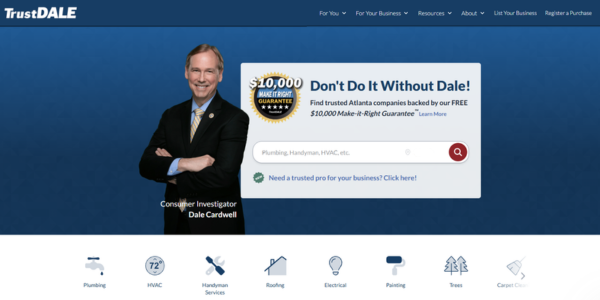
Home service providers on TrustDALE.com have already been rigorously vetted
Questions to Ask Before Hiring an Advertised Contractor
Don't rely on a badge, rating, polished video, or social media profile alone. Content creation, social media marketing, and a strong social media presence don't replace licensing, insurance, written terms, or complaint resolution. Ask direct questions and get each answer in writing:
- Who will perform the work, and will the company use subcontractors?
- Is the company licensed and insured for this job where licensing applies?
- Can you provide a written scope, total price, payment schedule, and estimated completion date?
- What permits are required, and who will obtain them?
- Which warranty applies to labor and materials, and how are complaints resolved?
- How will changes be documented, priced, and approved?
- When is payment due, and what amount is required before work begins?
A reputable provider expects reasonable questions. It should not punish you for asking them about a social media promotion.
Why Independent Verification Still Matters With Vetted Businesses
Vetting, certification, and consumer guarantees add accountability. They don't replace reading the contract or confirming that your exact project falls within any available protection.
For example, a written estimate should still explain whether repair work includes removal, disposal, permits, material upgrades, and final cleanup. You should also confirm the service call fee, labor warranty, and manufacturer warranty before authorizing work.
Use trusted resources as a safer starting point when a social media offer leads to home services. Then make the final hiring decision with clear paperwork and a full understanding of what you are buying.
Frequently Asked Questions
Are social media ads vetted before they appear?
Usually, social media platforms review ads for policy and formatting compliance. They don't independently verify the business or offer, so approval doesn't guarantee quality, licensing, fair pricing, delivery, or a refund.
How can I check whether a social media advertiser is legitimate?
Research the company outside the platform using an independently entered web address. Confirm its contact details, licenses, complaint history, reviews, written terms, and payment practices before you buy or hire.
What are common warning signs of a social media scam?
Urgent deadlines, unusually low prices, guaranteed results, vague refund terms, and mismatched business details are warning signs. Be cautious of requests for gift cards, cryptocurrency, wire transfers, or sensitive information, and pause the transaction until you verify the offer.
What should I do if I paid a suspicious advertiser?
Contact your bank, card issuer, payment app, or payment provider immediately to ask whether the transaction can be stopped or reversed. Save screenshots and receipts, change reused passwords, enable multifactor authentication, monitor your accounts, and report the ad.
Protect Your Money Before an Ad Costs You
Don't confuse visibility on social media with verification. When asking, "Are social media ads vetted?" remember that screening by social media platforms isn't independent proof that will safeguard a costly purchase or hiring decision.
Pause, verify the business independently, compare written terms, and protect your payment information. Reputable companies welcome questions and provide clear details in writing.
Social media ads can be tempting, and we're all susceptible to promises of a great deal. But take the time to verify the company and the offer before you put your hard-earned money on the line.