
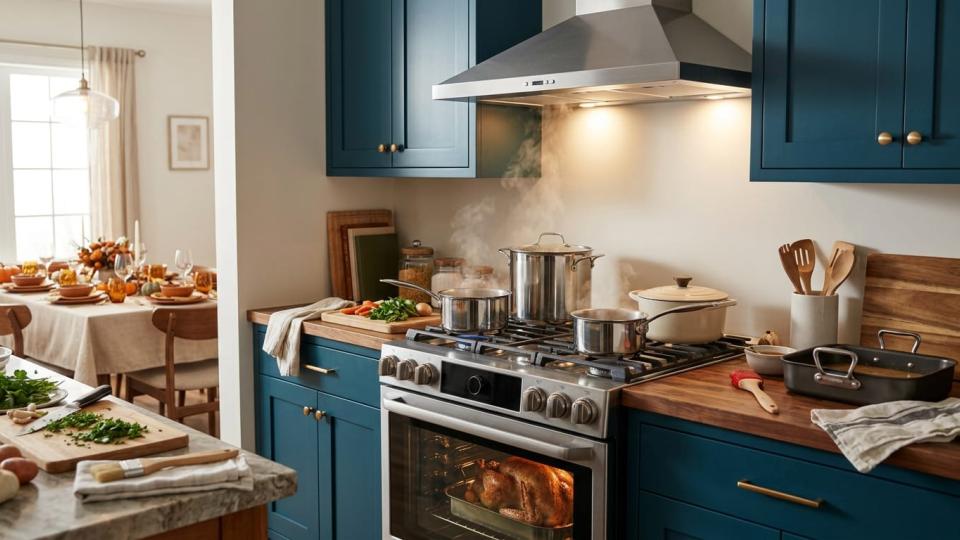
The turkey's been roasting for hours. Every burner on the stove is going. The doorbell rings, the relatives pour in, and suddenly your house feels like a sauna, and dinner isn't even on the table yet.
Does that scenario hit home? You're not alone, and it doesn't mean your HVAC system is broken. Hours of cooking pump heat into your home, and a house full of guests adds even more.
Cooking also puts moisture, odors and air pollutants into the air, so just moving warm air around won't fix it. The real fix is getting that cooking air out of the house. Here's why your home heats up on Thanksgiving, seven simple ways to keep your cool and how to tell when it's actually time to call an HVAC pro.
7 Quick Ways to Keep Your House Cool on Thanksgiving
| Do this | Why it helps |
|---|---|
| 1. Run your range hood the whole time you cook, plus 10 to 20 minutes after | Sends heat, moisture and cooking pollution outside |
| 2. Cook on the back burners when you can | Your hood generally captures their emissions better |
| 3. Keep the oven door closed | Every peek lets out a burst of hot air |
| 4. Close the shades on sunny windows | Cuts down on afternoon sun heating the room |
| 5. Set up drinks and snacks in another room | Draws guests (and their body heat) away from the kitchen |
| 6. Keep vents and return grilles clear | Blocked airflow makes a room feel worse |
| 7. Crack a window, if it's safe | Brings in fresh air when outdoor conditions allow |
Key Takeaways
- Cooking, guests and sunshine all add heat, and they pile up on Thanksgiving.
- Your HVAC system isn't a range hood. It moves air around inside your home, but only an outdoor-vented hood sends cooking air outside.
- Bigger isn't always better. A super-powerful hood can cause problems without enough fresh air coming back in.
- Keep food safe while you keep cool. Cook turkey to 165°F and refrigerate leftovers within two hours.
Still hot after the party's over? That's when it's worth getting your HVAC system checked.
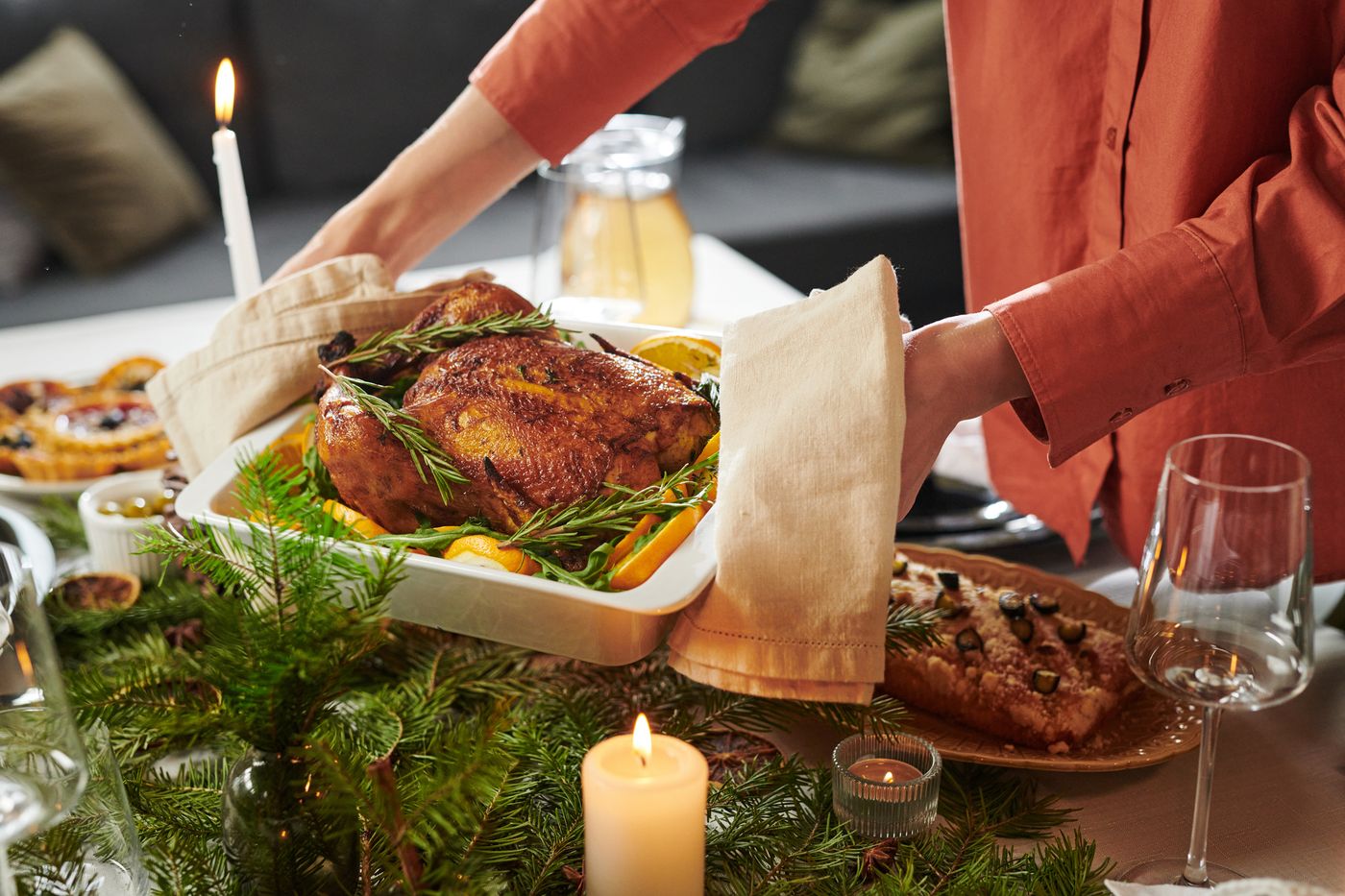
Why Does My House Get So Hot When I Cook Thanksgiving Dinner?
Your oven and stove crank out heat while your home is already working to stay comfortable. And Thanksgiving isn't a quick weeknight dinner. The turkey may roast for hours while several burners keep the gravy and sides going.
Your Oven Leaks Heat (Even When It's Closed)
An oven's insulated walls help hold in heat, but not all of it. Heat still escapes through the oven's surfaces and vents, and every time you open the door, a blast of hot air rolls into your kitchen.
Tip: Instead of opening the door to check on the bird, use the oven light and window if you have them. Only open it when you need to baste, move food or take its temperature.
Steam and Cooking Fumes Make It Worse
Uncovered pots release steam, and that extra moisture can make a warm kitchen feel even stuffier, especially without good ventilation.
Gas burners also give off combustion pollutants. But even if you cook with electric, you still need ventilation. Roasting, frying and other cooking methods release particles and odors from the food itself. Your kitchen can need better airflow even when you don't see any smoke.
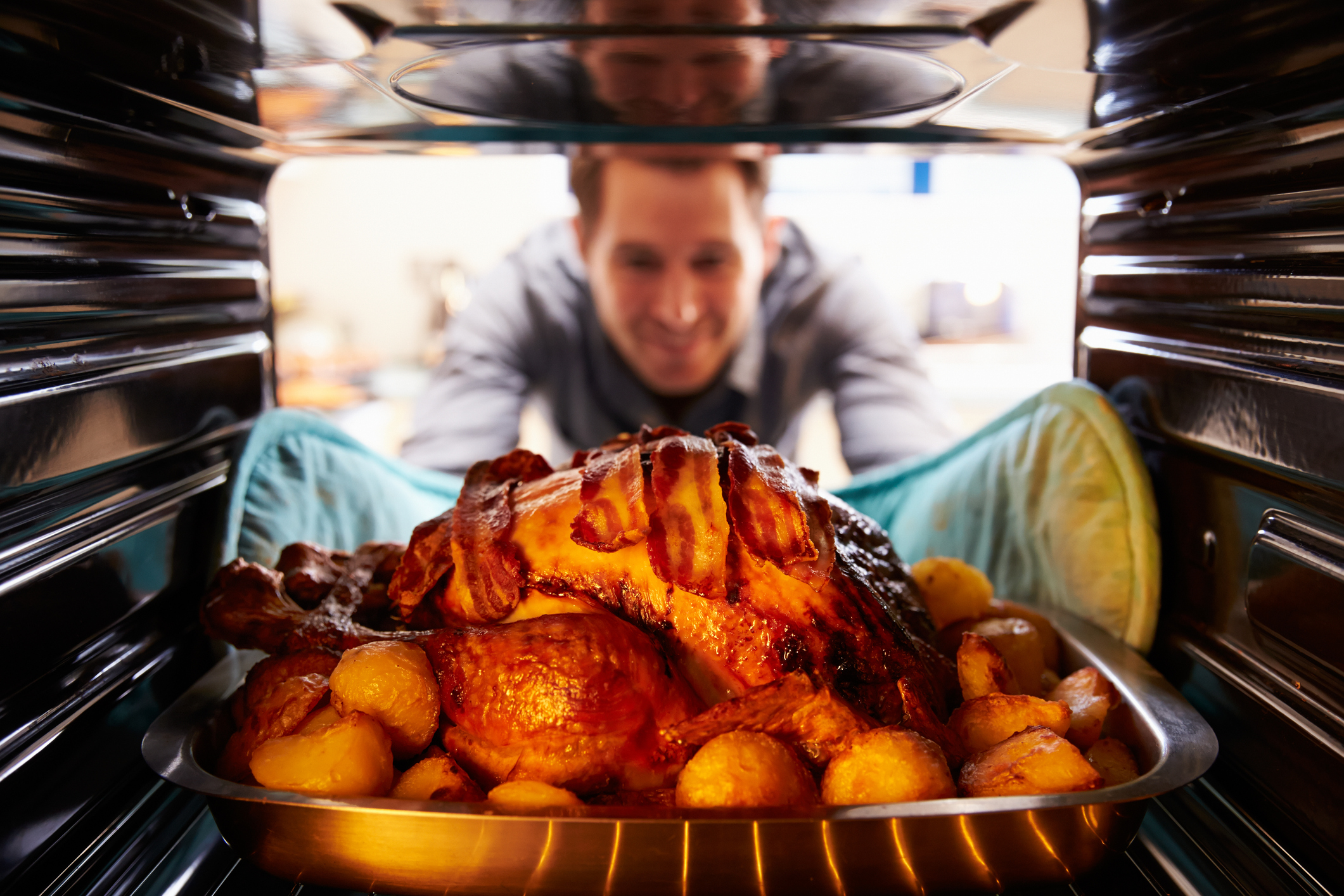
A Crowd Brings the Heat, Too
Every guest gives off body heat, so a packed kitchen or living room can feel much warmer than an empty one. Open floor plans also let cooking heat drift right into the seating area.
And don't forget the sun. Afternoon sunlight through the windows adds even more heat. Closing the shades can help, but it won't do anything about the heat coming off your oven and stove.
Before you buy new window coverings or assume your HVAC system needs replacing, keep this in mind: a kitchen that gets hot during an unusually long day of cooking is a very different problem from a house that's uncomfortable all the time.
Your Secret Weapon: The Range Hood
Here's something a lot of people don't realize: your HVAC system and your range hood do two completely different jobs.
- An outdoor-vented range hood captures cooking heat, moisture and fumes right at the stove and sends them outside.
- Your central HVAC system generally circulates the air that's already inside your home.
So running your heat or AC harder won't do the job of a range hood.
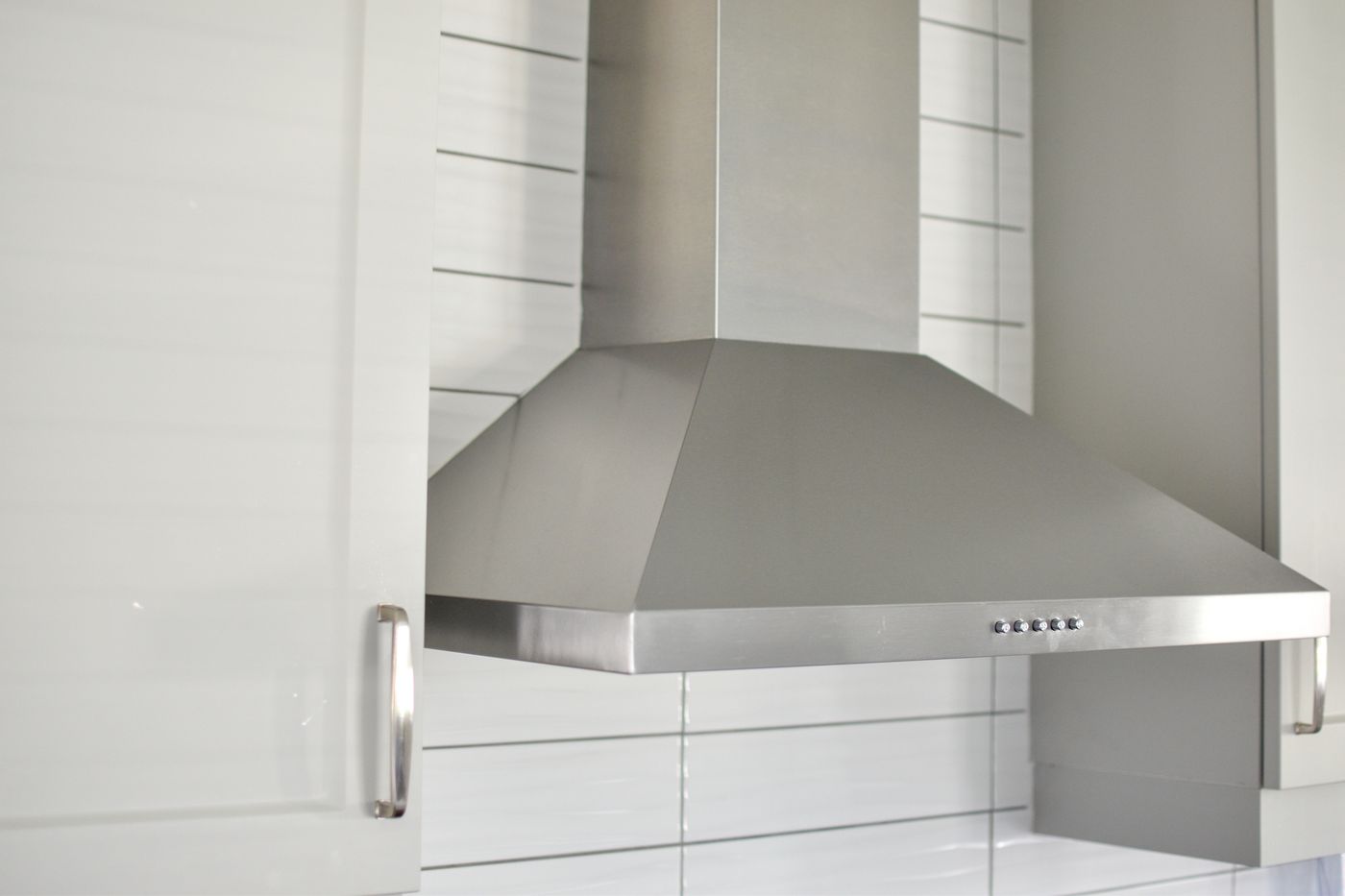
How to Get the Most Out of Your Range Hood
The U.S. Environmental Protection Agency's cooking ventilation guidance recommends:
- Run your range hood every time you cook.
- Leave it on for 10 to 20 minutes after you're done.
- Use the back burners when you can, since the hood generally captures their emissions better.
Do a quick check before the big day. Make sure the fan works, and clean off grease buildup following the manufacturer's instructions. Turn the hood off and let the cooktop cool before you remove a filter. Some filters can be washed and others need to be replaced, so don't assume yours can go in the dishwasher.
Thinking About a More Powerful Hood? Read This First
A stronger fan isn't automatically better. A powerful hood pulls a lot of air out of your house, and that air has to be replaced. Without enough fresh "makeup air" coming back in, it can depressurize your home and cause some fuel-burning appliances to backdraft.
Before you install or upgrade to a powerful hood, have a qualified professional check your ductwork, how much makeup air you need and your fuel-burning appliances. There's no one-size-fits-all fan rating. The right answer depends on your house and your cooking equipment.
What If Your Range Hood Doesn't Vent Outside?
A recirculating hood filters the air and blows it right back into your kitchen. It doesn't send heat or moisture outdoors, and how well it handles odors and particles depends on its filters.
Try opening a window or door for fresh air, as long as the weather, outdoor air quality and household safety allow it. Keep openings secure around kids and pets, and skip it if smoke or pollution outside would make things worse.
What about an air purifier? A portable air cleaner can help reduce some airborne particles, but it won't remove heat or moisture, and it's no substitute for venting outdoors. Don't buy one expecting it to cool down a hot kitchen.
How to Keep Guests Comfortable (and Out of Your Way)
You don't have to change your menu or send everyone out to the porch. A little planning keeps guests comfortable, keeps the crowd away from the stove and gives you room to cook. These tips won't guarantee a perfect room temperature, but they make a real difference.
- Set up a hangout spot away from the kitchen. Put drinks, appetizers and seating in another room so guests have a reason to gather somewhere besides next to the oven.
- Move plates and serving utensils out of your path. Guests can help themselves without getting stuck between the fridge, sink and stove.
- Keep vents clear. Make sure furniture, coats and bags aren't blocking any vents or return grilles.
- Pick one helper. If you need a hand, give one person a job instead of inviting a crowd into your workspace.
- Plan a landing spot for hot dishes. That way nobody's wandering around with a heavy roasting pan looking for somewhere to set it down.
Don't Let the Heat Mess With Food Safety
A hot, busy kitchen is no reason to cut corners on food safety. Here are the key numbers from the U.S. Department of Agriculture's Food Safety and Inspection Service (USDA FSIS):
| Food safety rule | Target |
|---|---|
| Turkey, cooked | 165°F in the thickest part of the breast and the innermost thigh and wing |
| Stuffing cooked inside the turkey | 165°F in the center |
| Hot food waiting to be served | 140°F or warmer |
| Refrigerating leftovers | Within 2 hours (1 hour if it's above 90°F) |
Check the Turkey the Right Way
Use a food thermometer, and keep the probe away from the bone. Browned skin and clear juices don't tell you the turkey is done. Only the thermometer can.
Keep Hot Food Hot
Use warming trays or other equipment made for keeping food warm, and check the food's temperature with your thermometer. A serving dish that feels warm doesn't mean the food inside is at 140°F.
Handle Leftovers Fast
According to USDA's leftovers and food safety guidance, perishable food needs to go in the fridge within two hours.
- Divide leftovers into shallow containers so they cool faster.
- Don't wait for food to cool to room temperature before refrigerating it.
- Clear out fridge space before guests arrive, so you're not leaving dishes on the counter while you rearrange shelves.
Is It Just Thanksgiving, or Is Something Wrong With Your HVAC?
A hot kitchen after a full day of cooking doesn't mean your HVAC system has failed. The real test: does the house cool back down once the cooking stops and everyone heads home?
If it does, you're probably fine. If you notice the same problems on ordinary days, it's time for an assessment before you spend money on new equipment or upgrades.
Signs It's More Than Holiday Heat
- Rooms stay uncomfortable long after you're done cooking
- Weak airflow from your vents
- Your system can't keep the house comfortable during everyday use
- Your system keeps shutting off
What to Note Before You Call
Jot down which rooms feel uncomfortable, whether it only happens when you cook and any strange sounds or smells. Those details help a technician track down the real problem instead of guessing.
What You Can (and Can't) Check Yourself
You can: check an air filter you can easily reach, and make sure nothing's covering your vents.
Don't: open equipment panels or try any electrical, refrigerant or gas repairs.
Smell gas? Leave the house and call your gas company from outside. That's a safety issue, not a comfort problem.
Get a Diagnosis Before You Buy a New System
A qualified HVAC professional should look at your airflow, how your equipment is running and what's causing the problem. Depending on what they find, the fix might be maintenance, ductwork, controls or a repair, not necessarily a whole new system.
Before you approve any work, ask:
- What did you measure?
- What's causing the problem?
- How will this work fix it?
A recommendation to replace your system should come with a better explanation than "your house got warm on Thanksgiving."
Get a written estimate that lists labor, materials and any extra fees. For a new installation, it should also name the equipment and any permits needed. And ask what the parts and labor warranties cover and how long each one lasts.
Find a Trusted HVAC Company in Atlanta
In the Atlanta area, you can find TrustDALE Certified HVAC companies on TrustDale.com. Our certified HVAC partners have passed our rigorous seven-point inspection process and are backed by our $10,000 Make It Right Guarantee for qualifying home-service purchases.
Thanksgiving Heat FAQs
Why does my kitchen get so hot when I cook?
Your oven and stovetop release heat into the room through their surfaces and vents, and every time you open the oven door, more hot air escapes. Steam from pots adds moisture that makes the kitchen feel even warmer.
Will my HVAC system clear out cooking heat and smells?
Not on its own. Your HVAC system generally circulates the air already in your home. An outdoor-vented range hood is what sends cooking heat, moisture and fumes outside.
How long should I run my range hood?
The EPA recommends running it the entire time you cook and leaving it on for 10 to 20 minutes after you finish.
Will an air purifier cool down my kitchen?
No. A portable air cleaner can reduce some airborne particles, but it doesn't remove heat or moisture, and it doesn't replace venting your cooking outdoors.
When should I call an HVAC pro?
If rooms stay uncomfortable after the cooking stops, airflow is weak, your system keeps shutting off or it can't keep up on ordinary days. And if you smell gas, leave the house and call your gas company from outside.
Keep Your Cool This Thanksgiving
The best thing you can do is get that cooking air out of the house. Run your range hood the whole time you cook and for a while after, and open a window only when the weather and household safety allow.
Give your guests a comfy place to gather away from the kitchen. Keep hot dishes hot, and get leftovers into the fridge quickly instead of leaving them out to cool.
And if your house is still uncomfortable after the dishes are done and the guests have gone home, schedule an HVAC checkup. A problem that sticks around deserves a real diagnosis before you spend money on a repair or a new system.
Happy Thanksgiving from all of us at TrustDALE!