
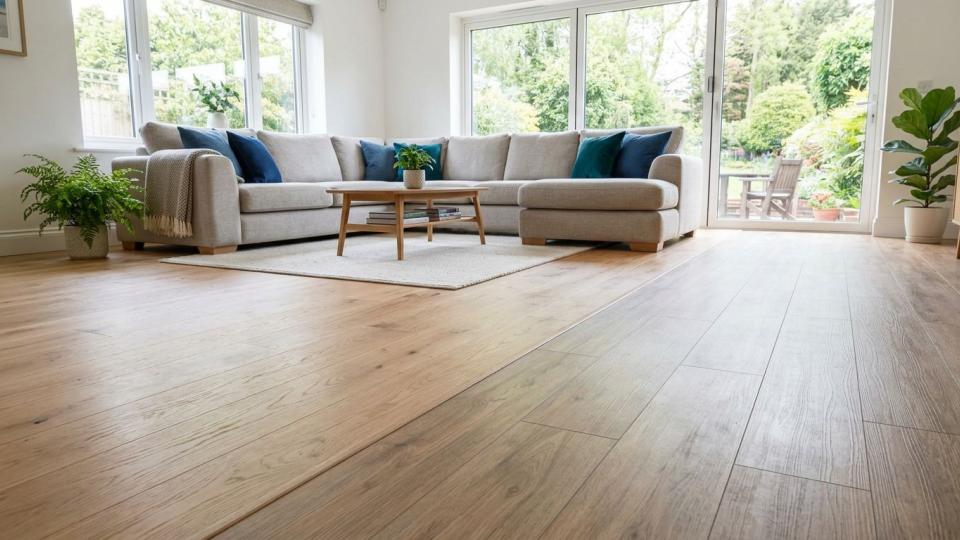
You want a floor that looks great, stands up to real life and fits your budget, without any expensive surprises down the road. So which should you choose: luxury vinyl or hardwood?
The honest answer is that neither one wins everywhere. Your decision really comes down to three things: how much moisture the room sees, how you'd repair the floor later, and the full installed cost (not just the price per square foot).
The Quick Answer
Choose luxury vinyl if spills, pets and a tighter budget top your list. It's generally easier to care for and cheaper upfront.
Choose hardwood if you love natural wood and want a floor you can refinish instead of replace.
Keep in mind that product quality and installation can change the outcome. A premium vinyl and a basic hardwood aren't automatically an even trade.
Luxury Vinyl vs. Hardwood at a Glance
| Luxury vinyl | Hardwood | |
|---|---|---|
| Upfront cost | Often lower, though premium vinyl can overlap with some wood | Often higher |
| Spills and moisture | Many products handle spills well, but "waterproof" doesn't mean floodproof | Can swell or warp with prolonged moisture, depending on construction and finish |
| Scratches and dents | Can still dent, cut or gouge | Can scratch and dent |
| Repairs | Can't be sanded and refinished; damaged planks are replaced | Solid wood can often be refinished; engineered depends on its real-wood layer |
| Look | Printed patterns, which may repeat across a big room | Natural grain, knots and color variation |
| Best for | Kitchens, busy households, pets, spill-prone rooms | Living areas where natural wood and long-term renewal matter |
Key Takeaways
- Luxury vinyl often suits spill-prone rooms and tighter budgets, but a "waterproof" label doesn't make the whole installed floor floodproof.
- Solid hardwood can be refinished. Whether engineered hardwood can depends on its real-wood surface and the manufacturer's guidance.
- Compare complete installed estimates, including removal, subfloor repairs, transitions and cleanup, not just material prices.
- Product warranties and installation warranties are separate. A long warranty doesn't cover every scratch, dent or moisture problem.
- Your rooms, cleaning habits and how long you'll stay matter more than any one-size-fits-all flooring ranking.
What's the Difference Between Luxury Vinyl, Solid Hardwood and Engineered Hardwood?
Luxury Vinyl
- Luxury vinyl plank (LVP) is a synthetic product designed to look like wood.
- Luxury vinyl tile (LVT) usually mimics stone or tile.
- Rigid-core vinyl may use an SPC (stone-polymer composite) core and PVC.
Construction and surface protection vary a lot from product to product, so always check the specs.
Solid Hardwood
Solid hardwood is real wood all the way through each board.
Engineered Hardwood
Engineered hardwood has a thin layer of real wood on top of a layered core, sometimes plywood. That construction can help it hold its shape better, but standard engineered wood is still vulnerable to moisture.
One key difference: the pattern on vinyl is a printed design layer. Engineered wood has an actual hardwood surface, so only engineered wood can potentially be refinished.
How Each Floor Looks and Feels
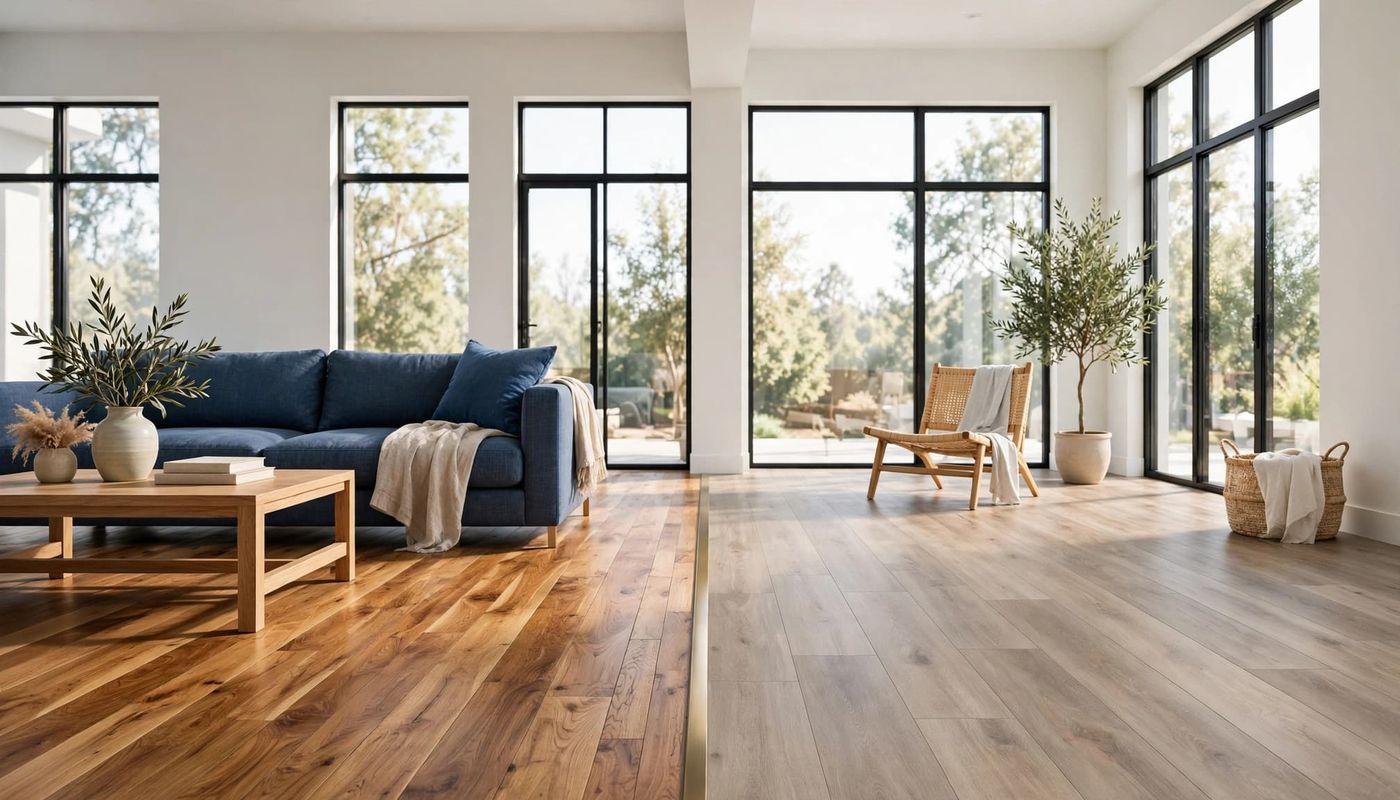
Hardwood gives you natural grain, knots and color variation. Vinyl gives you a more uniform pattern, though in a large room you may start to notice the same printed boards repeating.
How a floor feels underfoot depends partly on the subfloor, the installation method and the underlayment allowed. Neither material guarantees a soft or quiet floor.
Pro tip: Bring several samples home and look at them in both daylight and evening light. Compare the texture, sheen and color next to your cabinets and furniture. Just remember that a small sample won't show you how often a vinyl pattern repeats.
Which Floor Handles Water, Pets and Busy Rooms Better?
Luxury Vinyl
Many luxury vinyl products are a good fit for homes with muddy paws, pet claws, dropped drinks and frequent kitchen spills. But vinyl isn't indestructible:
- Heavy furniture can leave dents.
- Sharp objects can cut or gouge the surface.
- An aluminum oxide coating may help with scratches, but dent resistance varies by product.
No finish makes any floor damage-proof.
Hardwood
Wood can scratch and dent, too. How well it handles moisture depends on its construction and finish, and long exposure to water can cause swelling, warping or other damage. The National Wood Flooring Association covers these concerns in its technical guidance on moisture and wood. And engineered wood still needs moisture control.
"Waterproof" Doesn't Mean Floodproof
This is one of the most misunderstood parts of shopping for flooring. A product's waterproof claim may cover the plank itself, not the whole floor. Water can still get through the seams, around the edges, into the underlayment and down to the subfloor, even if the surface is fine.
Whichever floor you choose, sweep up tracked-in grit quickly and use the right furniture pads.
Cleaning, Repairs and Refinishing: How Long Will Your Floor Last?
How long a floor lasts depends on its condition, moisture exposure, maintenance and whether it can be repaired.
- Luxury vinyl generally can't be sanded and refinished. Once the surface damage bothers you, you'll need to replace individual planks or the whole floor.
- Solid hardwood can often be refinished, as long as there's enough usable wood left.
- Engineered hardwood depends on its real-wood wear layer and the manufacturer's instructions. The total thickness of the board doesn't tell you how many times it can be refinished.
How the floor was installed matters for repairs, too. Replacing a glued-down plank is a different job from getting to a board in a floating floor.
Two tips that will save you headaches later:
- Save extra flooring from your original purchase for future repairs.
- Follow the manufacturer's care guide exactly. Don't assume a steam mop, abrasive cleaner or polish is okay to use.
Luxury Vinyl vs. Hardwood Cost: Look at the Whole Project
The price per square foot on the box doesn't tell you what your project will actually cost. Online price ranges can't account for hidden damage under your old floor, tricky removal or labor rates in your area.
Get at Least Three Written Estimates
Make sure every estimate covers the same work, including:
- The exact product and quantity
- Removing and disposing of the old floor
- Subfloor repairs
- Transitions and trim
- Installation and cleanup
- Moving furniture and appliances
- Any door adjustments
- Moisture testing
If one bid is much lower, check whether it simply leaves out work the others included.
Moisture testing deserves a spot on that list. The National Wood Flooring Association's jobsite checklist includes moisture tests required by the manufacturer, and having those results documented is a smart part of your project records.
Also, require written approval before any added work. A vague allowance for subfloor repairs can leave your final bill wide open once the old floor comes up.
What Does a Flooring Warranty Actually Cover?
There are usually two separate warranties, and they can last very different lengths of time:
- The manufacturer's product warranty covers defects in the material.
- The contractor's installation warranty covers problems with the workmanship.
Before you buy, read the fine print on:
- What counts as a covered defect
- Approved uses and exclusions
- What the remedy is
- Moisture requirements
- Whether the warranty transfers to a new owner
- Whether replacement labor is included
A long wear warranty won't protect you from every pet scratch, furniture dent or installation mistake. "Wear-through" coverage may only apply when the surface layer is actually worn away, not to everyday changes in how the floor looks.
Does Hardwood Add More Resale Value?
Not necessarily. Hardwood doesn't guarantee a particular return. Whether new flooring pays off depends on your home's condition, what local buyers want and how much the project costs.
Already have wood floors? Before you pay to rip them out, compare the cost of refinishing them with the cost of replacing them.
How to Choose the Right Floor for Your Rooms
Match your flooring to how each room is actually used. A family living room and a busy commercial reception area put very different demands on a floor.
- Go with luxury vinyl if keeping upfront costs down and handling frequent spills matter most.
- Go with hardwood if you love natural wood and plan to refresh the surface over the years.
- Considering engineered hardwood? Check the thickness of the real-wood layer, not the total board thickness, to see how many times it can be refinished. And weigh its moisture limits against the room you're putting it in.
Not sure whether to replace your existing hardwood or bring it back to life? Explore our vetted flooring installation and refinishing services. Keeping a floor that can be repaired may save you the cost of tearing it out and starting over.
Before Installation: Check the Installer, Subfloor and Moisture Plan
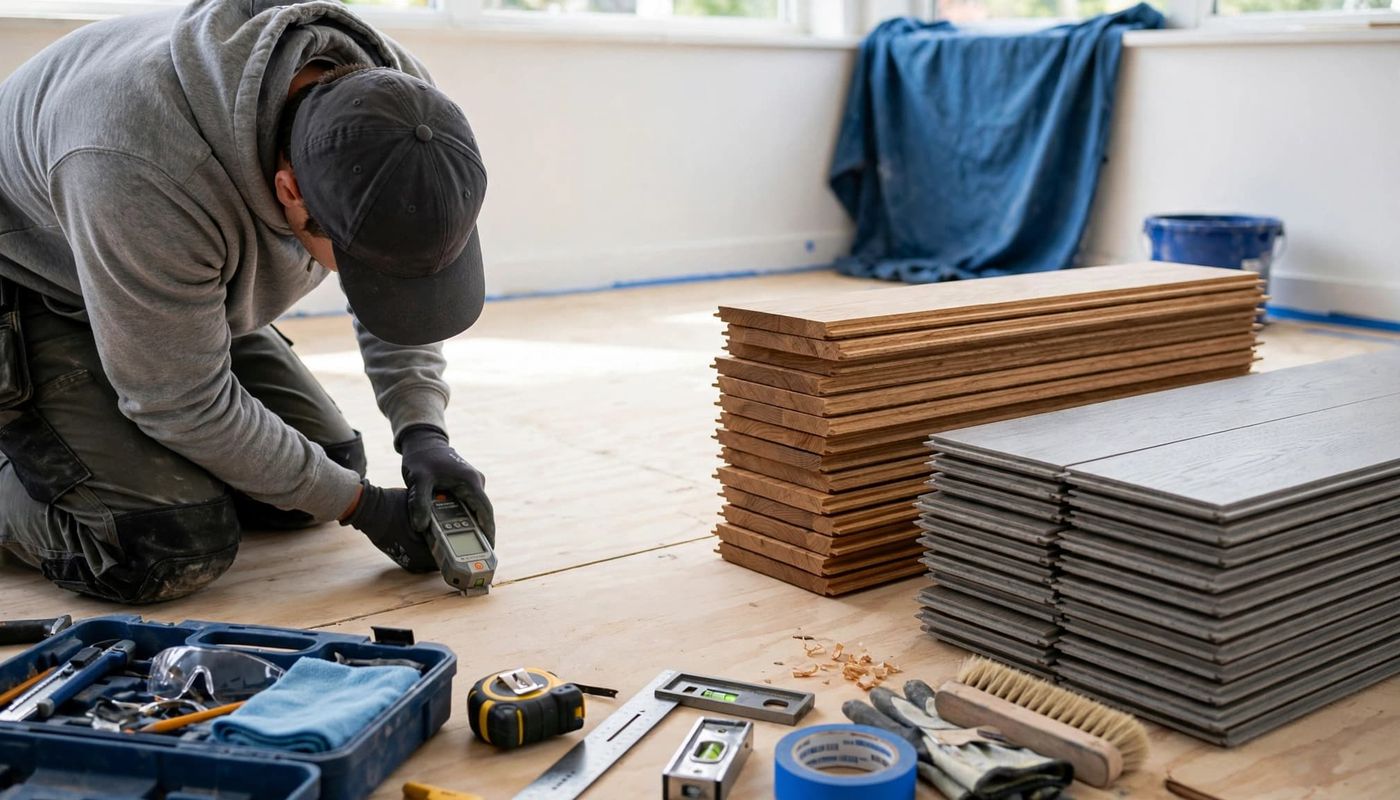
Find out who will actually do the work and who handles any problems afterward. Your written scope of work should cover:
- Making sure the subfloor is flat
- Any subfloor repairs
- Moisture testing
- Any required acclimation time for the flooring
According to the National Wood Flooring Association's installation guidelines, the work should follow both its guidance and the manufacturer's instructions. Moisture limits depend on the product, the floor underneath and the humidity, so there's no single number that applies to every floor.
Ask what happens if a moisture test fails before work starts. Covering up a damp subfloor doesn't fix where the moisture is coming from.
Planning to DIY? Check the product instructions, moisture-testing requirements and warranty terms first.
Finally, keep your test results, product labels, receipts and work records together. If you ever need to file a claim, they'll show what you bought and how the work was done.
Luxury Vinyl vs. Hardwood FAQs
Is luxury vinyl cheaper than hardwood?
Usually upfront, but premium vinyl can cost as much as some wood options. Removal, prep work and labor can also change which project ends up cheaper. Compare written estimates for the same rooms and the same scope of work instead of assuming the cheaper material means the cheaper project.
Can luxury vinyl go in a kitchen or bathroom?
Many products are made for rooms that get wet, but it depends on the specific flooring system. Choose a product whose written instructions and warranty cover that room and installation method. A product that's fine for a bathroom isn't automatically approved for use inside a shower or wet room.
Can you refinish engineered hardwood?
Sometimes. It depends on how thick the real-wood layer is and what the manufacturer allows. A thin top layer may not hold up to sanding, and each refinishing removes some of the wood. If refinishing matters to you, make sure it's spelled out in the product specs before you buy.
Does hardwood always add more resale value?
No. Local demand, installation quality and the floor's condition all affect how buyers respond. Replacing an attractive floor that's in good shape right before you sell may cost more than you'll get back.
Which flooring is better for commercial spaces?
It depends on foot traffic, rolling loads, moisture and maintenance needs. A residential warranty doesn't mean a product is suitable for commercial use, and "light commercial" coverage doesn't fit every business. Make sure the product's approved uses match your space, including any limits on rolling chairs, carts or equipment.
Make Your Decision Before You Sign
The right choice starts with your rooms and the full project cost. Compare complete estimates, understand the warranties, and choose your flooring and your installation plan together, because how your floor performs depends on both.
Ready for professional flooring installation? Find Vetted Home Service Providers on TrustDale.com. Our TrustDALE Certified flooring partners have passed our rigorous seven-point inspection process, and eligible home purchases are backed by our $10,000 Make It Right Guarantee.