
You finally repaint, and within a few months there are shoe scuffs by the back door, fingerprints around every light switch and a touch-up that somehow looks worse than the original mark. Sound familiar?
With holiday guests on the way, a lot of homeowners are thinking about a fresh coat right now. The good news: the right color and finish can make everyday wear much less noticeable. The catch is that no paint can hide everything, and the wrong finish can actually make flaws stand out more.
The short answer: choose a mid-tone color that doesn't contrast sharply with dirt and scuffs, pick a sheen that balances concealment with cleanability, and make sure the walls are properly prepped first.
Key takeaways
- Lower sheen hides more flaws. Flat and matte finishes downplay dents and patches but can be harder to clean.
- Mid-tones are forgiving. Warm neutrals, greige, muted greens and medium grays are great colors to sample.
- Satin and eggshell are the busy-room sweet spot. They wipe clean without showing every bump.
- Use semigloss or gloss on trim. Doors and baseboards get touched constantly and need to stand up to scrubbing.
- Get specifics in writing. Your painter's estimate should name the exact paint, sheen, repairs and number of coats.
Interior paint colors that hide everyday wear
Here's the simple rule: marks show up when they contrast with the wall. A dark scuff pops on bright white. Pale dust and light scratches stand out on navy or charcoal. A middle-of-the-road shade softens both.
Colors worth sampling
- Warm beige and greige: blend with dust, everyday grime and light scuffs.
- Muted sage and soft greens: forgiving, calming and on-trend.
- Medium grays: hide both dark and light marks, but test them, since grays can shift warmer or cooler.
These are smart starting points, not magic. Even a perfect color match won't guarantee an invisible touch-up. Differences in sheen, age or how the paint was rolled on can still give a repair away.

Think about where the wear happens
Every room takes a different kind of beating. Kids leave fingerprints around light switches. Pets rub against hallway corners. Kitchen walls near the stove collect splatters. A wall behind the couch barely gets touched. Choose with those trouble spots in mind.
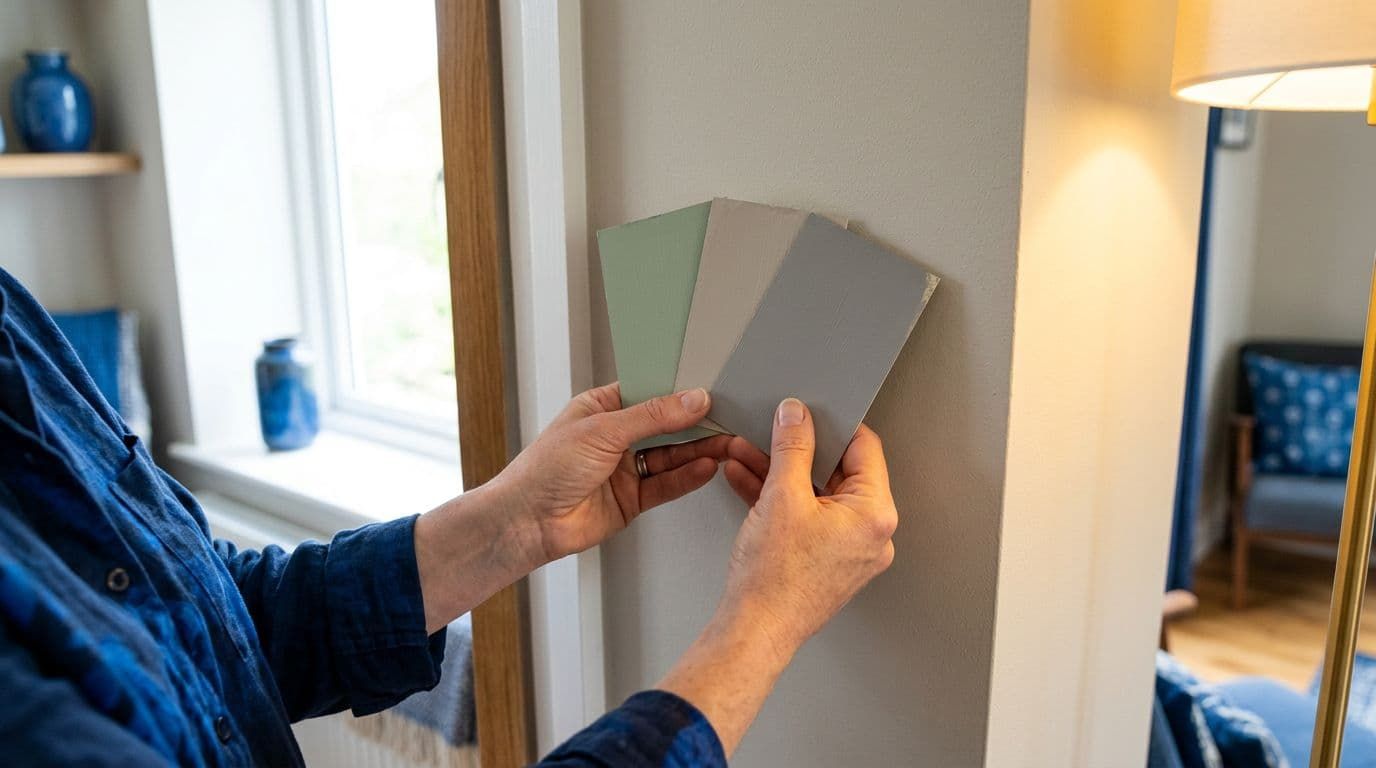
Test colors in your own light
Paint chips lie. A color that looks perfect in the store can turn cold, yellow or muddy in your living room. Before you commit:
- Paint large samples on at least two walls.
- Check them in morning light, afternoon light and under your evening lamps.
- Hold them near your trim, floors and furniture, which can make a color look warmer or cooler.
This matters most in small spaces like hallways and powder rooms, where light changes quickly and nearby surfaces bounce color onto the walls.
Pro tip: Hold a flashlight against the wall at a low angle, or check it when sunlight rakes across it. This "side lighting" reveals dents, ridges and patches that overhead lights hide.
Flat, eggshell, satin or semigloss? Picking the right sheen
Sheen is how much light your paint reflects. Here's the trade-off in one sentence: the shinier the paint, the easier it is to clean, and the more it shows every bump and patch.
| Sheen | Hides flaws | Easy to clean | Best for |
|---|---|---|---|
| Flat / matte | Best | Lowest | Ceilings, bedrooms, low-traffic walls |
| Eggshell | Very good | Moderate | Living rooms, dining rooms |
| Satin | Good | Good | Hallways, family rooms, kids' rooms |
| Semigloss | Fair | Very good | Trim, doors, baseboards, bathrooms |
| Gloss | Least | Best | Cabinets, railings, high-touch trim |
One heads-up: sheen names aren't standardized. One brand's satin may look shinier than another's, so always check a sample.
Flat and matte: best at hiding flaws
These low-shine finishes are great at disguising dents, patches and uneven texture. The downside is cleaning. Some flat paints scuff easily, and scrubbing can leave shiny spots (called burnishing). Many newer "washable" matte paints perform much better, but check the label for cleaning instructions rather than assuming.
Eggshell and satin: the busy-household sweet spot
Eggshell has a soft glow, and satin is a bit shinier. Both wipe clean better than flat, which makes them popular for hallways, family rooms and kids' rooms.
The catch: that extra sheen can reveal sanding marks or sloppy patch jobs. Satin works best on walls that are already smooth, and it won't fix grease, peeling or loose paint underneath.
Semigloss and gloss: built for trim
These shiny finishes stand up to constant wiping, making them the go-to for doors, baseboards and window trim. But shine highlights everything, including brush marks, dents and damaged wood. Careful sanding and prep make the biggest difference here.
Acrylic or oil-based paint: which is better?
Neither one wins every time. What matters is the whole system: prep, primer and finish coats, matched to the surface you're painting.
Water-based acrylic (latex): the go-to for walls
Water-based acrylic paint, often called latex, is the standard choice for interior walls. (Despite the name, "latex" paint doesn't contain natural rubber.) It dries faster, cleans up with soap and water, and comes in plenty of low-odor options.
Just know that not all water-based paints are interchangeable. A wall paint and a trim enamel can both be water-based and still perform very differently. Check that the product is designed for the surface you're painting.
Oil-based: sometimes right for trim
Oil-based paint can still make sense for certain trim or when you're painting over existing oil-based coats. But it takes longer to dry, needs solvent for cleanup and may require extra prep or a special primer, all of which can add to the cost. Compare the full requirements side by side with a water-based option before deciding.
What about VOCs and indoor air?
Some paints release volatile organic compounds (VOCs) into the air as they dry. The U.S. Environmental Protection Agency explains why these emissions matter for indoor air quality, especially in rooms with poor ventilation.
Low-VOC and zero-VOC paints are widely available. But as Green Seal's guide points out, a low-VOC label covers VOC content only. It doesn't tell you everything about a paint's emissions, health impact or durability. Open windows, run fans and follow the label's ventilation instructions either way.
Prep first, paint second
New paint follows whatever is underneath it. If the wall has bumps, grease or peeling paint, a fresh coat will show it, and shinier finishes will show it even more.
Your before-you-paint checklist
- Run your hand over the wall to find raised patches, cracks and rough spots.
- Look for grease (especially in kitchens), loose or peeling paint and old stains.
- Check walls with side lighting to spot dents and uneven repairs.
- Fix any leaks or moisture problems before patching water stains.
- Test color samples on more than one wall and in different light.
- Read the paint's cleaning instructions to make sure it suits the room.
One caution: sample pots are great for judging color, but they may not be the same formula or sheen as the full gallons. Don't judge washability from a sample.
Compare the total cost, not the gallon price
A cheaper can of paint isn't a bargain if it needs extra coats, a special primer or more prep work. When you compare options, add up paint, primer, prep, supplies and labor. That's the real price.
Hiring a painter? Make the estimate spell it out
"Premium paint included" sounds nice, but it tells you almost nothing. Neither does "wall prep." Filling a few nail holes is a very different job from repairing cracks or smoothing big patches.
A good written estimate should list:
- The paint manufacturer and exact product line
- The sheen for walls, trim and ceilings
- The number of coats
- Repairs, sanding and priming, including the type of primer
- Cleanup and anything excluded
Two estimates with the same number of coats can cover very different jobs if one leaves out patching or primer.
Once you've chosen a painter, make sure those product and prep details go into the contract. That gives you a clear standard to hold the finished work to.
Want a painter you can trust? Check out TrustDALE Certified Painters, who have all passed our rigorous seven-point inspection and are backed by our $10,000 Make It Right Guarantee.
Frequently asked questions
What paint finish hides scuffs best?
Flat and matte hide wall flaws best, but they can be harder to clean. For busy rooms, eggshell or satin is usually the best balance: they wipe clean and still downplay minor imperfections. Choose a washable formula if fingerprints and scuffs are a constant battle.
What color paint hides dirt best?
Mid-tone colors like greige, warm beige, muted green and medium gray hide dirt best. Bright white shows dark scuffs, while very dark colors show dust and light scratches.
Why does my touch-up show even with the original paint?
The paint on the wall has aged, been cleaned and been exposed to light, so it no longer looks exactly like the paint in the can. A different roller or brush can also change the texture. If a touch-up still stands out, repaint the whole wall from corner to corner for an even look.
Will primer stop an old stain from coming back?
A stain-blocking primer can keep many stains from bleeding through. But fix the cause first, especially after a leak. Regular primer and stain-blocking primer aren't the same thing, so make sure your repair plan names the right product.
How long should I wait to wash a newly painted wall?
Longer than you think. "Dry to the touch" isn't the same as fully cured, and the wait varies by product. Check the label for the recommended time and cleaning method before you scrub.
Can new paint fix mildew that keeps coming back?
No. Paint can't fix a leak, condensation or poor ventilation. Solve the moisture problem first, or the mildew will return. For heavy growth or damaged drywall, call a professional.
What should I save for future touch-ups?
Write down the brand, product line, color formula and sheen. Label leftover paint with the room and surface, store it according to the directions and note the type of roller you used, since roller texture affects how repairs blend in.
The bottom line: choose for your walls, not just the color card
The most forgiving paint job comes down to three things: a mid-tone color that doesn't fight with everyday dirt, a sheen that fits how much cleaning the room needs and walls that are properly prepped before the first coat goes on.
Test your samples in your own light, get the exact product and prep work in writing, and you'll spend a lot less time staring at scuffs, and a lot more time enjoying your freshly painted home.
Ready for a fresh coat? Find a TrustDALE Certified painter, backed by our $10,000 Make It Right Guarantee.
Want to dive even deeper? Check out our Trust Issues podcast episode "Paint By Number: The Truth About Cheap Paint Jobs" with painting expert Mike Rawlings of TrustDALE Certified Atlanta Painting Company.