
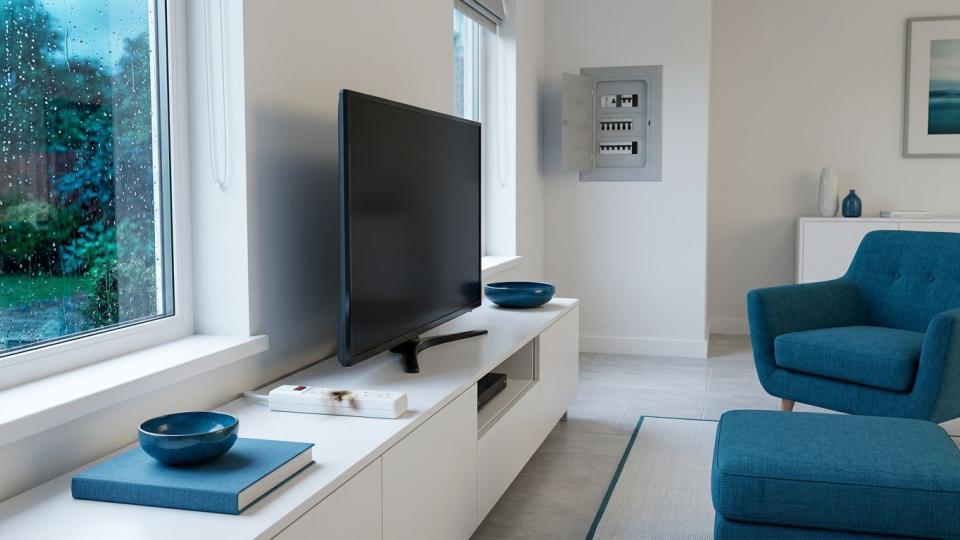
Your breaker didn't trip. So why won't your TV turn on?
The storm rolled through, the lights flickered and everything seemed fine. Then you went to turn on the TV, and nothing. You check the electrical panel: every breaker is right where it should be.
Here's the short answer: yes, a power surge can damage your electronics without tripping a breaker. Breakers and surge protectors do completely different jobs, so a normal-looking panel doesn't mean your equipment is safe.
With fall thunderstorms and the tail end of hurricane season still possible, now's a good time to understand how surges work, how to spot the damage and how to protect your home.
Key takeaways
- Breakers stop too much current. Surge protectors stop voltage spikes. One doesn't replace the other.
- Sudden failures are a clue, not proof. Several devices dying at once points to a surge, but other problems can look the same.
- Heat, burning smells or shocks are emergencies. They can signal dangerous wiring, not just a broken gadget.
- Document before you replace. Photos and model numbers help with warranty and insurance claims.
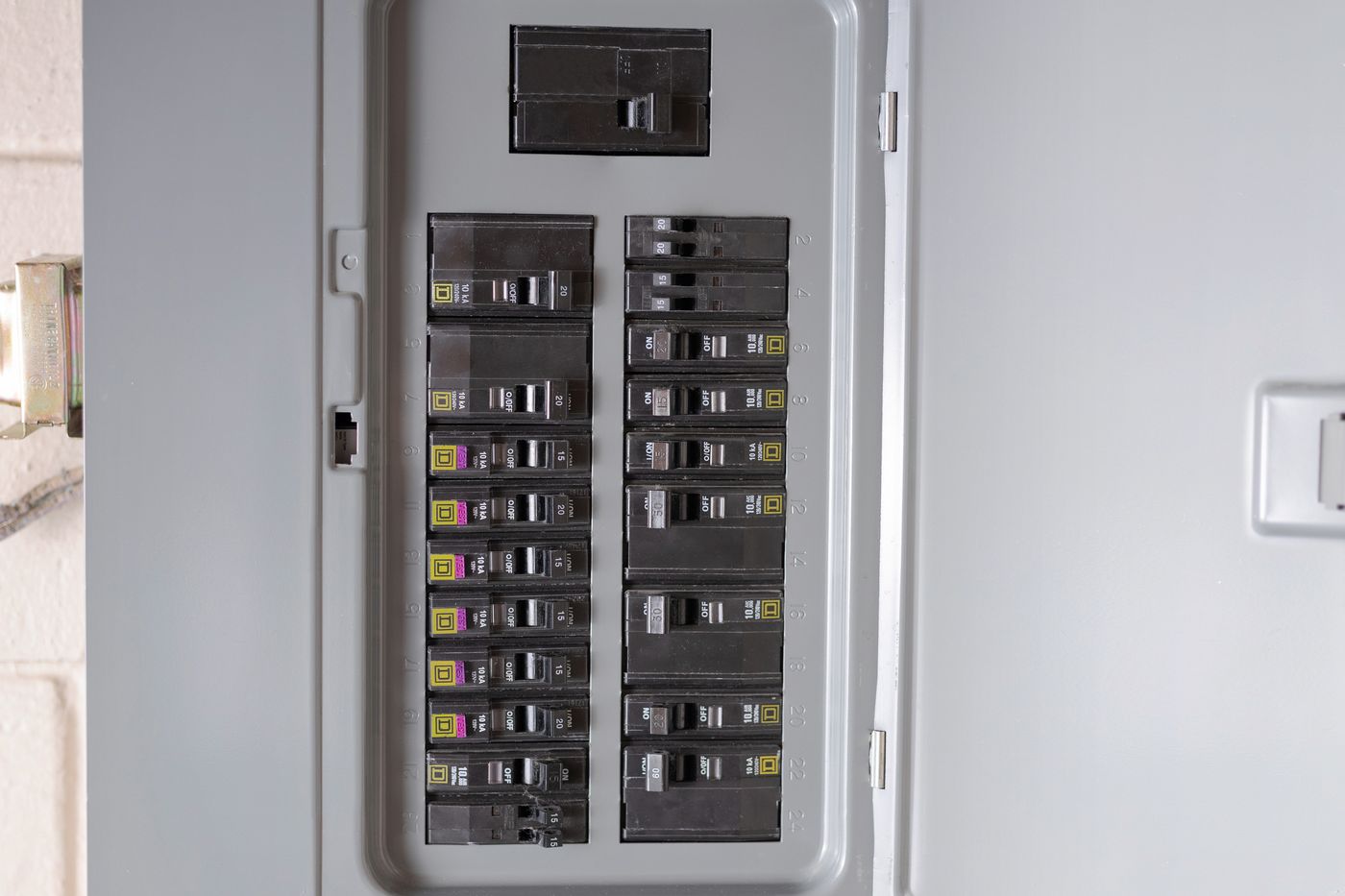
Why your breaker can't stop a surge
A power surge is a split-second spike in voltage. It's over so fast that it usually doesn't create the kind of sustained overload a breaker is built to catch. According to the National Institute of Standards and Technology (NIST), protecting your equipment from these brief spikes takes dedicated surge protection.
Here's who does what:
| Device | What it protects against | Stops surges? |
|---|---|---|
| Circuit breaker | Overloads and short circuits that could overheat your wiring | No |
| AFCI breaker | Arcing faults (sparks in damaged wiring) that can start fires | No |
| Surge protective device (SPD) | Brief voltage spikes that can fry electronics | Yes |
| Basic power strip | Nothing; it just adds outlets | No |
That last one surprises a lot of people. Extra outlets don't make a power strip a surge protector. Check the packaging for a surge protection rating.
Where do surges come from?
- Lightning: a direct or nearby strike can send extreme voltage through power lines.
- Power coming back on: the grid can spike when power is restored after an outage.
- Everyday appliances: big loads like air conditioners and refrigerators switching on and off create smaller, frequent surges.
You won't always see a flash or hear a pop. And the symptoms alone usually can't tell you which event caused the damage.
Signs a surge may have damaged your appliances
Electronics acting strange
Watch for:
- A TV, computer or appliance that suddenly won't turn on
- Computers or routers that keep restarting
- Digital displays or controls behaving erratically
- Several devices failing at about the same time
Write down when each problem started and which outlets and devices were involved. That timeline helps a technician investigate. Just keep in mind it isn't proof of a surge, since ordinary wear and tear can cause the same symptoms.

Red flags that mean stop now
Some signs point to a wiring problem, not just a broken device. The Electrical Safety Foundation International (ESFI) lists these warning signs:
- Flickering lights
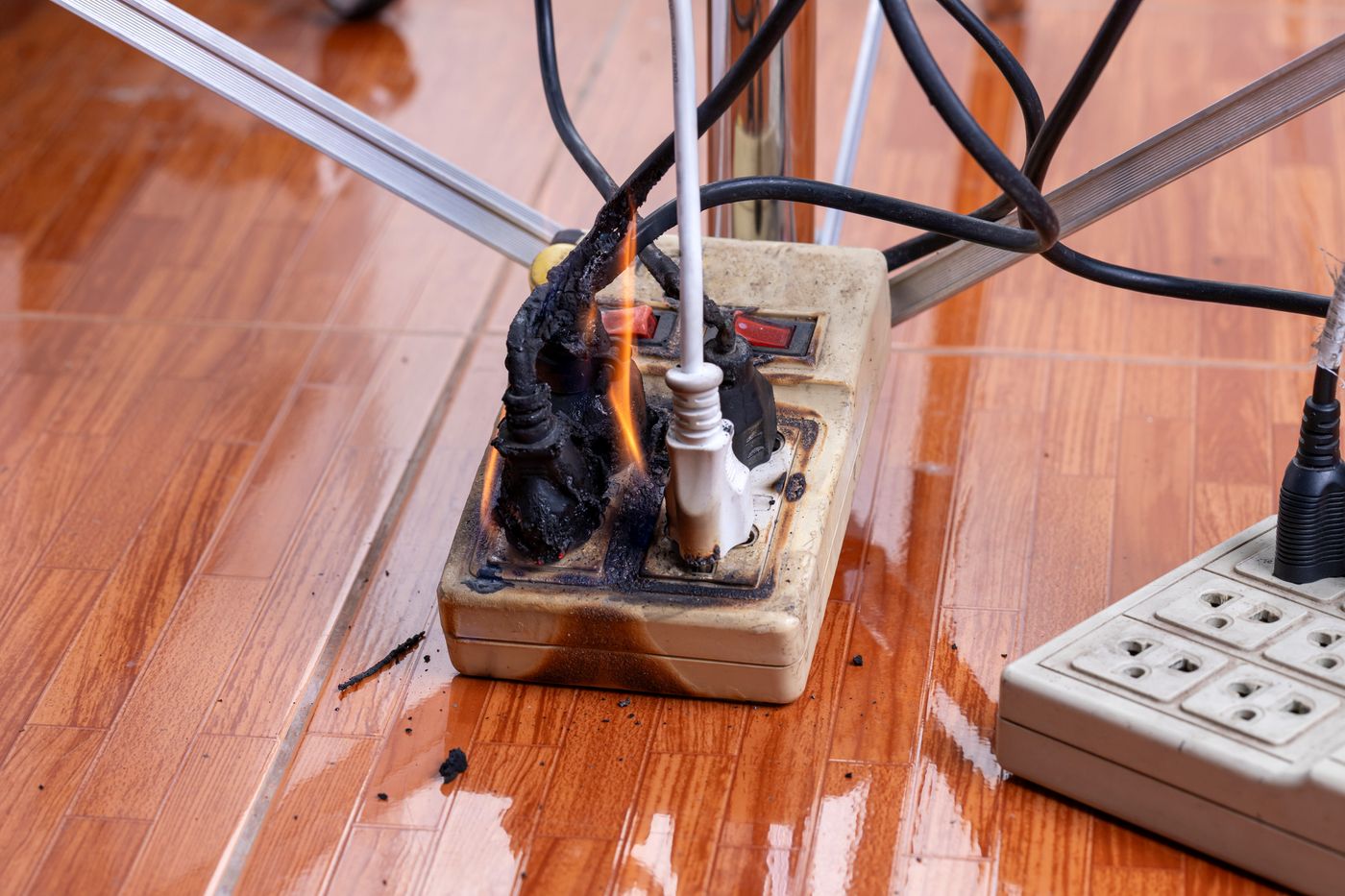
- Scorch marks or discolored outlets and switches
- Outlets or switch plates that feel warm
- A burning smell
- A shock or tingle when you touch an appliance or outlet
If you notice any of these, stop using the affected equipment and call a licensed electrician. Don't keep testing a hot or damaged outlet.
If you see smoke or fire, get everyone out and call 911. Don't go near the electrical panel to investigate.
What to do after a suspected power surge
Before you rush out to buy a new TV, take these steps:
- Stop using the damaged device. Unplug it only if you can do so safely.
- Check your surge protector. Look at its status light and follow the manufacturer's instructions. Search for recalls using the exact brand and model.
- Document everything. Photograph the damage and list each affected device, its model number and when it failed.
- Call the manufacturer. Ask about repair or warranty coverage.
- Contact your insurance company before throwing anything away. They may want to see the damaged items.
Leave the panel alone. Don't remove the panel cover or try to fix wiring yourself. That's a job for a licensed electrician.
How to protect your home from future surges
Use layered surge protection
The best defense works in two layers:
- Whole-home surge protector: installed at your electrical panel, it limits surges coming in from utility lines before they reach your circuits.
- Plug-in surge protectors: placed at your TV, computer and other sensitive electronics, they handle smaller surges and anything that gets past the first layer.
NIST's surge protection guide explains these options in more detail. Layered protection lowers your risk, but nothing can stop every surge, especially a direct lightning strike.
Newer editions of the National Electrical Code (2020 and later) require surge protection when a home's electrical service is installed or replaced. Whether that applies to you depends on which code your area has adopted, so ask a licensed electrician which device fits your panel and local rules.
When to call an electrician
Schedule an inspection if:
- Multiple circuits or appliances are affected
- Your surge protector shows a fault light
- You notice any wiring warning signs, like heat, scorch marks or burning smells
Tell the electrician when the problems started, and ask them to check the affected circuits, breakers, panel, surge protection and any AFCI breakers.
Before you hire
Ask for proof of a current electrical license, liability insurance and an itemized written estimate. A rock-bottom quote doesn't mean someone is qualified, and electrical work isn't the place to cut corners.
Need a trustworthy electrician? Find a TrustDALE Certified electrician at TrustDALE.com. Our partners pass our rigorous seven-point inspection and are backed by our $10,000 Make It Right Guarantee.
Frequently asked questions
Can a power surge happen without lightning?
Yes. Many surges come from everyday sources inside your home or on the grid, such as large appliances cycling on and off or power being restored after an outage.
Can a small power surge damage a TV or computer?
Yes. Sensitive electronics can be damaged by brief spikes, and smaller surges can wear down components over time. How much damage occurs depends on the surge and the device's built-in protection.
Do surge protectors wear out?
Yes. A surge protector can lose its ability to protect without any visible damage, and many keep supplying power even after their protection is gone. A glowing power light doesn't mean you're still protected. Check the protection indicator and replace the unit if it shows a fault.
Should I reset the breaker after a power surge?
Only if it actually tripped. If it won't reset, trips again, or you notice heat or a burning smell, stop and call a licensed electrician. Flipping it back on repeatedly won't fix the underlying problem.
Does homeowners insurance cover power surge damage?
It depends on your policy, the cause of the damage, your deductible and the claim terms. Take photos and call your insurer before you throw anything away. A repair estimate can also help document what failed and what it costs to fix.
Is a whole-home surge protector worth it?
For many homes, yes. It limits surges coming in from outside, while plug-in protectors guard individual electronics. Talk to a licensed electrician about which combination makes sense for your panel and your devices.
The bottom line: a normal-looking panel doesn't mean you're protected
Your breaker is there to protect your wiring, not your electronics. A surge can slip right past it and leave you with a dead TV and no clue why.
If you suspect a surge, stop using the damaged equipment, document everything and take heat, burning smells or shocks seriously. When the problem might involve your wiring or panel, let a licensed electrician check it out before you plug anything back in. Then consider adding layered surge protection so the next storm doesn't cost you another TV.
Ready to protect your home? Connect with a TrustDALE Certified electrician, backed by our $10,000 Make It Right Guarantee.
For a deeper dive into the limits of your electrical panel, check out our Trust Issues podcast episode "Wired: The Hidden Limits of Your Electrical Panel" with electrical expert Jason Radford of TrustDALE Certified Lightning Bug Electric.