
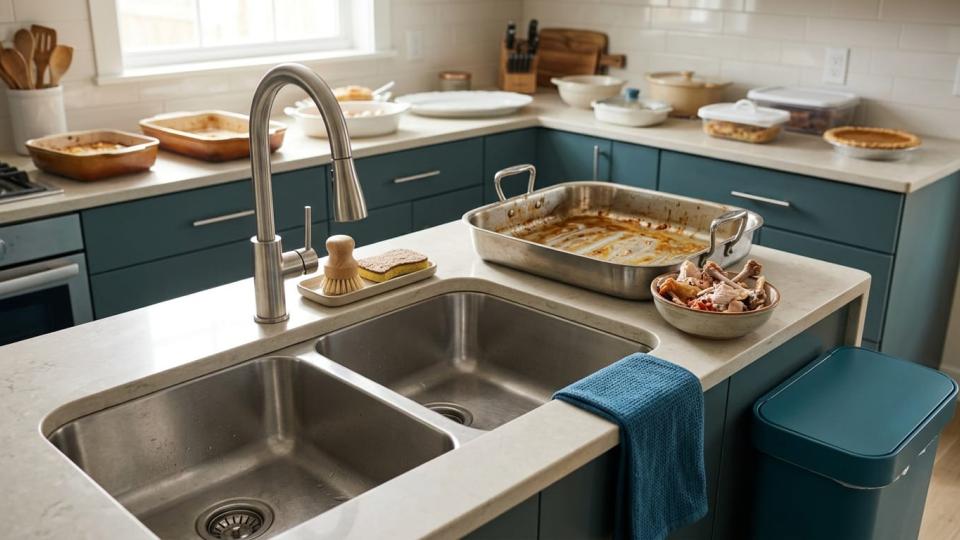
Dinner was a hit. Now you're rinsing the roasting pan, and the sink stops draining. Suddenly, instead of pie and football, your holiday is all about a clogged kitchen sink.
If you don't want that to be you on Turkey Day this year, you need to know one hard-and-fast rule for garbage disposals. Keep the grease out. Almost everything else depends on your specific model.
And even if your disposal can grind something, your pipes still have to carry it away. Dump a big bowl of scraps in at once, or send it into older, narrow plumbing, and you could have a backup on your hands.
So before you clear the table, here's what to keep out of the sink, how to make cleanup easier on your disposal and the warning signs that mean it's time to call a plumber.
Thanksgiving Garbage Disposal Cheat Sheet
| Food | Disposal or trash? |
|---|---|
| Turkey grease, pan drippings and fatty skin | Never down the drain. Trash it (or use a local grease collection program). |
| Turkey bones | Keep out unless your model's manual clearly says they're OK |
| Celery, corn husks, corn cobs and other fibrous scraps | Check your manual. When in doubt, toss them. |
| Fruit pits | Keep out unless your model's manual clearly allows them |
| Potato peels, pasta, rice and stuffing | OK for some models, in small amounts |
| Coffee grounds and eggshells | OK for some models, in small amounts |
Key Takeaways
- Grease is a no-go. Keep fats, oils and greasy pan drippings out of your disposal and your drain.
- Your model matters. Bones and stringy scraps are OK in some disposals and not others, so check your manual.
- Potato peels, pasta, rice, coffee grounds and eggshells aren't always off-limits, but big batches can cause trouble.
- Use cold water, not hot. Start the water first, turn on the disposal, then feed in approved scraps a little at a time.
- Stop if your disposal hums, leaks or keeps backing up. Disconnect the power before troubleshooting, and never put your hand inside.
The Thanksgiving Foods That Should Never Go Down Your Garbage Disposal
A reliable food list separates clear drain hazards from model-dependent restrictions. InSinkErator's series-specific food guidance distinguishes its Badger, Power and Advanced Series rather than applying one rule to every appliance.
Keep Turkey Skin, Pan Drippings And Grease Out
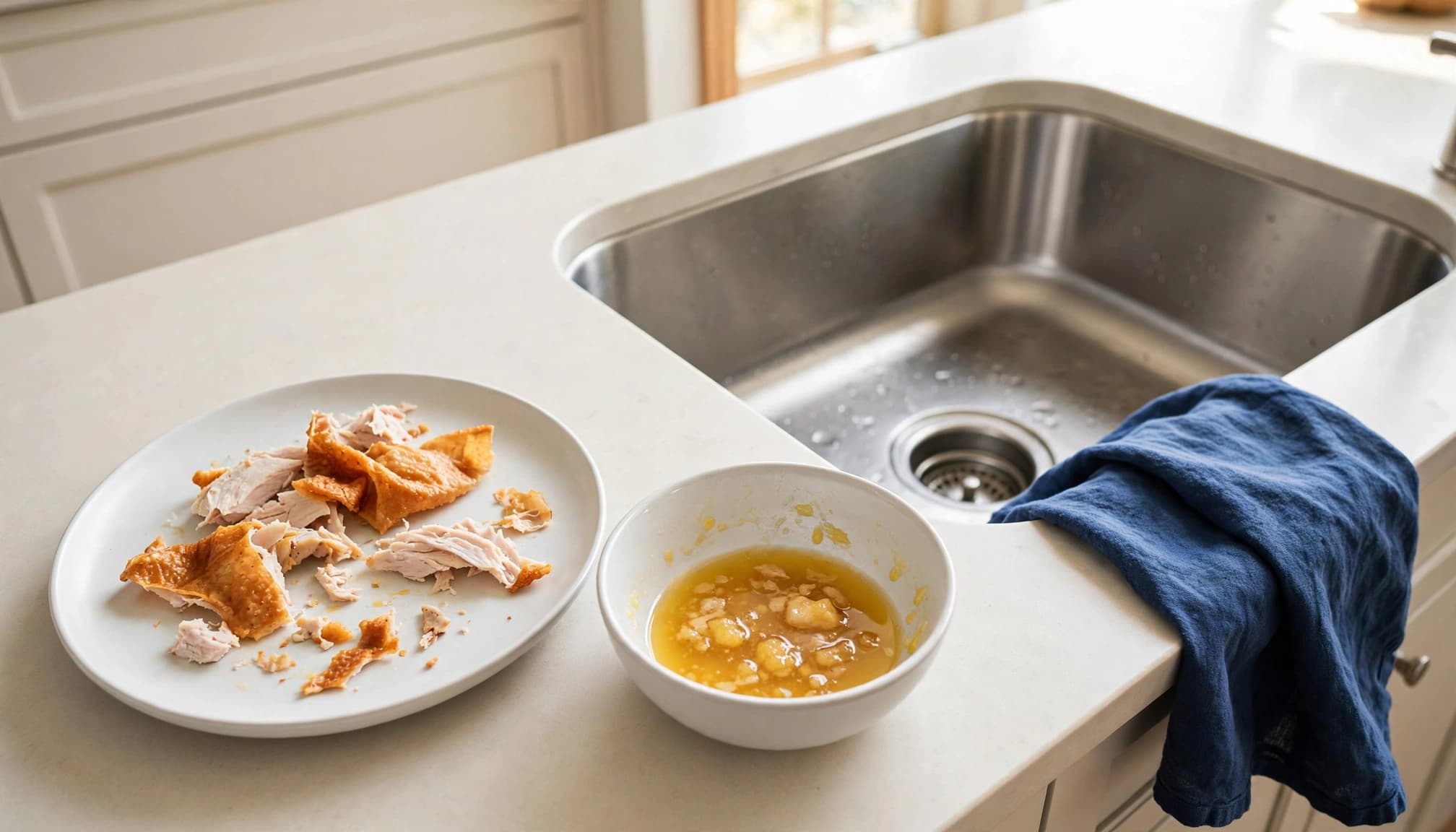
Keep fatty turkey skin, turkey grease and greasy roasting-pan residue out of the sink. According to InSinkErator's guidance on disposal restrictions, fats, oils and grease can collect in pipes and cause problems.
Scrape fatty solids into the trash. Let collected grease cool before placing it in a suitable container for household disposal or an accepted local collection program. Grinding doesn't make grease safe for your pipes.
Treat Turkey Bones And Fibrous Scraps With Caution
InSinkErator lists chicken bones and cooked beef bones for its Advanced Series, but that doesn't establish permission to grind those bones.
Fibrous vegetables require care. Celery appears on the Advanced Series list, while some standard models have restrictions on stringy material. Corn cobs and corn husks are different scraps, so permission for one doesn't establish permission for the other. Keep fruit pits out unless your exact model's instructions clearly permit them.
Use your exact model's manual. When its instructions don't clearly permit a questionable scrap, keep it out.
Know Which Popular Scraps Are Not Always Forbidden
Potato peels, pasta, rice, coffee grounds and eggshells appear on InSinkErator's recommended lists for some models. Calling all of them universally forbidden overstates the manufacturer's guidance.
However, permission doesn't mean unlimited capacity. Large batches can slow grinding or clog plumbing where drainage is restricted. Treat stuffing like other starchy foods: check your model instructions and avoid feeding a large serving at once. Separate an approved food from an approved quantity before emptying a preparation bowl into the sink.
Make Thanksgiving Cleanup Easier On Your Disposal
Your cleanup routine should control how much material enters the appliance and where the rest goes. Set up your disposal alternatives before dishes arrive.
Feed Scraps Slowly With Cold Water Running
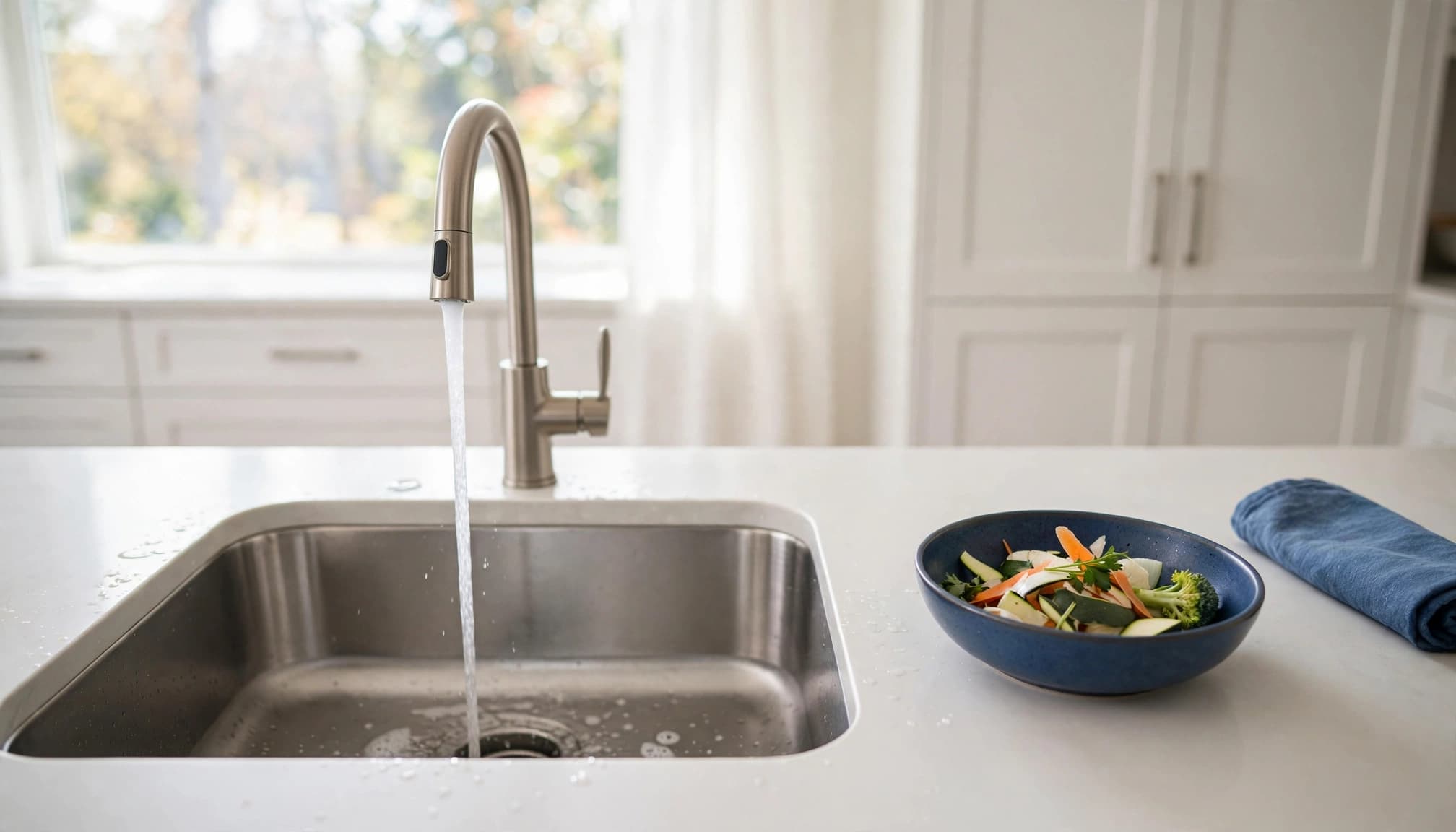
According to InSinkErator's garbage disposal operating instructions, begin with a steady stream of cold water, not hot water. Turn on the disposal before adding food, then feed approved scraps gradually.
Avoid packing the opening with food before starting the motor. A large load can slow grinding, so give the appliance time to process each small addition before feeding more.
After grinding finishes, turn off the disposal and leave the water running for a few seconds to flush the drainpipe. This routine applies to a normally functioning appliance. If water starts collecting in the sink, stop feeding scraps rather than trying to push the load through with more food.
Use The Trash Or Compost For Risky Scraps
Place a trash container or appropriate compost container near your cleanup area. Scrape food scraps from plates before rinsing them, and keep grease, bones and uncertain fibrous material out of the drain. Keep non-food items, such as utensils and wrappers, away from the sink opening.
Choose trash or compost for food waste according to your local program's acceptance rules. Don't assume it accepts meat, bones or fatty leftovers just because it takes vegetable scraps.
Afterward, remember that washing the basin doesn't clean the disposal opening or splash guard. Our safe garbage disposal cleaning tips explain why these surfaces need separate attention. Disconnect power as the manual directs before cleaning, and use a brush under the guard only when the manufacturer permits it. Don't assume the guard is removable or that a homemade cleaning mixture suits every appliance.
Know When A Slow Drain Needs A Plumber
A disposal's ability to grind food and a kitchen drain's ability to carry it away are separate issues. A slow sink doesn't automatically mean you need a replacement appliance.
Stop If The Disposal Hums, Leaks Or Keeps Backing Up
Stop feeding food and switch off the unit if it hums without normal grinding, leaks or repeatedly backs up. Repeatedly restarting it won't identify the cause.
Before troubleshooting, disconnect power as your model's manual directs. InSinkErator's disposal operating safety instructions address power isolation before attempts to free a jammed rotor. Never put your hand inside the disposal. Don't use chemical drain openers in or around the appliance unless the exact appliance instructions and product label both permit it.
Use only the troubleshooting instructions for your exact model. If you can't safely identify the cause, or the problem continues, contact a qualified plumber. Report whether the unit runs, whether water drains and whether you see a leak. These observations help describe the problem without guessing at a diagnosis.
Ask What Failed Before Approving Repairs
Ask the plumber to explain whether the problem involves the disposal, the connected drain or plumbing farther downstream. Request a written estimate that separates diagnosis, drain clearing and any proposed replacement.
If replacement is recommended, ask what finding supports it. Also ask whether the quoted work addresses the cause of the backup or only replaces the appliance. Replacing a functioning disposal won't clear a separate pipe restriction.
You can find TrustDALE Certified Plumbers at TrustDALE.com. Our partners have passed our rigorous seven-point inspection process and are backed by our free-to-you $10,000 Make It Right Guarantee. Describe the symptoms when requesting service so the provider understands whether you're reporting a drainage problem, an appliance problem or both.
Frequently Asked Questions
Can You Put Turkey Bones In A Garbage Disposal?
Keep them out unless your exact model's manual clearly allows them. Some InSinkErator models accept certain other bones, but its food guidance doesn't establish that those bones are suitable for every disposal. A permission for chicken bones isn't interchangeable with permission for turkey bones.
Are Potato Peels Always Bad For A Garbage Disposal?
No. InSinkErator lists potato peels among suitable foods for some models, subject to proper operation. If your model allows them, feed small amounts gradually rather than emptying a bowlful at once. A large preparation batch creates a different load than a few scraps left on a plate.
Can Coffee Grounds Or Eggshells Clog The Drain?
They aren't necessarily harmful to the disposal itself, but large quantities can contribute to a slow drain or clog. Restricted or older plumbing deserves particular caution. Your appliance's ability to grind these materials doesn't establish that a large amount will travel through your existing drain without trouble.
Should You Use Hot Or Cold Water With A Disposal?
Use cold water for the manufacturer's grinding and flushing routine. Start the water before the disposal, feed scraps gradually and keep water running briefly after switching off the appliance. Hot water doesn't make grease safe to pour down the drain or expand your model's approved food list.
What Should You Do If The Disposal Stops Draining?
Stop adding food and stop using the appliance. Consult your exact model's instructions, then call a plumber if the problem continues or you cannot safely identify the cause. Describe any humming, leakage or backup when requesting help rather than assuming the motor has failed or the unit needs replacement.
Protect Your Drain Before The Dishes Pile Up
To prevent Thanksgiving plumbing problems, separate what your disposal can grind from what your plumbing can carry away. Manufacturer approval for a particular scrap doesn't remove the need for small portions, cold water and attention to how your sink drains.
Set out a container for discarded food before the first plate reaches the sink. Keep grease and uncertain scraps elsewhere, then follow the operating instructions for the appliance you own instead of relying on a universal list that treats every model alike.
If your sink remains clogged, stop using the disposal and arrange for a qualified plumber to identify the cause before approving repairs or replacement. A clear diagnosis gives you a sound basis for deciding what work to authorize and helps you avoid paying for an appliance when the actual problem is a blocked drain.